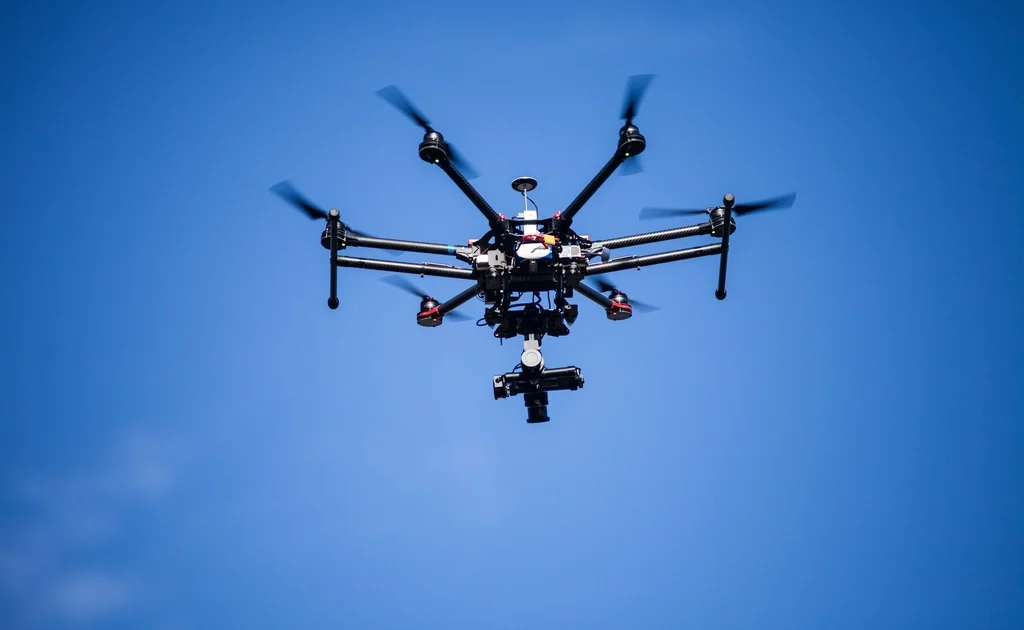
Quick Verdict: The best drone in 2026 depends almost entirely on what you want to do with it. For most people who want a great all-around camera drone, the DJI Mini 4 Pro delivers 4K/100fps, omnidirectional obstacle avoidance, and a 249-gram frame that sidesteps the strictest FAA registration rules. Professionals and serious photographers will want the DJI Mavic 4 Pro — its Hasselblad 4/3-inch sensor, 51-minute flight time, and 30km range are class-defining. Complete beginners and kids are best served by the Holy Stone HS210 or the DJI Neo ($199), which launches from your hand and requires zero flying experience.
Best Drones at a Glance (2026)
| Award | Drone | Best For | Camera / Weight | Price Tier |
|---|---|---|---|---|
| Best Overall | DJI Mini 4 Pro | Enthusiasts, travelers | 4K/100fps / 249g | $$ Mid (~$759) |
| Best Pro / Photography | DJI Mavic 4 Pro | Professional photographers | 6K60 Hasselblad / 4/3″ sensor | $$$ Premium (~$2,199) |
| Best for Beginners | DJI Neo | First-time flyers | 4K stabilized / 135g | $ Budget (~$199) |
| Best Under $500 | DJI Flip | Budget-conscious buyers | 4K/60fps / 1/1.3″ sensor | $$ Mid (~$439) |
| Best for Kids | Holy Stone HS210 | Young pilots / indoor play | No camera / 24g | $ Budget (~$30) |
| Best FPV | DJI Avata 2 | Immersive FPV flying | 4K/60fps / 377g | $$$ Premium (~$560–$860) |
| Best Mini | DJI Mini 4K | Portability on a budget | 4K / 249g | $ Budget (~$299) |
| Best Under $100 | Ryze Tello | Learning / casual fun | 720p / 80g | $ Budget (~$99) |
How We Pick the Best Drones
Every pick in this guide is built on synthesized research from leading independent drone publications — including DroneDJ, TechRadar, The Drone Girl, DroneXL, Space.com, and Engadget. We cross-reference award categories, stated buyer use-cases, and documented performance data to identify which drones earn consistent praise across multiple independent sources. No placement fees are accepted. Where sources diverge, we favor models that appear on multiple “best” lists rather than just one.
Our core selection criteria:
- Camera quality — sensor size, stabilization quality, and real-world video resolution, not just marketing specs.
- Flight time and range — real-world figures, not manufacturer maximums under ideal conditions.
- Weight and regulatory impact — sub-249g drones avoid FAA registration in the US and face lighter restrictions in most countries.
- Ease of use — obstacle avoidance, automated flight modes, and app quality matter as much as raw specs for most buyers.
- Value — the best drone at each price tier, not just the most expensive option.
The 8 Best Drones — Full Overviews
Best Overall — DJI Mini 4 Pro
Best for: Enthusiasts and travelers who want professional-quality footage in a pocket-sized package that avoids strict weight-class regulations.
The DJI Mini 4 Pro is the drone that most people should buy in 2026. It weighs exactly 249 grams — just under the FAA’s 250g registration threshold — while packing omnidirectional obstacle avoidance (the only sub-250g drone to offer this), a 1/1.3-inch sensor, and 4K video at up to 100fps. The APAS 5.0 obstacle sensing system handles complex environments that would ground most drones in its weight class, and the 34-minute rated flight time is among the best in its category. ActiveTrack 360 lets it circle and follow subjects automatically, making it a strong pick for solo travelers or content creators. It folds to roughly the size of a smartphone and includes return-to-home, geofencing, and AirSense for manned aircraft awareness.
Pros:
- Omnidirectional obstacle avoidance in a sub-249g frame — unique in its class
- 4K/100fps video and 48MP stills from a 1/1.3-inch sensor
- 34 minutes of rated flight time; real-world typically around 28–30 minutes
- APAS 5.0 handles complex, fast-moving environments
Cons:
- At ~$759, it is a significant investment for casual flyers
- Older DJI RC-N1 controller (standard version) lacks a built-in screen
Best Pro / Photography — DJI Mavic 4 Pro
Best for: Professional photographers, videographers, and real estate pilots who need the best image quality available from a consumer drone.
The DJI Mavic 4 Pro is the most capable consumer drone DJI has shipped. Its triple-camera system covers 28mm, 70mm, and 168mm equivalent focal lengths — all fed by large sensors (4/3-inch Hasselblad main, 1/1.3-inch tele, 1/1.5-inch super-tele). The main camera records 6K/60fps HDR video with 15.5 stops of dynamic range in D-Log M, and the Infinity Gimbal tilts 70 degrees upward and rotates 360 degrees for multi-angle shots. Flight time is rated at 51 minutes. The O4+ transmission system provides up to 30km of range. At ~$2,199 it is priced for working professionals, but nothing else in the consumer space matches what it delivers.
Pros:
- Hasselblad 4/3-inch sensor produces 100MP stills with f/2.0–f/11 variable aperture
- 51-minute flight time — substantially longer than any previous Mavic
- Triple-camera system with 28mm, 70mm, and 168mm focal lengths
- Infinity Gimbal supports 70° upward tilt and 360° rotation
Cons:
- ~$2,199 starting price is a serious professional investment
- Heavier than sub-250g options, requiring FAA registration in the US
Best for Beginners — DJI Neo
Best for: Absolute first-time drone pilots who want to start flying immediately without studying a manual.
The DJI Neo weighs just 135 grams and launches directly from your palm — no controller required. Its built-in AI tracking and automatic flight modes (Circle, Boomerang, Dronie, Rocket) handle the complex flying so you can focus on framing the shot. The 4K stabilized video from its half-inch sensor is surprisingly capable for a $199 drone, and at 135g it is exempt from FAA registration and many local restrictions. Battery-swappable, with roughly 18 minutes of rated flight time, it is the most accessible entry point into serious drone photography available in 2026.
Pros:
- $199 — the lowest price point for a genuine DJI-quality experience
- Launches from your palm; no controller or setup required to start
- 135g means no FAA registration and few local restrictions
- AI subject tracking and automated cinematic modes built in
Cons:
- Half-inch sensor struggles in low light compared to larger-sensor drones
- No obstacle avoidance — requires open flying areas
Best Under $500 — DJI Flip
Best for: Buyers who want near-Mini 4 Pro image quality with the safety of prop guards and palm launch, without spending $759.
The DJI Flip at ~$439 shares its 1/1.3-inch Quad Bayer sensor with the significantly more expensive Mini 4 Pro, records 4K/60fps, and adds integrated propeller guards that make palm launch safe. Its controller-free AI tracking mode follows subjects automatically, and the folding design is genuinely pocketable. It lacks omnidirectional obstacle avoidance (forward and backward only), but at this price it outperforms every competitor on camera quality. A strong pick for vloggers, travelers, and anyone upgrading from a budget drone.
Pros:
- Same 1/1.3-inch sensor as the Mini 4 Pro at a $320 lower price
- 4K/60fps video; prop guards make it safer for close-quarters flying
- Palm launch and controller-free AI tracking for solo content creators
- 249g weight keeps it under the FAA registration threshold
Cons:
- Forward and backward obstacle avoidance only — not omnidirectional
- Prop guards add slight bulk compared to bare-blade alternatives
Best for Kids — Holy Stone HS210
Best for: Children aged 8 and up who want a safe, durable indoor drone to learn the basics of flight.
The Holy Stone HS210 weighs just 24 grams, measures about four inches diagonally, and comes with built-in propeller guards. Three included batteries provide roughly 21 minutes of combined flight time — generous for a toy-class drone. Features include altitude hold, headless mode (direction is always relative to the pilot, not the nose), one-key takeoff and landing, and 3D flips. It flies best indoors or in calm outdoor conditions and is resilient to the inevitable crashes that come with new pilots. It carries no camera (keeping cost and weight minimal) but is an excellent pure-flight training tool before moving to a camera-equipped model.
Pros:
- 24 grams and fully enclosed props — very safe for indoor use
- 3 batteries included for approximately 21 minutes total flight
- Headless mode and altitude hold make it accessible for young pilots
- Very affordable (~$30) with strong crash durability
Cons:
- No camera — pure flight trainer only
- No GPS; wind sensitive outdoors
Best FPV — DJI Avata 2
Best for: Pilots who want the most immersive first-person flying experience with professional-grade stabilized video.
The DJI Avata 2 is the dominant consumer FPV drone in 2026. Flown through DJI Goggles 3, its 4K/60fps video with a 155-degree field of view delivers a genuinely cinematic immersive experience. The Motion Controller option lets pilots fly it with hand gestures alone — no joystick experience required. A built-in propeller guard cage protects the rotors during the inevitable collisions of FPV flying. At $560–$860 depending on bundle, the system is premium-priced, but nothing else at the consumer level matches the combination of image quality, safety features, and ease of use that makes true FPV accessible to non-racers.
Pros:
- 4K/60fps at 155-degree FOV — the immersive FPV experience done properly
- Motion Controller option: intuitive hand-gesture flying, no prior FPV experience needed
- Built-in prop guards reduce crash damage in tight spaces
- DJI Goggles 3 provide best-in-class low-latency transmission
Cons:
- $560–$860 depending on bundle; full kit costs more than many camera drones
- Real-world flight time is closer to 17–18 minutes recording 4K
Best Mini Drone — DJI Mini 4K
Best for: Buyers who want a capable 4K camera drone at the lowest possible DJI price point.
The DJI Mini 4K delivers genuine 4K video at approximately $299 — the most affordable entry into DJI’s ecosystem. It weighs 249 grams (no FAA registration required), uses a 3-axis mechanical gimbal for stabilized footage, and offers up to 31 minutes of rated flight time. Its 1/2.3-inch sensor is smaller than the Mini 4 Pro’s but still produces footage that looks professional in good light. The 10km video transmission range is genuinely impressive at this price. The main trade-offs are the absence of obstacle avoidance (budget it accounts for) and a slightly smaller sensor that struggles in low light.
Pros:
- ~$299 — the most affordable DJI with 4K and a mechanical 3-axis gimbal
- 249g, no FAA registration, folds to jacket-pocket size
- 31-minute rated flight time; 10km video transmission range
- Broad ecosystem of accessories and DJI app support
Cons:
- No obstacle avoidance — requires open, careful flying
- 1/2.3-inch sensor shows limits in low-light situations
Best Under $100 — Ryze Tello
Best for: Adults and older teens who want a stable, programmable sub-$100 drone with a camera for casual fun and learning to code.
The Ryze Tello is engineered by DJI (the flight controller is DJI-designed) and it shows: stability and hover precision are substantially better than other sub-$100 drones. At approximately $99, it captures 720p video, weighs 80 grams, and supports Scratch-based block programming — making it a favorite in STEM classrooms. Rated flight time is 13 minutes. It has no GPS (so no return-to-home), but its VIO (visual-inertial odometry) hover system keeps position indoors reliably. For the money, the Tello offers DJI-caliber stability at a toy-class price.
Pros:
- DJI-designed flight controller delivers class-leading hover stability
- Supports Scratch programming — great STEM and education use
- 80g and prop-guarded; very safe for indoor use
- ~$99 — reliable camera and flight at the budget ceiling
Cons:
- 720p only — adequate for sharing but not cinematic quality
- No GPS; wind-sensitive outdoors
Drone Buying Guide: What to Know Before You Buy
Weight Classes and Regulations
In the US, drones 250g and over require FAA registration (TRUST certificate for recreational flyers; Part 107 for commercial use). Drones under 250g — including the DJI Mini 4K, Mini 4 Pro, Flip, and Neo — avoid this requirement for recreational flying. Most countries have a similar threshold. If you plan to fly for commercial work (real estate, video production), a Part 107 Remote Pilot Certificate is required regardless of weight.
Camera Sensor Size Matters More Than Resolution
A 4K video label says nothing about actual image quality. Sensor size is the real differentiator: a 1/2.3-inch sensor (DJI Mini 4K) gathers far less light than a 1/1.3-inch sensor (DJI Flip, Mini 4 Pro) or a 1-inch sensor (DJI Air 3S). For photography and video in variable lighting, prioritize sensor size over raw megapixel count or resolution spec.
Flight Time: Real vs. Rated
Manufacturers rate flight time under ideal conditions (no wind, mild temperature, hovering). Real-world time is typically 75–85% of the rated figure when flying actively with wind. A drone rated at 34 minutes will realistically give you 25–28 minutes of useful flight per battery. Always buy a Fly More combo with extra batteries if you plan extended sessions.
Obstacle Avoidance
Only the DJI Mini 4 Pro offers omnidirectional obstacle avoidance below $1,000 in the sub-250g class. Most drones in the $200–$500 range offer forward and/or downward sensing only, or none at all. If you plan to fly in complex environments (trees, buildings, indoor spaces), obstacle avoidance is worth paying for.
GPS vs. No GPS
GPS enables return-to-home, position hold in wind, and automatic altitude lock. Most drones above $150 include GPS. Sub-$100 toy drones use optical or barometric hold instead, which works well indoors but drifts in any outdoor breeze.
Best Drones by Use Case
| Use Case | Recommended Drone | Why |
|---|---|---|
| Travel / Portability | DJI Mini 4 Pro | Sub-250g, omnidirectional OA, 4K/100fps |
| Professional Photo/Video | DJI Mavic 4 Pro | Hasselblad 4/3″ sensor, 51 min, 6K |
| Beginner / First Drone | DJI Neo | Palm launch, $199, AI tracking |
| Kids / Toy | Holy Stone HS210 | 24g, prop guards, 3 batteries, ~$30 |
| FPV Immersive Flying | DJI Avata 2 | 4K/60fps FPV, Motion Controller, prop cage |
| Best Under $300 | DJI Mini 4K | 4K gimbal, 249g, DJI ecosystem |
| Best Under $100 | Ryze Tello | DJI flight controller, stable hover, STEM |
| Non-DJI Alternative | Potensic Atom 2 | Sony sensor, no geofencing, ~$299 |
Explore Our In-Depth Drone Guides
- Best Camera Drones (2026) — top picks for video and photography at every budget
- Best Drones for Beginners (2026) — easiest models to fly right out of the box
- Best Drones Under $500 (2026) — serious capability without breaking the bank
- Best Drones for Kids (2026) — safe, durable, and age-appropriate picks
- Best FPV Drones (2026) — immersive first-person flying, from beginner kits to racing setups
- Best Mini Drones (2026) — sub-250g picks for travel and regulatory ease
- Best Drones for Photography (2026) — sensor quality and pro features for aerial imaging
- Best Drones with a 4K Camera (2026) — every 4K option ranked by value and quality
- Best Drones Under $100 (2026) — what to expect and the top picks at the budget ceiling
Frequently Asked Questions
Do I need to register my drone in the US?
If your drone weighs 250 grams or more and you are flying outdoors, FAA registration is required for both recreational and commercial use. Drones under 250g (like the DJI Neo, Mini 4K, Mini 4 Pro, and Flip) are exempt from registration for recreational flying, though Part 107 commercial pilots must still comply with airspace rules regardless of weight.
What is the best drone for a complete beginner in 2026?
The DJI Neo ($199) is the easiest entry point — it launches from your palm, requires no controller, and its automated flight modes handle the complex flying. For beginners who want a more conventional drone with a controller, the DJI Mini 4K (~$299) is the next step up and teaches proper piloting skills while delivering genuine 4K footage.
What is the difference between FPV and regular drones?
Standard (or “line-of-sight”) drones are flown while watching the aircraft from the ground. FPV (First-Person View) drones are flown through goggles that display a live camera feed from the drone’s perspective, creating an immersive flying experience. FPV drones are faster and more agile but require more practice to fly safely.
Is DJI the only brand worth buying?
DJI dominates the consumer drone market for good reason — their flight controllers, transmission systems, and camera quality are generally class-leading at each price point. However, the Potensic Atom 2 (~$299) is a credible alternative with a larger Sony sensor and no geofencing restrictions. The Autel EVO Lite+ is a strong option for photographers who want DJI-comparable specs from a US-allied brand. Holy Stone and Ryze Tello are excellent for toy and beginner use.
How long does a drone battery last?
Rated flight times range from about 13 minutes (Ryze Tello) to 51 minutes (DJI Mavic 4 Pro). Expect real-world time to be approximately 75–85% of the rated figure in active flying with light wind. Buying the Fly More combo with two or three batteries is strongly recommended for any session longer than a quick test flight.