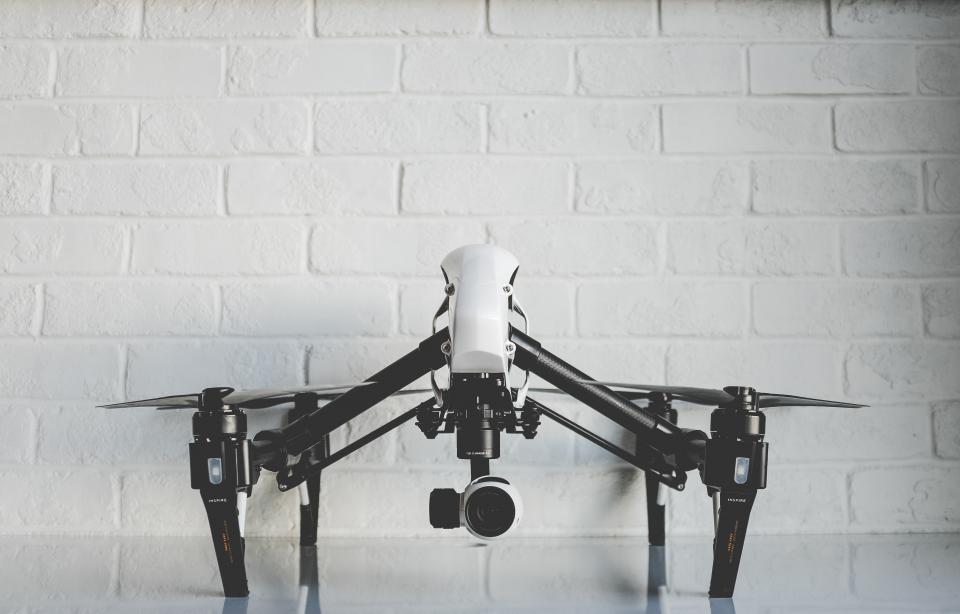
Quick Verdict: The best camera drone for most buyers in 2026 is the DJI Mini 4 Pro — it packs a 1/1.3-inch sensor, 4K/100fps, and omnidirectional obstacle avoidance into a 249-gram frame that avoids FAA registration. Professionals should look at the DJI Mavic 4 Pro, whose Hasselblad 4/3-inch sensor, triple-camera system, and 51-minute flight time set a new benchmark for aerial imaging. For a capable camera drone without DJI’s geofencing, the Potensic Atom 2 (~$299) delivers a Sony 1/2-inch sensor and 3-axis gimbal at a strong value.
Best Camera Drones at a Glance (2026)
| Award | Drone | Sensor | Max Video | Flight Time | Price Tier |
|---|---|---|---|---|---|
| Best Overall | DJI Mini 4 Pro | 1/1.3-inch | 4K/100fps | ~34 min | ~$759 |
| Best Pro | DJI Mavic 4 Pro | 4/3-inch Hasselblad | 6K/60fps | ~51 min | ~$2,199 |
| Best Mid-Range | DJI Air 3S | 1-inch (main) | 4K/120fps | ~46 min | ~$1,099 |
| Best Budget Camera | DJI Flip | 1/1.3-inch | 4K/60fps | ~31 min | ~$439 |
| Best Non-DJI | Autel EVO Lite+ | 1-inch CMOS | 5.4K/30fps | ~40 min | ~$799 |
| Best Value | Potensic Atom 2 | 1/2-inch Sony | 4K/30fps | ~38 min | ~$299 |
How We Picked the Best Camera Drones
Camera drone performance is determined by more than just the resolution number on the box. We evaluated each model based on sensor size and dynamic range, gimbal stability and axis count, video codecs and color profiles (flat/log footage for post-processing), obstacle avoidance quality, and real-world flight time from independent testing. Sources include The Drone Girl, DroneDJ, TechRadar, Engadget, Digital Camera World, and Space.com. No placement fees are accepted — picks are based entirely on how each model performs against its price tier.
Best Overall Camera Drone — DJI Mini 4 Pro
Best for: Enthusiasts, travelers, and content creators who want professional camera performance in a legally lightweight, highly portable package.
The DJI Mini 4 Pro is the consensus best camera drone for most buyers. Weighing 249 grams, it clears the FAA registration threshold while offering camera specs that were only available on heavier, more expensive drones a generation ago. The 1/1.3-inch sensor captures 4K video at up to 100fps and 48MP stills; its APAS 5.0 obstacle avoidance system is the only omnidirectional system available in any sub-250g drone. ActiveTrack 360 enables autonomous subject tracking, and the 34-minute rated flight time is competitive with significantly heavier competitors. The D-Log M color profile provides latitude for color grading in post-production. It folds to roughly smartphone size and supports DJI RC 2 (with built-in screen) or the standard RC-N1 controller.
Pros:
- Only sub-249g drone with omnidirectional obstacle avoidance (APAS 5.0)
- 4K/100fps and D-Log M for serious video work
- 48MP stills from a 1/1.3-inch sensor — meaningful quality in good light
- 34-minute rated flight time; pocketable folding design
Cons:
- ~$759 is a real investment for casual flyers
- Standard kit controller (RC-N1) requires your phone for a display
Best Pro Camera Drone — DJI Mavic 4 Pro
Best for: Working photographers, videographers, real estate professionals, and serious enthusiasts who require the best aerial imaging available.
The DJI Mavic 4 Pro is the most capable consumer drone DJI has made. Its main camera uses a 4/3-inch Hasselblad CMOS sensor with a variable aperture (f/2.0–f/11), capturing 100MP stills and 6K/60fps HDR video with up to 15.5 stops of dynamic range in D-Log M. A triple-camera system covers 28mm, 70mm, and 168mm equivalent focal lengths — giving it a versatility that previously required carrying multiple lenses. The Infinity Gimbal tilts 70 degrees upward and rotates 360 degrees. Flight time is rated at 51 minutes, and the O4+ transmission system offers 30km of range. Omnidirectional obstacle avoidance and APAS 5.0 are standard. The ~$2,199 starting price is steep, but the Mavic 4 Pro delivers results that rival dedicated mirrorless camera setups for aerial work.
Pros:
- Hasselblad 4/3-inch sensor: 100MP, f/2.0–f/11, 15.5 stops dynamic range
- Triple-camera system: 28mm, 70mm, 168mm — full zoom range coverage
- 51-minute flight time and 30km O4+ transmission range
- Infinity Gimbal: 70° upward tilt and 360° rotation for creative angles
Cons:
- ~$2,199 starting price — requires a professional or serious enthusiast justification
- Heavier than sub-250g alternatives; requires FAA registration
Best Mid-Range Camera Drone — DJI Air 3S
Best for: Photographers and videographers who want a 1-inch sensor and dual-camera versatility at under $1,100.
The DJI Air 3S bridges the gap between the Mini 4 Pro and Mavic 4 Pro. Its main camera uses a 1-inch, 50MP sensor capable of 4K/120fps, providing markedly better low-light performance than any 1/1.3-inch alternative. A secondary 1/1.3-inch 48MP telecamera at the equivalent of 70mm adds compositional flexibility without swapping drones. Omnidirectional obstacle avoidance, ActiveTrack 4.0 for subject following, and a rated 46-minute flight time round out a compelling mid-range package. At ~$1,099, it is the best camera drone for photographers who have outgrown the Mini 4 Pro but cannot justify the Mavic 4 Pro’s professional price.
Pros:
- 1-inch main sensor with 4K/120fps — strong low-light and slow-motion performance
- Dual-camera (wide + 70mm tele) for compositional range
- 46-minute rated flight time — among the longest in its class
- Omnidirectional obstacle avoidance and ActiveTrack 4.0
Cons:
- ~$1,099 puts it at the top of the mid-range budget
- Heavier than sub-250g options; requires FAA registration
Best Budget Camera Drone — DJI Flip
Best for: Budget-conscious buyers and solo content creators who want the best camera quality under $500.
The DJI Flip punches well above its ~$439 price by sharing its 1/1.3-inch Quad Bayer sensor with the much more expensive Mini 4 Pro. It records 4K/60fps, supports D-Log M for color grading, and adds integrated propeller guards that make palm launch and close-proximity flying genuinely safe. Controller-free AI subject tracking is built in. The trade-offs are forward and backward obstacle avoidance only (no omnidirectional), and slightly more bulk than the blade-only alternatives. For vloggers, solo travelers, and first serious camera drone buyers, the Flip represents outstanding value.
Pros:
- Same 1/1.3-inch sensor as the Mini 4 Pro at $320 less
- 4K/60fps with D-Log M color profile
- Prop guards + palm launch = safe for indoor and close-quarters flying
- AI subject tracking without needing a controller
Cons:
- Forward + backward obstacle avoidance only — not omnidirectional
- Prop guards add slight bulk to the folded form factor
Best Non-DJI Camera Drone — Autel EVO Lite+
Best for: Photographers who want DJI-grade aerial imaging without DJI’s geofencing system or supply chain concerns.
The Autel EVO Lite+ is the most credible DJI alternative for serious camera work. Its 1-inch CMOS sensor captures 5.4K video at 30fps and 50MP stills, with variable aperture (f/2.8–f/11) and adjustable ISO up to 6400. A 3-axis gimbal provides smooth stabilization, and obstacle sensing covers forward, backward, and upward directions. Rated flight time is 40 minutes. At around $799, it sits close to the DJI Air 3S but offers the choice of operating outside DJI’s ecosystem — no DJI app, no FlySafe geofencing database, and no dependency on DJI’s servers.
Pros:
- 1-inch sensor, 5.4K/30fps, variable aperture f/2.8–f/11
- 40-minute flight time with solid obstacle sensing
- No DJI geofencing — more operational freedom in certain locations
- Strong build quality and competitive image quality versus similarly priced DJI models
Cons:
- Autel’s app and ecosystem are less polished than DJI’s
- Slightly heavier and larger than comparable DJI models
Best Value Camera Drone — Potensic Atom 2
Best for: Budget-conscious buyers who want a Sony sensor and 3-axis gimbal without DJI’s price premium or geofencing.
The Potensic Atom 2 at ~$299 offers the strongest non-DJI value proposition in 2026. Its 1/2-inch Sony sensor captures 4K video with HDR, supported by a 3-axis mechanical gimbal for smooth stabilization. It includes built-in Remote ID compliance, no geofencing, and approximately 38 minutes of rated flight time. AI tracking is available through the companion app. It is not as polished as DJI’s equivalent — the app experience and transmission reliability trail the DJI Mini 4K — but for photographers who prioritize sensor quality per dollar and want to operate without DJI’s restrictions, the Atom 2 is the best option at its price.
Pros:
- 1/2-inch Sony sensor with 4K HDR — larger sensor than DJI Mini 4K at similar price
- 3-axis mechanical gimbal and ~38 minutes flight time
- Built-in Remote ID; no DJI geofencing restrictions
- ~$299 for a three-battery Fly More combo delivers excellent value
Cons:
- App and flight controller polish trail DJI at this price point
- Transmission range and reliability less competitive than DJI O3/O4 systems
Camera Drone Buying Guide
Sensor Size: The Single Most Important Spec
Sensor size determines how much light the camera gathers, which directly affects dynamic range, low-light performance, and image noise. From smallest to largest among common drone sensors: 1/2.3-inch (basic), 1/2-inch (Potensic Atom 2), 1/1.3-inch (DJI Flip, Mini 4 Pro), 1-inch (Air 3S, Autel EVO Lite+), 4/3-inch (DJI Mavic 4 Pro). A larger sensor is almost always better for image quality.
Stabilization: 3-Axis Gimbal vs. EIS
A 3-axis mechanical gimbal physically counteracts movement and delivers smooth video even in moderate wind. Electronic Image Stabilization (EIS) crops the frame digitally — it works in calm conditions but degrades quality and loses resolution. All the recommended drones above use mechanical gimbals. Avoid any camera drone that lists only EIS at prices above $150.
Video Codec and Color Profile
For serious work, look for drones that offer a flat or log color profile (D-Log M on DJI, L-Log on Autel) — these preserve more dynamic range and give editors greater control in post-production. H.265 compression is generally preferred over H.264 for its better quality at the same bitrate.
Frequently Asked Questions
What is the best camera drone for beginners in 2026?
The DJI Flip (~$439) is the best beginner camera drone — it shares a top-tier sensor with the Mini 4 Pro, adds prop guards for crash safety, and includes controller-free AI tracking. If budget is the constraint, the DJI Mini 4K (~$299) is the best entry-level camera drone with a mechanical gimbal.
Is a more expensive drone always a better camera drone?
Not automatically. The DJI Flip (~$439) and the DJI Mini 4 Pro (~$759) share the same sensor size — the price difference pays for omnidirectional obstacle avoidance, not camera quality. The biggest quality jumps come when moving from 1/2.3-inch to 1/1.3-inch, and again from 1/1.3-inch to 1-inch sensors.
Can I use camera drone footage commercially?
In the US, commercial drone use (any work done for compensation) requires a Part 107 Remote Pilot Certificate from the FAA, regardless of drone weight or video quality. Recreational flying under TRUST is not sufficient for commercial work.
What file format do camera drones use?
Most camera drones record video in MP4 (H.264 or H.265) and capture still images in JPEG and RAW (DNG format). Always enable RAW capture if you plan to edit photos seriously — the DNG files preserve far more detail than compressed JPEGs.
For the complete overview of every drone category, visit our Best Drones (2026) pillar guide.