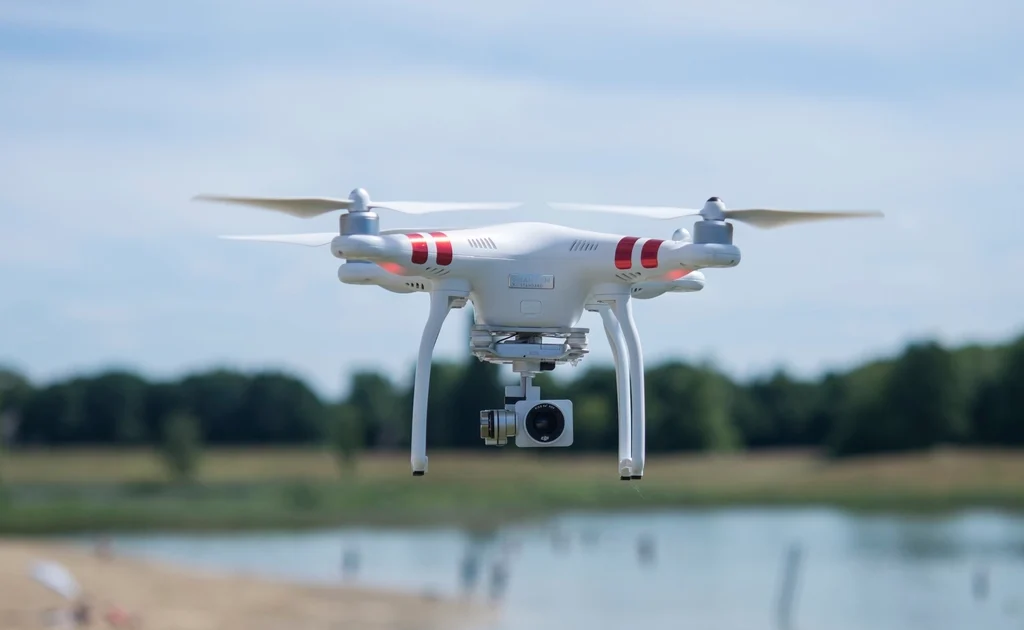
Quick Verdict: Every drone in this guide records genuine 4K video, but “4K” on a $69 toy and “4K” on a $1,099 DJI Air 3S are not comparable in actual quality. The best 4K drone overall is the DJI Mini 4 Pro (~$759) for its 1/1.3-inch sensor and 4K/100fps within the sub-250g class. For professional 4K and above, the DJI Mavic 4 Pro records 6K/60fps with a Hasselblad sensor. The best budget 4K drone is the DJI Flip (~$439), which records 4K/60fps with D-Log M from the same 1/1.3-inch sensor as the Mini 4 Pro.
Best 4K Drones at a Glance (2026)
| Award | Drone | Sensor | 4K Spec | Log Profile | Price |
|---|---|---|---|---|---|
| Best 4K Overall | DJI Mini 4 Pro | 1/1.3-inch | 4K/100fps | D-Log M | ~$759 |
| Best 4K (Pro) | DJI Mavic 4 Pro | 4/3-inch Hasselblad | 4K/120fps (6K/60fps) | D-Log M | ~$2,199 |
| Best 4K Under $500 | DJI Flip | 1/1.3-inch | 4K/60fps | D-Log M | ~$439 |
| Best 4K Under $300 | DJI Mini 4K | 1/2.3-inch | 4K/30fps | Normal only | ~$299 |
| Best 4K (Non-DJI) | Potensic Atom 2 | 1/2-inch Sony | 4K/30fps HDR | Normal only | ~$299 |
| Best 4K Mid-Range | DJI Air 3S | 1-inch (main) | 4K/120fps | D-Log M | ~$1,099 |
What “4K” Actually Means — And Why It Matters
4K resolution means 3840×2160 pixels — four times the pixel count of 1080p HD video. That resolution number, however, tells you very little about actual video quality. A $69 toy drone can record 4K via a tiny sensor compressed to your phone over Wi-Fi and produce flat, noisy footage. A DJI Mini 4 Pro records genuine 4K at 100fps with a 1/1.3-inch sensor, 3-axis gimbal stabilization, and D-Log M color profile. The frame rate (30fps vs. 60fps vs. 100fps), the sensor size, the stabilization type, and whether a flat/log color profile is available are all more important than the 4K label itself.
How We Picked the Best 4K Drones
We evaluated each drone specifically on the quality of its 4K output — sensor size (the primary image quality driver), frame rate ceiling (higher frame rates enable slow-motion), color profile support (flat/log for editing latitude), stabilization type (mechanical gimbal vs. EIS), and video bitrate. Sources include DroneGator, TechRadar, Digital Camera World, CineD, Space.com, and manufacturer specifications.
Best 4K Drone Overall — DJI Mini 4 Pro
Best for: Enthusiasts and content creators who want the best real-world 4K quality in a sub-250g drone that avoids FAA registration.
The DJI Mini 4 Pro records 4K at up to 100fps — a frame rate that enables genuine 4x slow-motion playback from native 4K footage (not upscaled). Its 1/1.3-inch sensor provides the dynamic range and low-light capability to make that resolution count in real shooting conditions. D-Log M color profile preserves maximum data for post-production color grading. A 3-axis mechanical gimbal eliminates vibration from the footage. 249 grams means no FAA registration and no registration overhead internationally. The combination of resolution ceiling, frame rate flexibility, sensor quality, and regulatory simplicity makes the Mini 4 Pro the best 4K drone for most buyers in 2026.
Pros:
- 4K/100fps — the highest 4K frame rate in the sub-250g class
- 1/1.3-inch sensor: strong dynamic range and low-light performance
- D-Log M for professional color grading latitude
- 249g, no FAA registration; omnidirectional obstacle avoidance
Cons:
- ~$759 — the highest price before the Air 3S and Mavic 4 Pro tier
- Fixed aperture limits exposure control in bright conditions vs. variable-aperture drones
Best 4K Pro Drone — DJI Mavic 4 Pro
Best for: Video professionals and filmmakers who need the best available 4K quality (and beyond, at 6K/60fps) from a consumer drone.
The DJI Mavic 4 Pro sets the ceiling for consumer drone video quality. Its Hasselblad 4/3-inch main sensor captures 4K/120fps for ultra-smooth slow-motion — or 6K/60fps when resolution is the priority. D-Log M preserves 15.5 stops of dynamic range for maximum post-production control. The triple-camera system (28mm, 70mm, 168mm) covers every compositional need from sweeping wide shots to compressed telephoto. The Infinity Gimbal supports 70-degree upward tilt. Bitrate and color depth are professional grade. At ~$2,199, the Mavic 4 Pro is for working filmmakers, not casual videographers, but nothing in the consumer space competes with its output quality.
Pros:
- 4K/120fps and 6K/60fps — class-leading resolution and frame rate combination
- 15.5 stops dynamic range in D-Log M; Hasselblad color science
- Triple-camera: 28mm, 70mm, 168mm for full compositional flexibility
- 51-minute flight time; 30km O4+ range
Cons:
- ~$2,199 starting price — professional investment required
- Heavier than sub-250g options; FAA registration required
Best 4K Drone Under $500 — DJI Flip
Best for: Buyers who want the best 4K quality available under $500 without compromising on sensor size or color profile support.
The DJI Flip delivers 4K/60fps with D-Log M from a 1/1.3-inch Quad Bayer sensor — identical camera hardware to the $759 Mini 4 Pro. The $320 price gap buys the Mini 4 Pro’s omnidirectional obstacle avoidance and the higher 100fps frame rate ceiling. For buyers who are not planning complex obstacle-heavy flying, the Flip’s 4K/60fps with D-Log M is the best camera quality per dollar available under $500 in 2026. Integrated prop guards and palm launch add safety and convenience. H.264 and H.265 encoding at up to 100Mbps bitrate.
Pros:
- Same 1/1.3-inch sensor as the Mini 4 Pro — no camera quality compromise
- 4K/60fps with D-Log M — professional color grading capable
- ~$439 — $320 less than the Mini 4 Pro for near-identical video output
- Prop guards for safe indoor and close-quarters shooting
Cons:
- 4K ceiling is 60fps, not 100fps like the Mini 4 Pro
- Forward + backward obstacle avoidance only
Best 4K Drone Under $300 — DJI Mini 4K
Best for: Buyers who want DJI-quality 4K video at the lowest possible price, accepting the smaller sensor and no obstacle avoidance.
The DJI Mini 4K records 4K/30fps through a 3-axis mechanical gimbal from a 1/2.3-inch sensor at ~$299. It does not support a log color profile — footage is recorded in standard color with less editing latitude — but it is smooth, stable, and vastly better than toy-class “4K.” The 10km O3 transmission range is exceptional at this price. For buyers whose primary need is smooth 4K footage for social media and personal use at the lowest reliable price, the Mini 4K delivers. The absence of log profile support means it is less suitable for serious video editing workflows than the Flip or Mini 4 Pro.
Pros:
- ~$299 — the most affordable DJI with mechanical gimbal 4K
- 10km transmission; 31-minute flight time; 249g no-registration
- DJI Fly app with QuickShots and tutorials
Cons:
- No log color profile — limited post-production editing latitude
- 4K/30fps maximum; no slow-motion 4K option
Best 4K Mid-Range — DJI Air 3S
Best for: Buyers who want 4K/120fps slow-motion and a 1-inch sensor under $1,100.
The DJI Air 3S records 4K at up to 120fps with a 1-inch main sensor — the combination of frame rate and sensor quality that professional videographers rely on for slow-motion work. The 1-inch sensor’s wider dynamic range compared to 1/1.3-inch alternatives makes a visible difference in challenging lighting, especially in the high-contrast situations common in outdoor video. The secondary telecamera at 70mm adds compositional range without sacrificing the 1-inch quality on the primary camera. D-Log M, omnidirectional obstacle avoidance, and a 46-minute flight time round out the package.
Pros:
- 4K/120fps with a 1-inch sensor — best slow-motion quality in its class
- Dual-camera system: 1-inch wide + 1/1.3-inch 70mm tele
- 46-minute flight time; omnidirectional obstacle avoidance
Cons:
- ~$1,099 — the highest price in this guide short of the Mavic 4 Pro
- Requires FAA registration; heavier than sub-250g options
Best 4K (Non-DJI) — Potensic Atom 2
Best for: Buyers who want 4K HDR video with a Sony sensor outside the DJI ecosystem at under $300.
The Potensic Atom 2 records 4K HDR video through a 1/2-inch Sony sensor with a 3-axis mechanical gimbal — and at ~$299 its sensor is larger than the DJI Mini 4K’s 1/2.3-inch chip. HDR capture preserves more highlight and shadow detail than standard video, providing useful latitude even without a dedicated log profile. The built-in Remote ID, no geofencing, and strong Fly More bundle value are consistent advantages over DJI at this price point.
Pros:
- 1/2-inch Sony sensor — larger than DJI Mini 4K at the same price
- 4K HDR for highlight/shadow retention
- No DJI geofencing; built-in Remote ID
Cons:
- App and transmission system less polished than DJI
- No dedicated log color profile
4K Drone Buying Guide
The 4K Quality Ladder in 2026
In ascending order of real-world 4K quality among current drones: Potensic Atom 2 (4K HDR, 1/2-inch Sony, no log) → DJI Mini 4K (4K/30fps, 1/2.3-inch, no log) → DJI Flip (4K/60fps, 1/1.3-inch, D-Log M) → DJI Mini 4 Pro (4K/100fps, 1/1.3-inch, D-Log M) → DJI Air 3S (4K/120fps, 1-inch, D-Log M) → DJI Mavic 4 Pro (4K/120fps + 6K/60fps, 4/3-inch Hasselblad, D-Log M).
Frame Rate and Slow Motion
To get 4x slow motion in your final 24fps or 25fps edit, you need 4K/100fps or 4K/120fps capture. The Mini 4 Pro (4K/100fps), Air 3S (4K/120fps), and Mavic 4 Pro (4K/120fps) all support this. The Flip maxes out at 4K/60fps — 2.4x slow motion at 25fps.
Frequently Asked Questions
Is 4K really necessary for a drone?
4K provides more flexibility in post-production — you can reframe, crop, and stabilize footage without losing quality at 1080p delivery. For YouTube, social media, and professional delivery, 4K source footage is the current standard. If you are only shooting for personal use and sharing casually, 1080p from a Ryze Tello is adequate.
What is the best 4K drone for YouTube?
The DJI Flip (~$439) is the best 4K drone for YouTube at its price — its 1/1.3-inch sensor and D-Log M profile produce color-graded footage that looks cinematic on screen, and its AI tracking and palm launch simplify solo production. For larger channels with budgets, the DJI Air 3S is the professional-grade step up.
Does 4K drone footage require a powerful computer to edit?
4K H.265 footage is more demanding than H.264 or 1080p and requires a reasonably modern computer with GPU-accelerated decoding. DaVinci Resolve and Adobe Premiere Pro handle DJI 4K footage well on a computer with a dedicated GPU from the last 4–5 years. Proxy workflows are available for older systems.
For the complete overview of all drone categories, visit our Best Drones (2026) pillar guide.