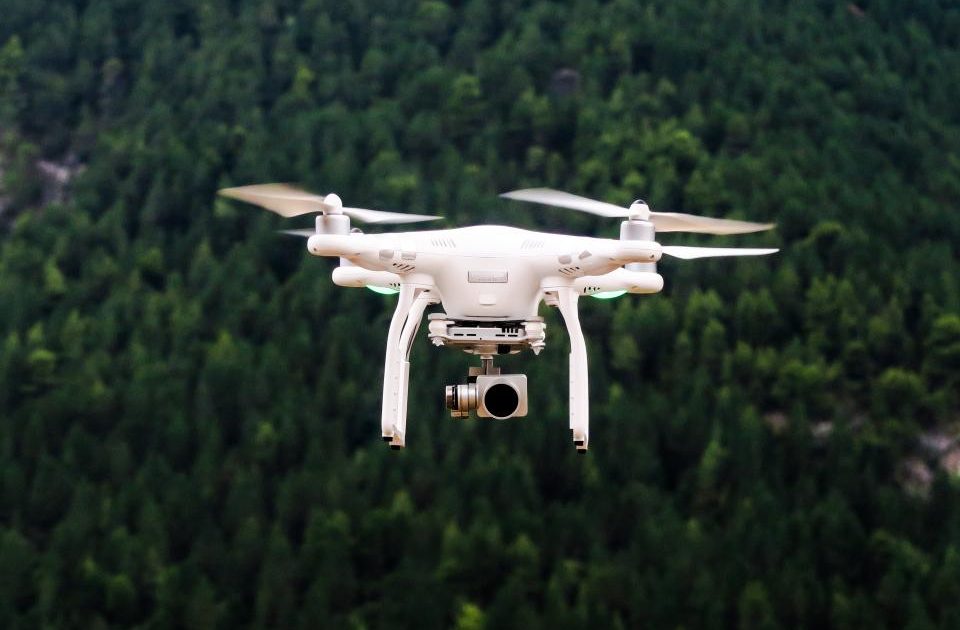
Quick Verdict: The best drone for photography in 2026 is the DJI Mavic 4 Pro — its Hasselblad 4/3-inch sensor with variable aperture, 100MP stills, triple-camera system, and 51-minute flight time is the most capable aerial photography platform available to consumers. For photographers who cannot justify the ~$2,199 price, the DJI Air 3S (~$1,099) with its 1-inch, 50MP main sensor is the best mid-range photography drone. Travelers who need sub-250g should look at the DJI Mini 4 Pro or the new DJI Mini 5 Pro (1-inch sensor in 249g).
Best Drones for Photography at a Glance (2026)
| Award | Drone | Sensor | Max Stills | Aperture | Price |
|---|---|---|---|---|---|
| Best Pro Photography | DJI Mavic 4 Pro | 4/3-inch Hasselblad | 100MP | f/2.0–f/11 | ~$2,199 |
| Best Mid-Range Photography | DJI Air 3S | 1-inch (main) | 50MP | f/1.7 (fixed) | ~$1,099 |
| Best Sub-250g Pro | DJI Mini 5 Pro | 1-inch CMOS | 50MP | Variable | ~$999+ |
| Best Value Photography | DJI Mini 4 Pro | 1/1.3-inch | 48MP | f/1.7 (fixed) | ~$759 |
| Best Non-DJI Photography | Autel EVO Lite+ | 1-inch CMOS | 50MP | f/2.8–f/11 | ~$799 |
How We Picked the Best Photography Drones
Aerial photography is distinct from casual drone videography. Still image quality is driven by sensor size, megapixel count, dynamic range, RAW file support, and the quality of the lens aperture system. We evaluated each pick on these criteria specifically — not just video specs — and drew from sources including DroneGator, Digital Camera World, CineD, DJI’s technical documentation, and photography-specific independent reviews. Price accuracy is approximate; always verify current pricing before purchasing.
Best Pro Photography Drone — DJI Mavic 4 Pro
Best for: Professional and semi-professional photographers who need the best aerial image quality available — real estate, landscape, architecture, and event work.
The DJI Mavic 4 Pro is the most capable photography drone DJI has made. Its main camera uses a Hasselblad 4/3-inch CMOS sensor — the largest available in any consumer drone — with variable aperture (f/2.0–f/11) that provides genuine depth-of-field control, not just exposure flexibility. It captures 100MP stills in RAW (DNG) format with 15.5 stops of dynamic range. The triple-camera system covers 28mm, 70mm, and 168mm equivalent focal lengths, giving photographers compositional range that was previously impossible from a single airborne platform. The Infinity Gimbal tilts 70 degrees upward for architectural shots looking up at buildings. Flight time is rated at 51 minutes — the longest available in a prosumer foldable. O4+ transmission extends range to 30km. Everything about this drone is built for working photographers.
Pros:
- Hasselblad 4/3-inch sensor: 100MP RAW, variable aperture f/2.0–f/11
- 15.5 stops dynamic range in D-Log M — professional editing latitude
- Triple-camera: 28mm, 70mm, 168mm — full focal length coverage from one drone
- 51-minute flight time; Infinity Gimbal with 70° upward tilt
Cons:
- ~$2,199 starting price — requires professional-level justification
- Heavier than sub-250g; FAA registration required
Best Mid-Range Photography Drone — DJI Air 3S
Best for: Serious photographers who want a 1-inch sensor and 50MP stills at under $1,100 with a second telecamera included.
The DJI Air 3S at ~$1,099 bridges the gap between the Mini 4 Pro and Mavic 4 Pro. Its main camera uses a 1-inch, 50MP sensor with an f/1.7 fixed aperture — the wider aperture than the Autel EVO Lite+’s variable system means better absolute low-light performance in most shooting situations. It also includes a secondary 1/1.3-inch 48MP telecamera at 70mm equivalent, providing compositional range without swapping drones. 4K/120fps is available for slow-motion video. Omnidirectional obstacle avoidance (APAS 5.0), ActiveTrack 4.0 for subject following, and a rated 46-minute flight time complete a strong package. For photographers who have outgrown 1/1.3-inch sensors but cannot justify the Mavic 4 Pro, the Air 3S is the right choice.
Pros:
- 1-inch, 50MP main sensor with f/1.7 — strong low-light and detail performance
- Dual-camera: 1-inch wide + 1/1.3-inch 70mm tele for compositional range
- Omnidirectional obstacle avoidance; 46-minute rated flight time
- 4K/120fps slow-motion and RAW photo support
Cons:
- ~$1,099 is at the top of the mid-range budget
- Fixed aperture; no variable depth-of-field control vs. Mavic 4 Pro
Best Sub-250g Photography Drone — DJI Mini 5 Pro
Best for: Professional travel photographers who need a 1-inch sensor in a sub-250g, no-registration package.
The DJI Mini 5 Pro is technically remarkable: a 1-inch CMOS sensor producing 50MP stills in a sub-250g body that avoids FAA registration. This sensor size previously required crossing into 300–500g drone territory, bringing registration requirements and stricter travel restrictions. LiDAR obstacle avoidance provides precise sensing in challenging conditions. Flight time is rated at up to 36 minutes. At approximately $999 and above, it is priced at the professional tier — but for travel photographers who need this specific combination of sensor quality and regulatory lightness, no other drone delivers it.
Pros:
- 1-inch CMOS sensor in sub-250g — category-defining specification
- 50MP RAW; professional color profile support
- No FAA registration for recreational use; lighter travel regulations globally
- LiDAR obstacle avoidance for precision sensing
Cons:
- ~$999+ — approaching mid-range price at a mini weight
- Newer platform; ecosystem still developing
Best Value Photography Drone — DJI Mini 4 Pro (~$759)
Best for: Enthusiasts and part-time professional photographers who want excellent aerial stills in a sub-249g package at a lower price than the Air 3S or Mavic 4 Pro.
The DJI Mini 4 Pro punches above its weight for photography work. Its 1/1.3-inch sensor captures 48MP RAW stills with support for D-Log M color profiles — more than adequate for professional editing workflows in good light. Omnidirectional obstacle avoidance (unique in the sub-250g class) enables confident flying in complex environments where the best compositions are often found. The 34-minute rated flight time and 249g weight combine portability with serious capability. For photographers primarily shooting landscapes, real estate exteriors, and travel subjects in daylight, the Mini 4 Pro’s image quality is routinely indistinguishable from more expensive drones in published work.
Pros:
- 48MP RAW with D-Log M — professional editing workflow capable
- Omnidirectional obstacle avoidance — confidence in complex environments
- 249g, no FAA registration; 34-minute flight time
- ~$459 less than the Air 3S for real-world photography work
Cons:
- 1/1.3-inch sensor limits low-light and high-DR performance versus 1-inch alternatives
- Fixed aperture — no depth-of-field control
Best Non-DJI Photography Drone — Autel EVO Lite+
Best for: Photographers who want a 1-inch sensor with variable aperture outside the DJI ecosystem, without DJI’s geofencing restrictions.
The Autel EVO Lite+ offers a 1-inch CMOS sensor capable of 50MP stills and 5.4K/30fps video with a variable aperture (f/2.8–f/11). Variable aperture is photographically valuable — it enables real depth-of-field manipulation and exposure control without relying purely on ND filters. Rated flight time is 40 minutes. Autel’s L-Log color profile is comparable to DJI’s D-Log M for post-production latitude. The absence of DJI geofencing means operation in some locations where DJI drones would be restricted by the FlySafe database. The app and ecosystem trail DJI’s polish, but for photographers who value operational freedom and a comparable sensor in a non-DJI package, the EVO Lite+ is the leading choice.
Pros:
- 1-inch CMOS sensor, 50MP, variable aperture f/2.8–f/11 for depth-of-field control
- 5.4K/30fps video with L-Log color profile
- 40-minute flight time; no DJI geofencing
Cons:
- App and transmission system less polished than DJI equivalent
- Heavier than DJI Mini options; requires FAA registration
Photography Drone Buying Guide
RAW vs. JPEG for Aerial Photography
RAW files (DNG format on DJI and Autel drones) preserve full sensor data and provide substantial editing latitude — especially for recovering highlights and shadows. JPEG files are processed in-camera and are suitable for quick sharing but less flexible for serious editing. Always enable RAW capture if you plan to edit aerial photos seriously. All five recommended drones above support RAW.
Variable vs. Fixed Aperture
Variable aperture drones (DJI Mavic 4 Pro, Autel EVO Lite+) allow photographers to control depth of field and use shutter speed more flexibly without relying entirely on ND filters for exposure control. Fixed-aperture drones (DJI Air 3S, Mini 4 Pro) require ND filters for proper exposure in bright conditions. For serious photography work, variable aperture is a meaningful advantage.
Sensor Size Hierarchy for Photography
From smallest to largest in this guide: 1/1.3-inch (Mini 4 Pro) → 1-inch (Air 3S main, Autel EVO Lite+, Mini 5 Pro) → 4/3-inch (Mavic 4 Pro). Each step up in sensor size delivers substantially better dynamic range, low-light performance, and editing latitude. For professional photography clients, the 1-inch threshold is the practical minimum; the 4/3-inch Hasselblad is best-in-class.
Frequently Asked Questions
What is the best drone for real estate photography in 2026?
The DJI Air 3S is the most practical choice for real estate photography — its 1-inch sensor delivers excellent quality in the varied lighting of exterior real estate shoots, and dual-camera flexibility handles both wide establishing shots and tighter detail shots. Budget-focused real estate photographers can achieve professional-quality results with the DJI Mini 4 Pro.
Do I need a Part 107 license for drone photography work?
Yes. In the US, any photography done in exchange for compensation — including real estate, events, and commercial video — requires a Part 107 Remote Pilot Certificate regardless of drone weight or camera quality. Recreational flying rules do not cover commercial work.
What ND filters should I buy for drone photography?
ND filters reduce incoming light to allow proper shutter speed (ideally 2x the frame rate for natural motion blur). A standard set of ND4, ND8, ND16, and ND64 covers most daylight shooting scenarios. DJI sells filter sets specific to each drone model, and third-party options from Freewell and PolarPro are widely used.
For the complete overview of all drone categories, visit our Best Drones (2026) pillar guide.