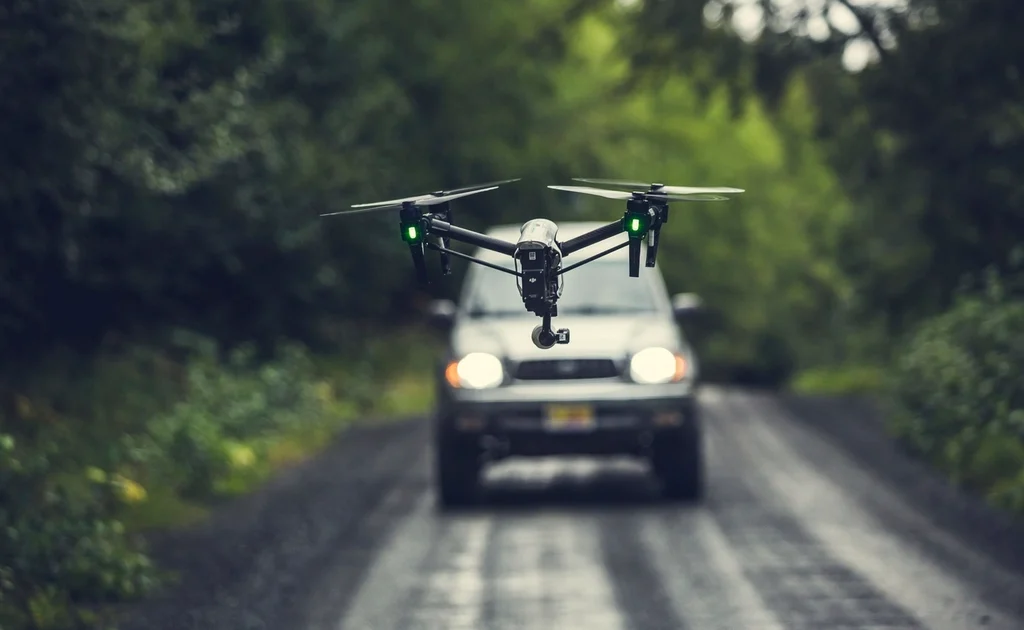
Quick Verdict: The best drone for beginners in 2026 is the DJI Neo ($199) — it launches from your palm, weighs just 135 grams, needs no prior flying experience, and captures stabilized 4K video. For those who want a conventional controller experience with a larger sensor, the DJI Flip (~$439) adds prop guards and AI tracking to a class-leading 1/1.3-inch camera. On a tight budget, the Holy Stone HS900 and Potensic Atom 2 (~$299) are strong non-DJI alternatives that develop real piloting skills.
Best Beginner Drones at a Glance (2026)
| Award | Drone | Camera | Weight | Flight Time | Price |
|---|---|---|---|---|---|
| Best Overall Beginner | DJI Neo | 4K stabilized | 135g | ~18 min | ~$199 |
| Best Beginner Camera Drone | DJI Flip | 4K/60fps | 249g | ~31 min | ~$439 |
| Best Value Beginner | Potensic Atom 2 | 4K HDR | 249g | ~38 min | ~$299 |
| Best Budget Beginner | DJI Mini 4K | 4K | 249g | ~31 min | ~$299 |
| Best Non-GPS Beginner | Holy Stone HS900 | 4K | ~250g | ~23 min | ~$149 |
| Best Toy-Class | Ryze Tello | 720p | 80g | ~13 min | ~$99 |
How We Chose These Beginner Drones
For beginners, the most important factors are not camera specs — they are ease of learning, crash tolerance, GPS stability, and quality of automated safety features. We evaluated each drone on how quickly a new pilot can get airborne safely, how forgiving it is during inevitable early mistakes, and how much it teaches real flying skills versus purely automated assist. Sources include Space.com, The Drone Girl, BeginnerDrones.com, DroneDJ, and TechRadar.
Best Overall Beginner Drone — DJI Neo
Best for: Complete beginners who want to start flying immediately with no setup, no FAA registration, and no previous experience required.
The DJI Neo is the most accessible entry into real drone flight in 2026. At 135 grams, it is exempt from FAA registration and many local restrictions. It launches directly from your open palm — no runway, no launch pad. Automated flight modes (Spotlight, ActiveTrack, Circle, Boomerang, Rocket, Dronie) handle the complex flying while you focus on framing. The camera uses a half-inch stabilized sensor for 4K video. There is no obstacle avoidance, so open flying areas are recommended, but the featherlight weight means even crashes are generally harmless. DJI’s Fly app is beginner-friendly with tutorials and a simulator built in. At $199, it is the lowest-cost entry into the DJI ecosystem with a genuinely capable camera.
Pros:
- Launches from palm — zero setup time, instant beginner gratification
- 135g, no FAA registration, few local restrictions
- Full suite of automated cinematic modes — beginners get professional-looking shots immediately
- $199 — lowest DJI price with stabilized 4K camera
Cons:
- No obstacle avoidance — must fly in open areas
- Half-inch sensor struggles in low light; not the right tool for serious photography
Best Beginner Camera Drone — DJI Flip
Best for: Beginners who want proper camera quality and the safety of prop guards but are not ready for the Mini 4 Pro price.
The DJI Flip is the beginner’s camera drone that serious photographers actually want to use long-term. Its integrated propeller guards make it resistant to minor collisions — an important feature while still learning spatial awareness. It shares the same 1/1.3-inch Quad Bayer sensor as the DJI Mini 4 Pro, records 4K/60fps, and supports D-Log M for post-production color work. The controller-free AI tracking mode lets beginners film themselves without needing to fly manually. GPS provides solid position hold and return-to-home. The 249-gram weight avoids FAA registration. This is a beginner drone that beginners will not outgrow quickly.
Pros:
- Integrated prop guards protect the drone (and people nearby) during learning crashes
- Same sensor as the Mini 4 Pro — does not limit camera growth
- GPS position hold and return-to-home — standard safety net for beginners
- 4K/60fps + D-Log M for those who want to edit footage seriously
Cons:
- ~$439 is a meaningful first-drone investment
- Forward + backward obstacle avoidance only, not omnidirectional
Best Value Beginner Drone — Potensic Atom 2
Best for: Beginners who want a serious camera and mechanical gimbal without DJI’s price premium or geofencing system.
The Potensic Atom 2 is frequently cited as the best non-DJI drone under $300. Its 1/2-inch Sony sensor is larger than the DJI Mini 4K’s 1/2.3-inch chip, and its 3-axis gimbal delivers smooth stabilized footage. Built-in Remote ID compliance satisfies FAA requirements. AI tracking via the Potensic app handles subject following. Rated flight time is approximately 38 minutes — more than the DJI Mini 4K and DJI Flip. No geofencing means more operational freedom. The app and controller experience are less polished than DJI’s, and beginners will notice the slightly steeper learning curve compared to DJI Fly, but the hardware value is genuine.
Pros:
- 1/2-inch Sony sensor — larger than DJI Mini 4K at a similar price
- ~38 min flight time; solid 3-axis gimbal stabilization
- No DJI geofencing; built-in Remote ID
- ~$299 with strong Fly More bundle value
Cons:
- App and ecosystem less polished than DJI Fly
- Transmission range less competitive than DJI O3/O4
Best Budget Beginner Drone with Camera — DJI Mini 4K
Best for: Beginners who want DJI reliability, 4K video, and sub-250g portability at the lowest DJI price point.
The DJI Mini 4K at ~$299 is the most affordable DJI drone with a 3-axis mechanical gimbal and 4K video. It weighs 249 grams (no FAA registration), uses a 1/2.3-inch sensor, and offers 31 minutes of rated flight time. The 10km video transmission range is exceptional at this price. DJI’s Fly app provides an excellent learning environment with tutorials, flight simulator access, and streamlined automated modes. No obstacle avoidance is the key limitation — beginners must fly in open areas and build spatial awareness carefully. For those committed to learning proper drone piloting, the Mini 4K teaches real skills while delivering footage good enough to share professionally.
Pros:
- ~$299 — lowest price for a DJI 3-axis gimbal with 4K camera
- 249g, no FAA registration; exceptional DJI app experience
- 31-minute flight time; 10km transmission range
- GPS position hold and return-to-home for safe beginner learning
Cons:
- No obstacle avoidance of any kind — requires careful open-area flying
- 1/2.3-inch sensor is the smallest in the DJI lineup; limited in low light
Best Budget Non-GPS Beginner — Holy Stone HS900
Best for: Beginners on a tight budget who want a camera drone with basic GPS features and an accessible learning curve.
The Holy Stone HS900 is consistently cited as a strong beginner choice in the $130–$160 price range. It captures 4K video via a stabilized camera, includes GPS-assisted position hold, return-to-home, and follow-me mode. Three flight modes (slow, medium, fast) let beginners start with maximally gentle controls and graduate upward. Holy Stone’s app is simpler than DJI Fly and easier for absolute beginners to navigate. Build quality is solid for the price, and the active HS900 user community means plenty of beginner troubleshooting resources are available online.
Pros:
- ~$149 — serious GPS features at a budget price
- GPS position hold, RTH, follow-me mode for beginner confidence
- Three-speed mode system lets new pilots start very slowly
- Active community and strong documentation for beginners
Cons:
- Camera quality well below DJI Mini 4K despite similar “4K” label
- Transmission and GPS accuracy trail DJI at the same price tier
Best Toy-Class Beginner — Ryze Tello
Best for: Beginners (including kids and teens) who want stable indoor flight with a camera at the absolute minimum price.
The Ryze Tello is a toy-class drone with DJI engineering underneath: its flight controller is developed by DJI, and the stability difference versus other sub-$100 drones is obvious from the first hover. At 80 grams with enclosed propellers, it is very safe for indoor use. It captures 720p video, supports Scratch-based block programming for STEM education, and features altitude hold plus one-key takeoff and landing. Rated flight time is 13 minutes — modest, but the low price makes buying a second battery trivial. No GPS means wind outdoors is a problem, but indoors it is the most stable sub-$100 drone available.
Pros:
- DJI-designed flight controller — class-leading indoor stability at any price
- 80g, prop guards, very safe for indoor learning
- Scratch programming support makes it excellent for STEM education
- ~$99 — the most value you can get at the budget ceiling
Cons:
- 720p only; not suitable for serious video
- No GPS; drifts significantly in outdoor wind
Beginner Drone Buying Guide
What Should a First Drone Have?
For a first drone, prioritize: GPS (for position hold and return-to-home), altitude hold (barometric or GPS-assisted hovering), a simple app (DJI Fly is the gold standard), and ideally prop guards for crash tolerance. Camera quality matters less than flight stability for the learning phase — a wobbly 4K shot is worse than a smooth 720p one.
How Long Does It Take to Learn to Fly a Drone?
Most beginners are comfortable flying a GPS-stabilized drone in an open area within one to three sessions. Obstacle-free parks and athletic fields are ideal. Obstacle avoidance (available on the DJI Flip, Mini 4 Pro, and above) significantly speeds up the learning process by providing a safety net against simple spatial errors.
Do Beginners Need to Register Their Drone?
In the US: drones under 250g flown for recreation do not need FAA registration (though the TRUST test is required for all recreational pilots). The DJI Neo, Flip, Mini 4K, and Mini 4 Pro are all 249g and avoid the registration requirement. Drones 250g and over require registration regardless of skill level.
Frequently Asked Questions
What is the easiest drone to fly for beginners in 2026?
The DJI Neo is the easiest drone to fly — it launches from your palm, requires no controller, and its automated modes handle complex maneuvers. The DJI Flip is the easiest conventional (controller-operated) beginner drone, thanks to integrated prop guards and AI tracking.
Should beginners buy a cheap toy drone or a real drone?
For pure flight skill-building, the Ryze Tello (~$99) is a better teacher than most toy drones because of its DJI-designed stability. However, beginners who want camera footage from day one will get dramatically better results from the DJI Mini 4K or DJI Neo, even at a higher initial cost.
How far can a beginner drone fly?
Most beginner GPS drones have a transmission range of 1–4km. The DJI Mini 4K reaches 10km. However, visual line of sight (VLOS) is legally required for recreational pilots in most countries — meaning you should never fly beyond the point where you can clearly see the drone with your naked eyes, regardless of transmission range.
For the complete overview of all drone categories, visit our Best Drones (2026) pillar guide.