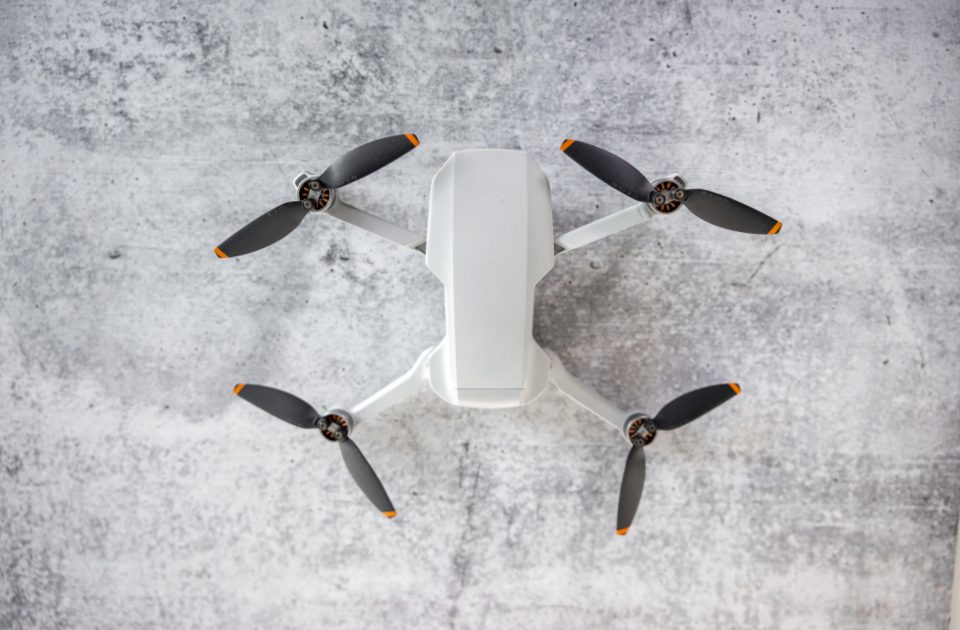
Quick Verdict: The best drone under $500 in 2026 is the DJI Flip (~$439), which delivers the same 1/1.3-inch sensor as the $759 Mini 4 Pro plus integrated prop guards and AI tracking — all in a 249-gram package. For buyers who want to spend closer to $300, the DJI Mini 4K (~$299) and Potensic Atom 2 (~$299) offer the best camera quality per dollar, with the Atom 2 winning on sensor size and the Mini 4K on DJI ecosystem polish. The DJI Neo ($199) is the pick for anyone who prioritizes simplicity over camera spec.
Best Drones Under $500 at a Glance (2026)
| Award | Drone | Sensor | Max Video | Flight Time | Price |
|---|---|---|---|---|---|
| Best Under $500 | DJI Flip | 1/1.3-inch | 4K/60fps | ~31 min | ~$439 |
| Best Under $300 (DJI) | DJI Mini 4K | 1/2.3-inch | 4K | ~31 min | ~$299 |
| Best Under $300 (Non-DJI) | Potensic Atom 2 | 1/2-inch Sony | 4K HDR | ~38 min | ~$299 |
| Best Under $200 | DJI Neo | 1/2-inch | 4K | ~18 min | ~$199 |
| Best Budget Non-DJI | Holy Stone HS900 | 1/3-inch | 4K | ~23 min | ~$149 |
How We Picked the Best Drones Under $500
The under-$500 drone market is where most buyers live — and where the competition is most intense. We evaluated each model on sensor size (the primary camera quality driver), gimbal type (mechanical vs. EIS), GPS and obstacle avoidance quality, actual transmission range, and the total value of Fly More bundles. Sources include DroneGuru, DroneXL, Space.com, TechRadar, and The Drone Girl. Price tiers are approximate; always check Amazon for current pricing.
Best Under $500 Overall — DJI Flip (~$439)
Best for: Buyers who want near-top-tier camera quality, prop guard safety, and AI tracking — and can spend up to $439.
The DJI Flip is the most impressive value proposition under $500 in 2026. Its 1/1.3-inch Quad Bayer sensor is the same hardware found in the $759 DJI Mini 4 Pro, delivering 4K/60fps video with D-Log M support for color grading. Integrated propeller guards protect the rotors and make palm launch safe. The AI subject tracking mode works without a controller — useful for solo content creators. GPS provides position hold, return-to-home, and AirSense. At 249 grams, FAA registration is not required for recreational use. Forward and backward obstacle avoidance are included; the absence of omnidirectional sensing (available only on the Mini 4 Pro at $320 more) is the main practical difference between the two drones.
Pros:
- Same 1/1.3-inch sensor as the $759 Mini 4 Pro — no camera compromise
- Prop guards + palm launch enable safe close-quarters and indoor flying
- Controller-free AI subject tracking for solo filmmakers
- 249g, no FAA registration; folds to pocketable size
Cons:
- F+B obstacle avoidance only — not omnidirectional like the Mini 4 Pro
- ~$439 is near the top of this price bracket
Best Under $300 — DJI Mini 4K (~$299)
Best for: Buyers who want the DJI ecosystem, pocketable portability, and reliable 4K video at the lowest DJI price.
The DJI Mini 4K is the best-value DJI drone in 2026 for buyers at the $300 mark. A 3-axis mechanical gimbal delivers smooth, stabilized 4K video from a 1/2.3-inch sensor. GPS enables position hold, automatic return-to-home, and AirSense for aircraft awareness. The 10km video transmission range is genuinely exceptional at this price — many drones at 2–3x the cost offer less range. DJI’s Fly app provides a polished beginner experience with tutorials, automated modes (QuickShots), and firmware updates. The 31-minute rated flight time and sub-250g weight add up to a well-rounded package. The main limitations are no obstacle avoidance and the smaller sensor — both expected at this price.
Pros:
- ~$299 — lowest DJI price with a mechanical 3-axis gimbal
- 10km transmission range — extraordinary for the price tier
- 249g, no FAA registration; DJI QuickShots automated modes
- 31-minute rated flight time
Cons:
- No obstacle avoidance — must fly carefully in open areas
- 1/2.3-inch sensor noticeably lags behind the Atom 2 and Flip in low light
Best Under $300 (Non-DJI) — Potensic Atom 2 (~$299)
Best for: Buyers who want a larger sensor than the DJI Mini 4K offers at the same price, or who prefer operating without DJI’s geofencing system.
The Potensic Atom 2 is the strongest DJI alternative under $300. Its 1/2-inch Sony sensor is meaningfully larger than the DJI Mini 4K’s 1/2.3-inch chip, producing better low-light performance and improved dynamic range. The 3-axis gimbal delivers smooth video, HDR is supported, and approximately 38 minutes of rated flight time is a notable advantage. Built-in Remote ID satisfies FAA requirements without DJI’s geofencing restrictions. AI tracking is available via the Potensic app. The trade-offs are a less polished app experience and shorter transmission range than DJI’s O3 system, but for pure hardware value per dollar the Atom 2 is hard to beat.
Pros:
- 1/2-inch Sony sensor — larger than DJI Mini 4K’s 1/2.3-inch at the same price
- ~38 min flight time; 3-axis gimbal with HDR support
- No DJI geofencing; built-in Remote ID
- Strong Fly More bundle value (~$277 for three batteries)
Cons:
- App and transmission system less polished than DJI Fly
- Smaller brand ecosystem — fewer accessories and third-party support
Best Under $200 — DJI Neo (~$199)
Best for: Buyers who want the simplest, most approachable flying experience at the lowest DJI price.
The DJI Neo is a palm-launch selfie drone that weighs just 135 grams and needs no controller to operate. Its 4K camera uses a stabilized half-inch sensor and a suite of automated cinematic modes handle the flying while you focus on content. At $199, it sits comfortably under the $200 mark and delivers a genuine DJI-quality experience. Extras like a joystick controller and DJI Goggles can be added later if you want to grow into more active flying. The limitations — half-inch sensor, no obstacle avoidance, ~18 minutes of battery life — reflect the price. For its cost and simplicity, no other drone comes close.
Pros:
- $199 — the lowest-cost DJI experience with a stabilized 4K camera
- Palm launch, no controller required, instant usability
- 135g — the lightest serious camera drone available
- Modular: optional controller and goggles available for growth
Cons:
- No obstacle avoidance; requires open flying areas
- ~18 min flight time is short for extended sessions
Best Budget Pick — Holy Stone HS900 (~$149)
Best for: Budget-conscious buyers who want GPS features and a camera drone under $150, accepting non-DJI build quality.
The Holy Stone HS900 is one of the most recommended non-DJI GPS drones in the sub-$200 range. It includes GPS position hold, return-to-home, and follow-me mode — features typically found at higher price points. The 4K camera is stabilized, and three flight speed modes make it accessible for beginners. Holy Stone has a strong support community and active firmware updates. Camera quality and transmission reliability are below DJI’s standards at any comparable price, but for buyers committed to spending under $150 on a GPS drone, the HS900 represents the best combination of features and reliability available.
Pros:
- ~$149 — GPS, return-to-home, follow-me at a budget price
- 3-speed mode system ideal for first-time pilots
- Active Holy Stone community with strong beginner support
Cons:
- Camera quality well below DJI Mini 4K despite “4K” label
- Shorter transmission range and less precise GPS than DJI models
Under-$500 Drone Buying Guide
The Real Camera Quality Ladder Under $500
In ascending order of real-world camera quality under $500: Holy Stone HS900 (basic 4K) → DJI Neo (stabilized 4K, half-inch sensor) → DJI Mini 4K (3-axis gimbal, 1/2.3-inch) → Potensic Atom 2 (3-axis gimbal, 1/2-inch Sony) → DJI Flip (3-axis gimbal, 1/1.3-inch). Sensor size and gimbal type are the two biggest quality drivers — not raw resolution.
Fly More Combos: Always Worth It
Extra batteries are the single best upgrade for any drone. One battery gives you roughly 18–31 minutes of flight per session. A Fly More combo with two or three batteries triples your session time and often saves $30–$60 versus buying batteries individually. Always check Fly More pricing when evaluating total drone cost.
What Does $500 Actually Buy?
At ~$500 (DJI Flip), you get a 1/1.3-inch sensor with 4K/60fps, D-Log M color grading, prop guards, AI tracking, and GPS. Stepping up to ~$760 (DJI Mini 4 Pro) adds omnidirectional obstacle avoidance — the main practical difference. Everything below $500 involves some trade-off in sensor size, obstacle avoidance, or transmission quality.
Frequently Asked Questions
Is the DJI Flip worth the extra cost over the DJI Mini 4K?
Yes, if you value safety and camera quality. The Flip’s sensor is roughly 40% larger than the Mini 4K’s (1/1.3-inch vs. 1/2.3-inch), and the integrated prop guards make it substantially safer for close-quarters flying. If portability and DJI ecosystem are the only priorities and camera quality is secondary, the Mini 4K saves $140.
What is the best drone under $500 for travel?
The DJI Flip or DJI Mini 4K — both weigh 249g (no FAA registration), both fold to pocket size, and both carry powerful cameras. The Flip wins on camera quality; the Mini 4K wins on price and simplicity.
Can a drone under $500 take professional-quality footage?
Yes. The DJI Flip’s 1/1.3-inch sensor with D-Log M produces footage that professional editors work with routinely. Real estate photographers, travel vloggers, and documentary filmmakers regularly use $300–$500 drones for paid work. The limiting factor is usually pilot skill, not camera hardware.
For the complete overview of all drone categories, visit our Best Drones (2026) pillar guide.