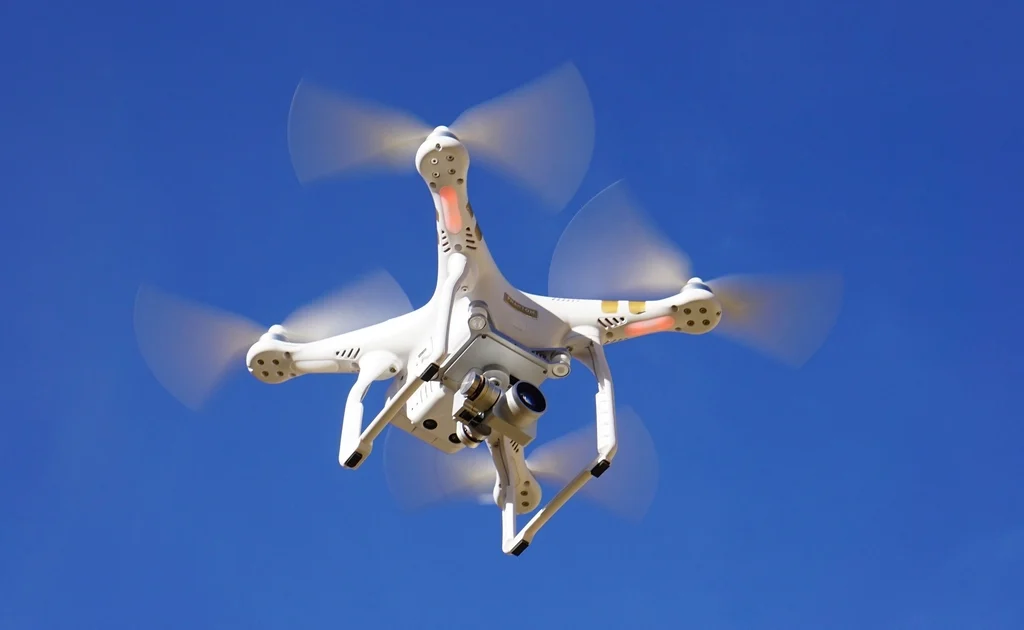
Quick Verdict: The Holy Stone HS720G is the most complete entry-level GPS drone under $300. It pairs 4K EIS video recording with a 2-axis gimbal, GPS-based return-to-home, brushless motors, Follow Me tracking, and approximately 26 minutes of flight per battery — a specification sheet that would have cost $500 or more just a few years ago. Image quality is limited compared to mid-range DJI competitors, and the 2-axis gimbal with software stabilization for yaw movement means footage has visible limitations in certain maneuvers, but for beginners learning to fly and casual outdoor photographers who cannot justify a $700+ DJI investment, the HS720G represents genuine value. It consistently earns “best drone under $300” recognition from budget-focused reviewers.
| Spec | Detail |
|---|---|
| Weight | ~460 g |
| Camera | 4K EIS (3840×2160) |
| Gimbal | 2-axis (pitch and roll) + EIS for yaw |
| Max Flight Time | ~26 min per battery; 52 min with 2-battery bundle |
| Motors | Brushless |
| GPS Features | GPS Auto Return, Follow Me, Waypoints, Orbit Mode |
| Control Range | Up to ~999 meters |
| Build | High-grade ABS plastic, foldable arms |
| Obstacle Sensing | None |
| Price (approx.) | Under $300 (frequently on sale; bundle with extra battery and carry case common) |
Background and Context
Holy Stone is a Chinese consumer drone brand that has built its reputation by consistently undercutting the entry-level DJI price point while including GPS features — return-to-home, Follow Me, Waypoints — that beginner pilots genuinely need for safe, recoverable flights. The HS720G is their upper tier of the consumer budget segment, adding a 2-axis gimbal and brushless motors to differentiate it from lower-end models. This review is based on published Holy Stone specifications and analysis from DroneNomad, MyPrimeThings, and ByteBuys.
Camera and Stabilization
The HS720G captures 4K video at 3840×2160 — the resolution number is accurate, though the sensor behind it is considerably smaller and lower-quality than the 1/1.3-inch or one-inch sensors in DJI’s mid-range lineup. In good daylight with stable flight, footage is clean and usable for family memories, travel documentation, and casual social media posts. In lower light, color noise becomes visible and dynamic range is limited — bright skies with foreground detail will often clip or block up in high-contrast scenes.
The 2-axis gimbal stabilizes pitch (up/down tilt) and roll (side tilt), which handles the most common sources of aerial camera shake. Yaw (horizontal rotation) is handled by software-based EIS. The result is footage that holds up well during slow, controlled maneuvers but shows stabilization limitations during fast pans and aggressive turns. Reviewers consistently note that slow, smooth flying habits extract the best footage from this drone — a reasonable expectation for its price tier.
GPS Features and Safety
The GPS system is the HS720G’s strongest practical differentiator over cheaper non-GPS alternatives. Return-to-Home automatically brings the drone back to its launch point if signal is lost, battery drops critically low, or the pilot activates it manually — a genuine safety net for beginner pilots who may misjudge battery levels or fly into a low-signal area. Follow Me mode tracks the controller’s GPS position and keeps the drone framed on the pilot; Waypoints allows pre-programmed flight paths; Orbit Mode (Point of Interest) circles a designated point automatically.
These modes work at the level expected for a budget GPS drone: functional and reliable in open outdoor environments, less precise in complex environments or when GPS signal quality degrades. None of them approach the AI-based, camera-recognition tracking of DJI’s ActiveTrack system, but they serve the beginner use case effectively.
Build Quality and Battery Life
At 460 grams, the HS720G is heavier than the DJI Mini 4 Pro and Neo 2, but well within the portable foldable drone category. The high-grade ABS plastic construction feels solid relative to its price; it is not as premium as DJI’s magnesium alloy and polycarbonate finish, but it is not flimsy. Foldable arms make it compact for transport. The brushless motors are a meaningful upgrade over the brushed motors used in cheaper models — quieter, more efficient, and significantly more durable over time.
Twenty-six minutes per battery is solid for the budget tier. The dual-battery bundle (commonly listed at Walmart and Amazon) extends effective session time to around 52 minutes — better than the DJI Neo 2’s 19 minutes per battery, and competitive with the Mini 4 Pro’s 34-minute standard battery. Charging time is not the fastest at this price point; plan for about 90–120 minutes per battery recharge.
Who It’s For
Best for: True beginners buying their first GPS drone; families who want a capable outdoor recreational drone without a major financial commitment; anyone who needs GPS return-to-home as a safety feature on a tight budget; casual travel photographers who want aerial shots without the DJI price premium.
Skip it if: Image quality is a primary criterion — the sensor is not in the same tier as DJI’s 1/1.3-inch or one-inch cameras; obstacle sensing is a safety requirement — the HS720G has none; you plan to upgrade within a year or two and would prefer to invest once in a mid-range platform.
Strengths and Limitations
Strengths:
- GPS Return-to-Home — the most important safety feature for beginners, reliably implemented
- Under $300 price point — significantly more affordable than any DJI with comparable GPS features
- 26 minutes per battery; dual-battery bundle extends to ~52 minutes total session time
- Brushless motors — quieter, more efficient, and more durable than brushed motor alternatives
- Follow Me, Waypoints, and Orbit Mode cover most beginner intelligent flight use cases
- Foldable compact design with carry case commonly included in bundles
- 4K EIS video — adequate quality for casual content in good daylight conditions
Limitations:
- No obstacle avoidance — requires careful manual piloting to avoid collisions
- 2-axis gimbal with software yaw stabilization — footage shows limitations in fast maneuvers
- Sensor quality significantly below DJI’s mid-range cameras — limited low-light performance and dynamic range
- Control range approximately 999 meters — considerably less than DJI’s 10–20 km O4 transmission
- No D-Log or advanced color profiles for post-production flexibility
- Less sophisticated intelligent tracking than DJI’s camera-recognition-based ActiveTrack
- Holy Stone’s software ecosystem and app experience is less polished than DJI Fly
Alternatives Worth Considering
DJI Mini 4 Pro — The Right Upgrade Path
When budget allows, the DJI Mini 4 Pro ($759+) is the correct next step from the HS720G. It offers a 1/1.3-inch sensor with f/1.7 aperture, omnidirectional obstacle sensing, 34–45 minutes flight time, 20 km range, and DJI’s mature ActiveTrack 360° intelligent tracking. The image quality gap between the HS720G and Mini 4 Pro is immediately visible. If the budget ceiling is $300, the HS720G makes sense; if stretching to $700+ is possible, the Mini 4 Pro is a significantly better long-term investment.
DJI Neo 2 — Lighter Budget Alternative
At approximately $200, the DJI Neo 2 is less expensive than the HS720G, and its image quality (DJI-processed 4K with a two-axis gimbal) is generally better. However, the Neo 2 has no GPS, no return-to-home, shorter flight time (19 minutes), and a much more limited control range for remote operation. For beginners who value GPS safety features, the HS720G’s GPS system is a meaningful advantage over the Neo 2.
Frequently Asked Questions
Does the Holy Stone HS720G require FAA registration?
At approximately 460 grams, the HS720G exceeds the 250-gram recreational registration threshold. US recreational pilots must register with the FAA ($5 fee, valid three years) and display the registration number on the drone. The registration process is simple and does not restrict where you can fly — it only requires registration and compliance with airspace rules. Commercial use requires a Part 107 Remote Pilot Certificate.
Is the HS720G suitable as a first drone for a child or teenager?
The HS720G is designed as an adult beginner drone rather than a toy. It flies at speeds that require focused attention and has no obstacle avoidance — it will collide with trees, walls, and other obstacles if the pilot is not attentive. For children under 14, a smaller, slower toy drone in the $50–$100 range with built-in altitude hold (not GPS) is a safer learning environment. For teenagers who are mature enough to fly outdoors responsibly with supervision, the HS720G is a capable step-up option.
How accurate is the 4K camera on the HS720G?
The HS720G captures video at 3840×2160 resolution, which qualifies as 4K. However, not all 4K cameras are equal — the HS720G uses a smaller, lower-cost sensor than cameras found in DJI’s mid-range drones. In bright outdoor daylight, the footage is clean and detailed. In overcast conditions or shade, color noise increases and fine detail becomes less defined. If you have seen DJI Mini 4 Pro footage side-by-side with HS720G footage, the difference is noticeable. The HS720G’s 4K is appropriate for the $300 price point; it is not comparable to DJI’s sensor quality at higher price tiers.
What is the difference between Follow Me and ActiveTrack on DJI drones?
The HS720G’s Follow Me mode uses GPS tracking — it follows the GPS position of the remote controller, not a visual subject. This works reliably in open outdoor environments but cannot distinguish between the controller and an object nearby, cannot anticipate movement, and loses tracking if the controller GPS signal degrades. DJI’s ActiveTrack uses camera-based visual recognition — the drone identifies a specific subject visually, locks on, and maintains frame through directional changes and temporary obstructions. For active sports, cycling, or complex movement, DJI’s ActiveTrack is markedly superior. For simple hiking and walking Follow Me use, GPS-based tracking is functional.
Can the HS720G fly in wind?
Holy Stone rates the HS720G at Level 5 wind resistance (approximately 8–10 m/s). In practice, brushless motors and GPS-assisted hover give it meaningful wind resistance for a budget drone. In moderate winds (under 20 mph), it holds position reliably. In gusts or stronger sustained wind, stability degrades noticeably. Like all consumer drones in this class, fly in calm conditions for best results and avoid flying in conditions forecast above Beaufort scale 4.
Final Verdict
The Holy Stone HS720G earns its position as the leading budget GPS drone by delivering the features that beginner pilots need most — GPS return-to-home, Follow Me, brushless motors, and a genuine 2-axis gimbal — at a price below $300 that makes the entry barrier accessible. It is not a substitute for a DJI mini-series drone in terms of image quality, obstacle safety, or intelligent flight capability. But it is a capable, competently built first drone for recreational pilots who cannot yet commit to a $700+ investment, and it is noticeably better than cheaper non-GPS alternatives at its own price point. When the budget grows, the natural upgrade path leads to the DJI Mini 4 Pro.
Last updated: June 2026
See our main guide: Best Drones.