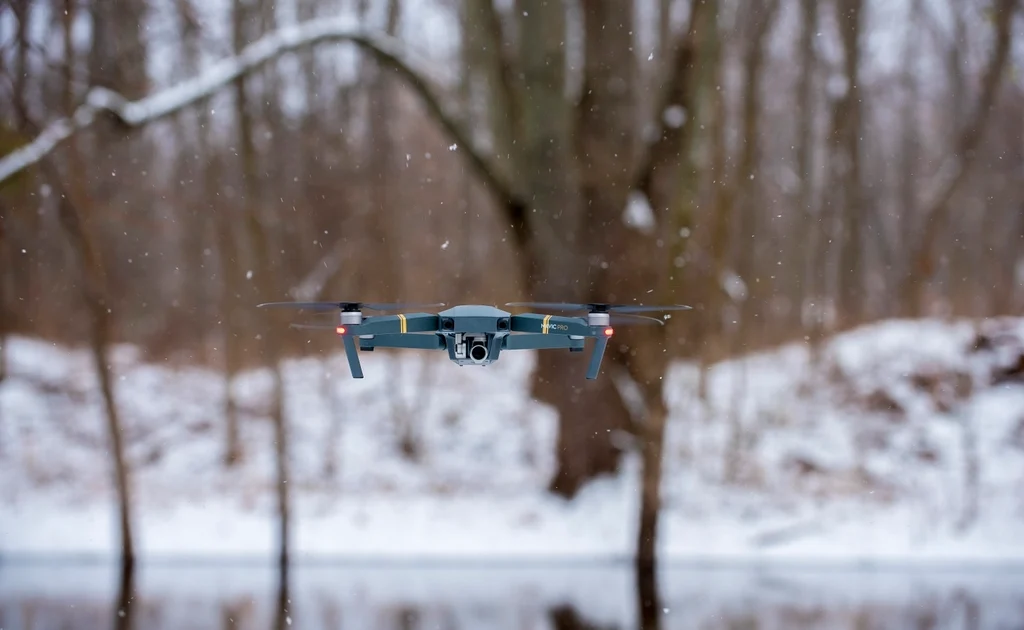
Quick Verdict: The Autel EVO Lite+ is the most capable sub-$1,200 non-DJI drone on the market, pairing a one-inch CMOS sensor, 6K video recording, adjustable aperture from f/1.1 to f/2.8, and a 40-minute flight time in an 835-gram foldable body. It is a compelling alternative for photographers who want one-inch sensor image quality outside the DJI ecosystem, or who are seeking a capable drone that has historically operated outside Chinese government data concerns. Note that Autel has discontinued the EVO Nano and Lite consumer lines; the EVO Lite+ may have limited new stock availability, and buyers should confirm availability through retailers before committing. As a platform still found at competitive prices, it remains worth evaluating.
| Spec | Detail |
|---|---|
| Weight | 835 g (with battery) |
| Sensor | 1-inch CMOS, 20MP |
| Aperture | f/1.1 – f/2.8 (adjustable) — widest available aperture in its class |
| Max Video | 6K/30fps; 4K/60fps; 2.7K/60fps |
| Stabilization | 3-axis gimbal + 4-axis stabilization system |
| Max Flight Time | 40 minutes |
| Transmission Range | Up to 7.4 miles (approximately 12 km) at 2.7K |
| Obstacle Sensing | Obstacle avoidance via ultra-wide angle sensors |
| Subject Tracking | Up to 64 simultaneous subjects |
| Max Speed | 18 m/s (65 km/h) in Ludicrous mode |
| Price (approx.) | $1,149 (Standard) – $1,399 (Premium) |
Background and Context
Autel Robotics is a US-based drone manufacturer that has positioned its products as DJI alternatives, particularly for buyers concerned about DJI’s Chinese ownership and data handling practices. The EVO Lite+ launched as a direct challenge to DJI’s Air series, offering a one-inch CMOS sensor, 6K video, and an unusually wide maximum aperture of f/1.1 — a specification that no DJI consumer drone has matched. Autel has since discontinued the consumer Lite and Nano lines, focusing on enterprise products, so the EVO Lite+ is best understood as a final-generation consumer flagship from Autel rather than an evolving platform. This review is based on published Autel specifications and analysis from TechRadar, GlobalDroneHQ, and SpecDB.
Camera: The One-Inch Sensor and f/1.1 Aperture
The EVO Lite+’s headline specification is its one-inch CMOS sensor — the same sensor size as the DJI Air 3S’s primary camera — combined with an adjustable aperture that opens to f/1.1. That f/1.1 maximum aperture is notably wider than the Air 3S’s f/1.8, which in theory allows for significantly more light gathering in low-light conditions and more pronounced background separation (bokeh effect) when the subject fills a substantial portion of the frame. In practice, aerial photography at very wide apertures is constrained by the need for fast shutter speeds to avoid motion blur from the drone’s movement, but the aperture flexibility from f/1.1 to f/2.8 gives the photographer more direct control than most consumer drones allow.
6K/30fps is the maximum video resolution — higher than the Air 3S’s 4K cap on the primary camera — though 6K footage requires significantly more storage and processing power in post-production. At 4K/60fps the EVO Lite+ sits at parity with many competitors. The 20MP still image resolution is adequate but below the 50MP available from the Air 3S’s primary sensor.
Flight Performance
Forty minutes of claimed flight time is competitive with the Air 3S (45 minutes claimed, 35–40 typical) and better than the Mini 4 Pro’s 34-minute standard battery. At 835 grams, the EVO Lite+ is heavier than either DJI competitor — a trade-off buyers should consider in terms of transport, wind resistance, and regulatory classification. Maximum speed of 18 m/s in Ludicrous mode and a 7.4-mile transmission range (at 2.7K video quality) round out a capable flight performance profile.
The obstacle avoidance system uses ultra-wide angle sensors and is functional, though expert reviewers have noted it is less refined in its avoidance behavior than DJI’s APAS system. Pilots should fly with appropriate caution in complex environments.
The Non-DJI Ecosystem Factor
For some buyers, the choice of Autel over DJI is driven by data privacy and security considerations. DJI’s drones have faced restrictions from certain government agencies and military units due to concerns about data transmission to Chinese servers. Autel Robotics is headquartered in the US and has not faced the same regulatory restrictions. For commercial operators working with government clients, law enforcement, or security-sensitive organizations, the EVO Lite+ has been a serious alternative. For recreational photographers, this factor is a personal decision rather than a technical one.
Availability Caveat
Autel has officially discontinued the consumer EVO Lite series. Stock may be found through authorized retailers, Amazon, and the official Autel store, but long-term platform support (firmware updates, accessories, battery availability) is not guaranteed at the same level as a current-production drone. Buyers should factor this into a purchase decision — the EVO Lite+ is excellent hardware at its current discounted pricing, but it is not a drone with an active development roadmap behind it.
Who It’s For
Best for: Photographers who specifically want a one-inch sensor outside the DJI ecosystem; commercial operators with data privacy requirements that favor non-DJI platforms; buyers who find the EVO Lite+ at a meaningful discount versus its original retail price and want strong image quality at a lower total cost; anyone who wants the widest possible aperture (f/1.1) in a consumer drone.
Skip it if: Long-term platform support and firmware updates are priorities; you want a current-generation drone with an active development roadmap; portability is essential (835 g is significantly heavier than DJI’s comparable options).
Strengths and Limitations
Strengths:
- One-inch CMOS sensor — matches the Air 3S’s primary camera sensor size at a competitive price
- f/1.1 maximum aperture — widest available in any consumer camera drone, excellent for low-light and creative bokeh
- 6K/30fps video recording — highest resolution in its class
- 40 minutes flight time — among the best in the mid-range segment
- US-based manufacturer — preferred by government, military, and security-sensitive commercial users
- 4-axis stabilization system for smooth footage in challenging conditions
- Strong tracking capability (up to 64 simultaneous subjects)
Limitations:
- Officially discontinued consumer line — limited long-term platform support
- 835 g weight — significantly heavier than DJI competitors in its price range
- No dual-camera system — single focal length only (vs. Air 3S’s wide + tele)
- Autel’s app and intelligent flight modes are less polished than DJI’s mature software ecosystem
- Transmission at maximum quality (2.7K) limited to 7.4 miles versus DJI’s 20 km at 1080p/60fps
- 20MP stills versus 50MP on the Air 3S primary sensor
- Battery and accessory availability may diminish as the platform ages
Alternatives Worth Considering
DJI Air 3S — The Current-Generation Competitor
The DJI Air 3S matches the EVO Lite+’s one-inch sensor, adds a second medium telephoto camera, LiDAR obstacle sensing, and has an active development roadmap from DJI. At $1,099, it is slightly priced above the EVO Lite+’s typical current selling price, but offers better long-term software support, a more mature intelligent flight ecosystem, and the dual-camera advantage. For most buyers choosing between the two, the Air 3S is the recommendation unless the non-DJI ecosystem is a hard requirement.
DJI Mini 4 Pro — Lighter, More Portable Alternative
At 249 grams and under $1,000, the Mini 4 Pro is substantially more portable and benefits from DJI’s full active software ecosystem. It uses a smaller 1/1.3-inch sensor, but offers omnidirectional obstacle sensing and a much more compact form factor. If portability matters more than maximum sensor size, the Mini 4 Pro is the more practical choice.
Frequently Asked Questions
Is the Autel EVO Lite+ still worth buying in 2026?
At its current pricing — often discounted from original retail as old stock sells through — the EVO Lite+ represents strong hardware value for its one-inch sensor and wide aperture range. The key consideration is platform longevity: Autel has discontinued the consumer line, so firmware updates, accessories, and batteries may become harder to source over time. If you plan to use the drone for two or three years and can find it at a meaningful discount, it remains a capable platform. For a new purchase at full retail, the DJI Air 3S is the better long-term investment.
How does the EVO Lite+ compare to DJI for data privacy?
Autel Robotics is headquartered in Bothell, Washington (US), and its drones have not faced the same federal purchasing restrictions that have been applied to DJI products for government and military use. For commercial operators working in sensitive contexts, this distinction has practical importance. Recreational users face no legal restriction on DJI use; the data privacy consideration is personal preference for that group.
What does the f/1.1 aperture actually mean in practice?
Aperture controls how much light enters the lens and affects depth of field. At f/1.1, the lens is extremely wide open, admitting maximum light — useful in low light — and creating a shallower depth of field that blurs backgrounds more aggressively. In aerial photography, the practical impact of f/1.1 versus f/1.7 (DJI Mini 4 Pro) or f/1.8 (Air 3S) is most noticeable at low altitudes where subjects are close to the drone, and in dusk/night light gathering. At high altitude over landscapes, depth of field differences are minimal regardless of aperture.
Does the EVO Lite+ have a return-to-home function?
Yes — the EVO Lite+ includes GPS-based return-to-home functionality. If the drone loses signal or battery reaches a low threshold, it will automatically navigate back to its recorded home point and land. This is standard on all GPS-equipped drones in this class.
Can I get replacement batteries for the EVO Lite+?
As of mid-2026, replacement batteries are still available through Autel’s official store and through third-party resellers. Given the platform’s discontinued status, buying a spare battery at time of purchase is a reasonable precaution — sourcing accessories may become progressively more difficult as inventory depletes.
Final Verdict
The Autel EVO Lite+ is a genuinely impressive drone on its hardware specifications — the f/1.1 aperture, one-inch sensor, and 6K capability represent a combination that DJI has not directly replicated at this price point. For buyers who need a non-DJI alternative, it remains the most capable consumer option available. The discontinued product status introduces real risk around long-term support that should factor into any purchase decision; buyers who can find the EVO Lite+ at a significant discount versus full retail get strong imaging hardware at good value. Those buying new should seriously consider the DJI Air 3S as a better-supported long-term investment at a comparable price.
Last updated: June 2026
See our main guide: Best Drones.