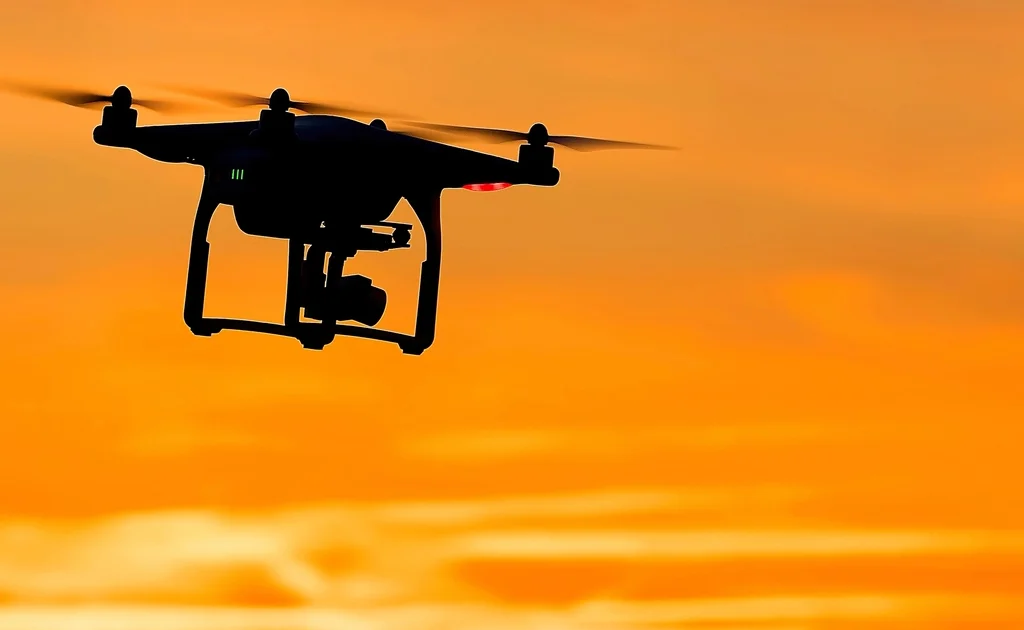
Quick Verdict: The DJI Neo 2 is the most beginner-accessible camera drone available in 2026. At approximately $200 and 151 grams, it fits in a palm, needs no phone or remote controller to fly (gesture control is built in), and shoots 4K/60fps video with a two-axis gimbal. It is not a replacement for the Mini 4 Pro — it lacks obstacle avoidance by default, its sensor is small, and 19 minutes of flight time is short — but as an introduction to aerial photography or a pocket-sized vlogging companion, it is a genuinely clever product at a price no competitor currently matches. Note: The original DJI Neo (135 g, 4K/30fps, $159) is also available as a more stripped-down alternative.
| Spec | DJI Neo 2 | Original DJI Neo |
|---|---|---|
| Weight | 151 g | 135 g |
| Camera | 12MP, 4K/60fps (100fps slow motion available) | 12MP, 4K/30fps |
| Gimbal | 2-axis | 1-axis (electronic stabilization) |
| Internal Storage | 49 GB | 22 GB |
| Battery / Flight Time | 1606 mAh / ~19 min | 1435 mAh / ~18 min |
| Transmission | O4 (with optional O4 transponder module) | O4 (onboard) |
| Obstacle Avoidance | Downward + forward (basic) | None |
| Gesture Control | Yes | Yes |
| Launch / Land | Palm launch / land | Palm launch / land |
| Price (approx.) | ~$200 (standalone) / ~$459 (Fly More Combo) | ~$159 |
Background and Context
DJI launched the original Neo in 2024 as its most stripped-down, lowest-barrier camera drone — a sub-$300 palm-sized flier designed for new users, vloggers, and anyone who found the Mini series too bulky or expensive. The Neo 2 followed in late 2025, launching globally (outside the US initially) and adding a two-axis gimbal, faster 4K/60fps, obstacle avoidance, and significantly more internal storage. As of mid-2026, the Neo 2 is DJI’s entry point for users who want a drone they can throw in a jacket pocket and fly immediately. This review is based on published DJI specifications and reporting from DroneDJ, The Drone Girl, and DroneXL.
What the DJI Neo 2 Does Well
The Neo 2’s defining characteristic is frictionlessness. There is no mandatory app pairing process, no controller assembly, no pre-flight ritual beyond pressing the power button: hold the drone in your palm, power it on, and it lifts off from your hand. Gesture control lets you trigger photos and videos by raising your hand in a specific pattern — useful for solo vlogging, selfie shots, and situations where pulling out a phone or controller would be awkward. The built-in 49 GB of internal storage means you can fly without any memory card at all.
The two-axis gimbal (upgraded from the original Neo’s electronic-only stabilization) makes a noticeable difference in footage smoothness, particularly in breezy conditions or during fast directional changes. 4K/60fps and 4K/100fps slow motion are legitimate additions that put the Neo 2’s video capabilities ahead of many drones in its price bracket. RockSteady electronic image stabilization supplements the physical gimbal for additional smoothing.
Camera Quality: Honest Assessment
The Neo 2 uses a 12MP sensor — smaller than the 1/1.3-inch CMOS found in the Mini 4 Pro, and meaningfully more limited in low-light performance and dynamic range. Footage in good daylight conditions is clean and usable for social media and vlogging; in overcast conditions or at dusk, noise becomes apparent and detail falls off. Color science is standard DJI — accurate and neutral in default profile. This is not a drone for serious aerial photography where image quality is the primary output; it is a drone for capturing experiences and creating casual content.
Flight Limitations
Approximately 19 minutes of flight time is the most significant operational constraint. In practice, accounting for takeoff, landing, and conservative battery management, typical sessions run 12–15 minutes before the battery needs swapping. The Fly More Combo with three batteries ($459) effectively triples usable session length at the cost of managing and charging multiple packs. The obstacle avoidance on the Neo 2 is basic — downward sensors for landing safety and forward sensors for basic collision awareness — not the full APAS omnidirectional system found on the Mini 4 Pro and Air 3S. Aggressive flying in complex environments is not this drone’s intended context.
Who It’s For
Best for: Absolute beginners taking their first steps in aerial photography; travel vloggers who want a pocket-sized drone that weighs under 200 grams; social media creators who need a quick, no-fuss aerial perspective; anyone who wants an ultra-portable “always-in-the-bag” drone as a complement to a more capable primary drone.
Skip it if: Image quality is a primary requirement (step up to the Mini 4 Pro); you need reliable obstacle avoidance in complex environments; you want more than 20 minutes of flight per battery; you plan to use it for professional or commercial work.
Strengths and Limitations
Strengths:
- 151 g — genuinely pocketable, ultra-portable, easy to carry everywhere
- No required controller or phone pairing — palm launch, gesture control, zero friction
- 49 GB internal storage — no memory card required
- 4K/60fps and 4K/100fps slow motion — competitive for the price
- Two-axis gimbal upgrade over original Neo delivers noticeably smoother footage
- ~$200 price point — lowest barrier to DJI-ecosystem aerial photography
- Optional O4 transponder module for extended range when needed
Limitations:
- ~19 minutes flight time per battery — short sessions limit practical usability
- Small sensor — noticeably lower image quality than the Mini 4 Pro in anything other than ideal daylight
- Basic obstacle avoidance only — not suitable for complex environments without careful piloting
- No adjustable aperture, no ND filter compatibility in standard configuration
- Fly More Combo raises total cost to ~$459 — approaching Mini 4 Pro territory
- Two-axis gimbal (not three-axis) — yaw movements still corrected electronically
Alternatives Worth Considering
DJI Mini 4 Pro — The Serious Step Up
At $759+, the Mini 4 Pro offers a 1/1.3-inch sensor, omnidirectional obstacle sensing, 34–45 minutes flight time, and a three-axis gimbal — all the areas where the Neo 2 is weakest. If image quality or flight safety are priorities, the Mini 4 Pro is worth the additional investment. The Neo 2 is a complement to the Mini 4 Pro for ultralight travel situations, not a replacement.
Original DJI Neo — Budget Entry Point
At $159, the original Neo saves $40 versus the Neo 2 with trade-offs: 4K/30fps only (no 60fps or slow motion), electronic-only stabilization instead of the two-axis gimbal, 22 GB versus 49 GB internal storage, and no obstacle sensing. For buyers whose primary use is casual selfie shots and simple vlog clips, the original Neo remains a functional choice at lower cost.
Holy Stone HS720G — Budget GPS Alternative
The Holy Stone HS720G (under $300) offers 4K EIS, GPS return-to-home, and 26 minutes of flight time in a foldable form factor. It is less elegant than the Neo 2 and requires controller use, but provides more flight time and GPS safety features at a similar price. A reasonable alternative for buyers who find the Neo 2’s 19-minute battery limiting.
Frequently Asked Questions
Do I need a phone or controller to fly the DJI Neo 2?
No — the Neo 2 can be flown entirely via gesture control with no phone or controller required. For more precise control and access to intelligent flight modes, DJI’s RC Motion 3 controller or the DJI Fly app on a smartphone are recommended. The Goggles N3 combo ($929 for the full Motion + Goggles set) enables an immersive FPV-style viewing experience. But the zero-controller operation is a genuine differentiator for casual use.
Is the DJI Neo 2 available in the US?
The Neo 2 launched in Asia in October 2025 and globally (excluding the US) in November 2025. US availability has been complicated by trade restrictions affecting DJI products. As of mid-2026, availability through authorized US resellers should be confirmed before purchase. The original DJI Neo remains more widely available in the US market. Check Amazon and DJI’s official US store for current availability.
What is the difference between the DJI Neo and Neo 2?
The Neo 2 adds a two-axis gimbal (versus electronic-only stabilization on the original), upgrades camera capability to 4K/60fps and 4K/100fps slow motion (versus 4K/30fps), adds basic obstacle avoidance (versus none), and more than doubles internal storage from 22 GB to 49 GB. The Neo 2 weighs 151 g versus 135 g for the original. For most users, the Neo 2’s improvements are worth the modest price premium.
Does the DJI Neo 2 need FAA registration?
At 151 grams, the Neo 2 falls below the 250-gram FAA recreational registration threshold in the US. Recreational flights are generally exempt from registration. However, rules around where you can fly (airspace restrictions, no-fly zones near airports and stadiums) apply regardless of drone weight. Always check the FAA’s B4UFLY app or Aloft before flying.
How is the DJI Neo 2’s footage quality for social media?
For Instagram Reels, TikTok, and YouTube Shorts in good daylight conditions, the Neo 2 produces clean, smooth 4K footage that works well at typical social media viewing sizes. The two-axis gimbal handles normal flying maneuvers competently. For cinema-quality work, YouTube long-form at full 4K, or anything requiring strong dynamic range, the limitations of the small sensor become apparent. Frame the Neo 2 as a social content tool, not a filmmaking instrument.
Final Verdict
The DJI Neo 2 succeeds entirely on its own terms: a palm-sized, sub-$200 camera drone that you can carry anywhere, fly immediately without setup, and produce social-ready 4K footage from. Its limitations — short flight time, small sensor, basic obstacle avoidance — are real and disqualifying for serious aerial photography. But serious aerial photography is not what this drone is for. For first-time drone buyers, travel minimalists, and vloggers who want an aerial perspective without carrying dedicated equipment, the Neo 2 is the easiest recommendation in the drone market. Start here, and upgrade to the Mini 4 Pro when your use case grows beyond what a palm-sized flier can deliver.
Last updated: June 2026
See our main guide: Best Drones.