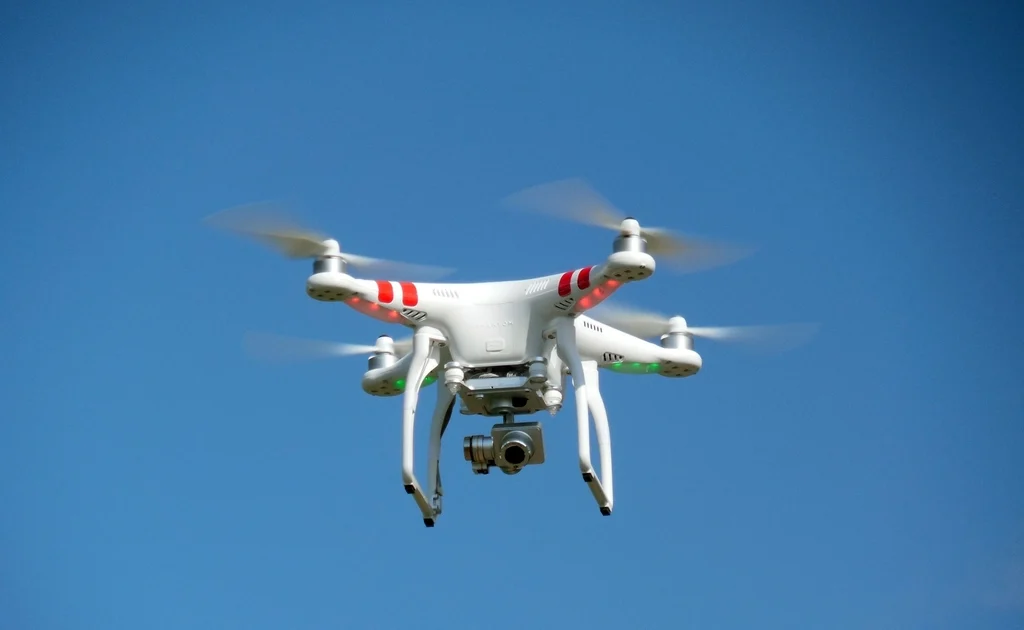
Quick Verdict: The DJI Mini 4 Pro is the benchmark for sub-250g camera drones in 2026. It pairs a capable 1/1.3-inch sensor with omnidirectional obstacle avoidance, ActiveTrack 360°, and up to 34 minutes of flight time — all in a package light enough to skip FAA registration in most recreational contexts. At around $759–$911 depending on configuration, it costs more than budget alternatives, but the image quality, safety features, and transmission range justify the premium for serious aerial photographers who need a genuinely pocketable travel drone.
| Spec | Detail |
|---|---|
| Weight | 249 g (under FAA registration threshold) |
| Sensor | 1/1.3-inch CMOS, 48MP |
| Aperture | f/1.7 (fixed) |
| Focal Length (equiv.) | 24mm |
| Max Video | 4K/60fps, 4K/30fps HDR, True Vertical Shooting |
| Stabilization | 3-axis gimbal + EIS (RockSteady 3.0 / HorizonSteady) |
| Max Flight Time | 34 min (standard battery); 45 min (Intelligent Flight Battery Plus) |
| Transmission | O4 — up to 20 km FHD video |
| Obstacle Sensing | Omnidirectional (6-direction vision sensing) |
| Intelligent Modes | ActiveTrack 360°, Spotlight, Point of Interest, Hyperlapse, MasterShots |
| Folded Dimensions | 145 × 88 × 62 mm |
| Price (approx.) | $759 (RC-N2) – $911 (RC 2) |
Background and Context
DJI released the Mini 4 Pro in late 2023 as the direct successor to the Mini 3 Pro, and it remains a top pick heading into 2026 — the combination of omnidirectional obstacle avoidance, a proper wide aperture (f/1.7 versus f/1.7 on its predecessors), and the O4 transmission system keeps it competitive even as newer models arrive. The 249-gram weight ceiling is the defining commercial feature: in most recreational use scenarios in the US, drones under this threshold fall under simplified rules, making it a genuinely low-friction option for travel and casual shooting. This overview is based on published DJI specifications and the consensus findings of expert reviewers including DroneDJ, DronerRater, and TechGearLab.
Camera and Image Quality
The 1/1.3-inch CMOS sensor is the core of the Mini 4 Pro’s appeal. It delivers 48MP stills and 4K video at up to 60fps, with D-Log M color profile support for those who want maximum flexibility in post-production. The f/1.7 aperture is notably fast for a drone camera, allowing meaningful low-light capture compared to f/2.8-aperture competitors in the budget segment. HorizonSteady stabilization keeps footage level even during aggressive maneuvers, while True Vertical Shooting — shooting natively in 9:16 portrait orientation — directly targets the social media content creator workflow.
Expert reviewers consistently note that the Mini 4 Pro’s output sits comfortably between the Mini 3 Pro (which it replaced) and the full Air series — not quite the dynamic range of a one-inch sensor, but a meaningful step above the sub-$300 market. Color science is clean; footage is usable straight from the camera for social content and requires only light grading in D-Log M for more polished edits.
Flight Performance and Range
The O4 video transmission system delivers a 20 km maximum range at 1080p/60fps under ideal conditions — a practical ceiling far beyond what most pilots legally fly in controlled airspace. In real-world urban environments, reviewers report reliable 5–8 km of usable range before interference becomes a factor. Flight time sits at 34 minutes on the standard Intelligent Flight Battery and stretches to 45 minutes with the Plus battery (larger, heavier, available as an upgrade). Both are solid numbers for the 249g class; the Mini 3 Pro maxed out at 34 minutes with its extended battery, so gains here are modest.
APAS 5.0 (Advanced Pilot Assistance System) powers the omnidirectional obstacle sensing — a significant upgrade from the Mini 3 Pro’s tri-directional sensing. In practice, this means the drone can sense and route around obstacles from all six directions, making it considerably more capable in complex environments like forests, construction sites, and urban canyons.
Intelligent Flight Modes
ActiveTrack 360° is the headline intelligent feature: the drone locks on to a subject and maintains tracking through a full 360-degree orbit, keeping the subject in frame regardless of how the pilot repositions. For solo content creators filming themselves, this is a genuine workflow advantage. MasterShots generates automated cinematic sequences by flying several preset maneuvers around a subject and stitching them into an edited clip — useful for beginners who want polished results without manual choreography.
Hyperlapse modes (Free, Circle, Course Lock, Waypoint) work well for landscape and architectural time-lapses. Spotlight 2.0 locks the camera on a fixed point while the pilot flies freely — standard at this price point but well-implemented here.
Design and Portability
At 145 × 88 × 62 mm folded and 249 g, the Mini 4 Pro fits in a jacket pocket or a small pouch. The build quality is solid plastic — not premium metal-frame territory, but robust enough for everyday travel. The redesigned folding arm system is more compact than the Mini 3 Pro’s and deploys quickly. DJI offers the drone with two remote controller options: the RC-N2 (requires a smartphone, lower cost) and the RC 2 (built-in 5.5-inch HD display, no phone needed). The RC 2 pairing is strongly recommended by reviewers for flying in bright sunlight where phone screens become difficult to read.
Who It’s For
Best for: Travel photographers and videographers who need a capable drone that fits in a carry-on bag; solo content creators who want automated tracking features; recreational pilots who want to stay below the 249g registration threshold; anyone stepping up from a budget drone for the first time.
Skip it if: You need a one-inch sensor for maximum dynamic range in challenging lighting (consider the DJI Air 3S); you primarily fly FPV and need raw speed rather than camera performance; your budget caps out below $500 (budget alternatives exist at a lower quality tier).
Strengths and Limitations
Strengths:
- 249 g weight — stays under the FAA recreational registration threshold in most scenarios
- Omnidirectional obstacle sensing (6-direction) — significant safety upgrade over tri-directional competitors
- f/1.7 aperture delivers meaningfully better low-light performance than budget-tier drones
- 4K/60fps with D-Log M color profile and True Vertical Shooting for social content
- 20 km O4 transmission — best-in-class range for the sub-250g category
- ActiveTrack 360° is one of the most capable autonomous tracking systems at this price
- Up to 45 minutes flight time with extended battery option
Limitations:
- 1/1.3-inch sensor, not the one-inch CMOS found in the Air series — dynamic range is noticeably lower in high-contrast scenes
- Fixed f/1.7 aperture: no depth-of-field control for shallow-focus cinematic looks
- No zoom capability (single fixed focal length)
- RC 2 controller (recommended) adds $150+ to the base price
- No LiDAR — nighttime obstacle sensing remains limited vs. the Air 3S
- Standard battery only 34 min; extended Plus battery adds bulk and weight
Alternatives Worth Considering
DJI Air 3S — Best Step-Up Option
If budget stretches to $1,099, the Air 3S adds a one-inch CMOS primary sensor (14 stops of dynamic range), a medium telephoto second camera, LiDAR-based nighttime obstacle sensing, and 4K/120fps slow motion. It weighs more (548 g) and falls above the 249g threshold, but the image quality step up is real and meaningful for professional work. For anyone who finds themselves consistently frustrated by the Mini 4 Pro’s dynamic range limitations, the Air 3S is the natural upgrade.
DJI Mini 3 Pro — The Budget Predecessor
The Mini 3 Pro can often be found at a significant discount now that the Mini 4 Pro has replaced it. It shares the 249g form factor and True Vertical Shooting, but offers only tri-directional obstacle sensing versus omnidirectional on the Mini 4 Pro. A reasonable choice if cost is the primary concern and the improved obstacle sensing is not a priority.
Autel EVO Lite+ — DJI Alternative with One-Inch Sensor
The Autel EVO Lite+ offers a one-inch CMOS sensor and 6K video at a price competitive with the Mini 4 Pro in its standard configuration. It weighs significantly more (835 g), so it doesn’t occupy the same travel-light niche, but it delivers notably stronger image quality for the same budget. Worth considering if portability is less critical than image performance.
Frequently Asked Questions
Does the DJI Mini 4 Pro require FAA registration?
In the US, drones under 250 grams used for recreational flying are generally exempt from FAA registration requirements under the recreational flyer rules. The Mini 4 Pro weighs exactly 249 grams, keeping it below that threshold. Note: commercial operations (paid photography, commercial video) have different rules and may require a Part 107 certificate regardless of drone weight. Always check current FAA guidance before flying.
What is the difference between the RC-N2 and RC 2 controller versions?
The RC-N2 is a traditional stick-only controller that requires you to attach a smartphone as the screen. The RC 2 is a more expensive controller with a built-in 5.5-inch HD display that does not require a phone. The RC 2 is more convenient in bright sunlight (dedicated screen is easier to see), takes up less space in your bag, and reduces the risk of phone overheating during long flights. Most experienced pilots prefer the RC 2 despite the added cost.
Can the Mini 4 Pro fly in rain or strong wind?
DJI does not rate the Mini 4 Pro for rain or wet conditions — it has no IP water resistance rating and should not be flown in precipitation. Its maximum wind resistance is 10.7 m/s (approximately 24 mph, Beaufort scale 5). In moderate wind conditions below this threshold, flight performance is stable; in gusty conditions near the ceiling, stability degrades and battery drain increases. Treat it as a fair-weather drone.
How does the Mini 4 Pro compare to the Mini 4K?
The DJI Mini 4K is a budget entry-level model priced well below the Mini 4 Pro. It shares the 249g form factor but uses a smaller sensor without obstacle sensing, D-Log M, or ActiveTrack. The Mini 4 Pro is a different tier of product — better sensor, safety systems, and intelligent features. The Mini 4K is suitable for casual first-time flyers; the Mini 4 Pro is the choice when image quality and safety features matter.
Is the DJI Mini 5 Pro better than the Mini 4 Pro?
As of mid-2026, the DJI Mini 5 Pro has been reported and compared in reviews. The Mini 5 Pro is anticipated to offer improvements in sensor size and intelligent features. If you are purchasing new and the Mini 5 Pro is widely available at a reasonable price, it may be the better long-term buy. However, the Mini 4 Pro remains a highly capable, well-supported drone with a mature accessory ecosystem and is available at reduced pricing — a strong value for the dollar in 2026.
What memory card does the Mini 4 Pro use?
The DJI Mini 4 Pro uses a microSD card (up to 2TB, UHS-I Speed Grade 3 or higher recommended for 4K recording). DJI recommends cards rated at a minimum of 60 MB/s write speed for reliable 4K/60fps capture. Cards from SanDisk Extreme or Samsung Pro Endurance series are commonly recommended by users and reviewers.
Final Verdict
The DJI Mini 4 Pro earns its position as the sub-250g benchmark not by being the cheapest drone in its class but by offering a genuinely complete package: a fast-aperture capable sensor, omnidirectional obstacle avoidance, industry-leading transmission range, and a suite of intelligent flight modes that makes it useful for solo creators as much as traditional aerial photographers. The 249g weight ceiling remains its defining commercial advantage. If you need one-inch sensor dynamic range or a telephoto lens, the DJI Air 3S is the upgrade path. But for the overwhelming majority of travel and recreational photographers who want best-in-class performance at or under 249 grams, the Mini 4 Pro remains the correct answer in 2026.
Last updated: June 2026
See our main guide: Best Drones.