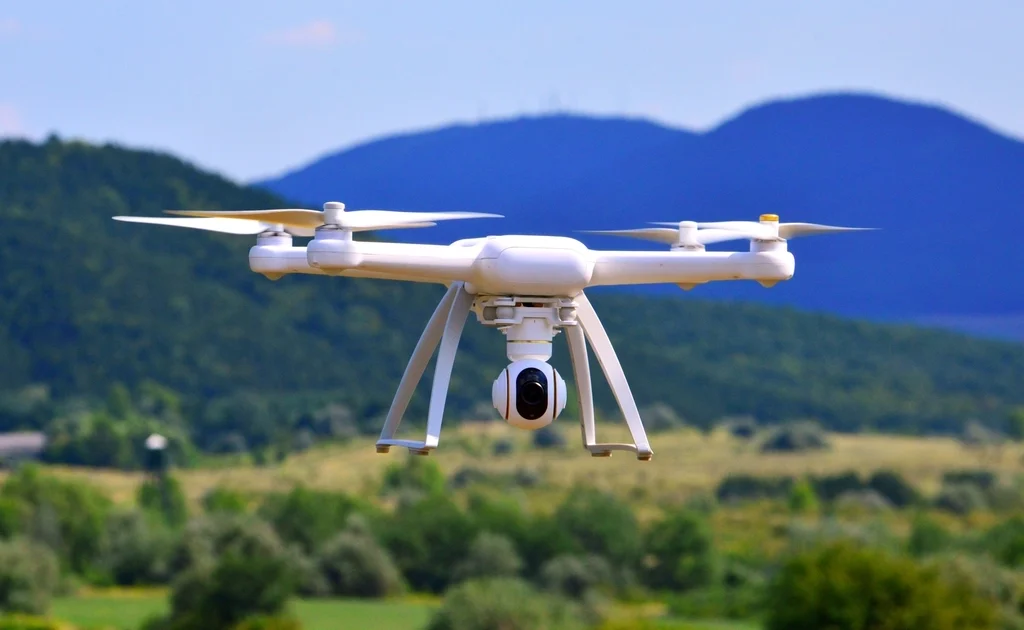
Quick Verdict: The FPV drone vs camera drone debate is largely a question of intent. FPV (First Person View) drones are built for speed, agility, and immersive piloting — they produce dynamic, motion-driven footage and are the platform of choice for drone racing and action sports cinematography. Camera drones are optimized for stable aerial photography and videography — smooth hovering, intelligent flight modes, GPS-assisted safety, and high-quality imaging sensors in a platform that a beginner can fly on day one. Most buyers should start with a camera drone; FPV is a committed skill-building path that rewards dedicated practice.
| Category | FPV Drone | Camera Drone (e.g. DJI Mini 4 Pro, Air 3S) |
|---|---|---|
| Primary Purpose | Speed, agility, immersive piloting, action footage | Stable aerial photography and videography |
| Camera Stabilization | None (or basic) — tilts and rolls with the drone body | Motorized gimbal — camera stays level regardless of movement |
| GPS Hover / Return to Home | Generally absent (freestyle models) or limited | Standard feature — automatic hover and GPS safety return |
| Obstacle Sensing | None — pilot avoidance only | Omnidirectional sensing (APAS) on mid-range and up |
| Max Speed | 100–150+ mph (racing/freestyle) | 25–50 mph (sport mode) |
| Learning Curve | Steep — requires significant simulator practice before outdoor flight | Gentle — beginner can fly responsibly on day one with minimal training |
| Crash Resilience | Built to survive crashes; props guards and repair parts commonplace | Fragile to crashes; repair costs can be high |
| Flight Time | 3–10 minutes (racing); up to 20 min (long-range FPV) | 20–46 minutes typical |
| Entry Cost | $200–$600 for capable starter kit (drone + goggles + controller) | $159 (DJI Neo 2) to $1,099+ (Air 3S) |
| Best Footage Type | Chase footage, proximity flying, racing cinematography, action sports | Landscape, real estate, travel, portrait, smooth cinematic |
How We Evaluated This Comparison
This comparison is based on published specifications across DJI’s current camera drone lineup (Mini 4 Pro, Air 3S, DJI Avata 2 for hybrid/FPV reference), community analysis from DroneDJ and FPV-focused communities, and the consensus of experienced pilots on platform selection. No placement fee was received.
What Is an FPV Drone?
FPV stands for First Person View — you fly the drone through goggles that show a real-time camera feed from the drone’s perspective, as if you are sitting in the cockpit. Traditional FPV drones are manually controlled quadcopters optimized for agility: they can fly inverted, perform rolls and flips, dive through gaps, and reach speeds of 100 mph or more in racing configurations. The camera is mounted fixed to the drone body with an adjustable angle — when the drone tilts forward to accelerate, the camera tilts with it, producing the signature FPV footage look: dynamic tilt-shifts, close-proximity maneuvers, and kinetic motion.
FPV drones do not hover passively like camera drones — in “manual mode” (also called Acro mode), releasing the controls means the drone simply maintains whatever orientation it had. Stabilized hold-position requires GPS modules not present on most freestyle frames. Building FPV skill requires hours of simulator practice (Velocidrone, Liftoff, or DJI’s own simulator) before attempting outdoor flight.
What Is a Camera Drone?
Camera drones — the DJI Mini 4 Pro, Air 3S, and comparable products — are GPS-stabilized aerial platforms optimized for photography and smooth video. The camera is mounted on a motorized gimbal that compensates for the drone’s movement, keeping the horizon level and eliminating vibration regardless of wind gusts or flight maneuvers within normal parameters. GPS holds position automatically when the pilot releases the sticks. Obstacle sensing systems (on mid-range and up) alert or automatically route around obstructions. Intelligent flight modes handle tracking, time-lapses, and pre-programmed flight paths automatically.
Camera drones are beginner-accessible by design. A new pilot can take a DJI Mini 4 Pro out of the box, activate it following the setup instructions, and produce usable footage within their first hour. The GPS safety systems and return-to-home function significantly reduce the risk of loss or crash during the learning period.
Footage Character: The Core Creative Difference
The footage character of each platform is fundamentally different. Camera drone footage — especially on a 3-axis gimbal — is smooth, level, and cinematic in the traditional aerial sense: sweeping pans over landscapes, slow reveals, stable hovering shots above subjects. It is the footage used in real estate marketing, travel documentation, wedding films, and nature cinematography.
FPV footage is kinetic, immersive, and visceral. Close-proximity chases through forest trails, spiral dives off cliffs, flythrough shots under bridges and through architectural spaces — the footage language is action-forward and immediately recognizable. It dominates sports highlight reels, motorsport coverage, Red Bull-style action cinematography, and the most viral drone content on social media. But it requires a highly skilled pilot and typically a second operator managing camera settings while the pilot focuses entirely on flight.
The DJI Avata 2: The Hybrid Option
DJI’s Avata 2 occupies a middle ground: a cinematic FPV drone with stabilized 4K footage, beginner-accessible flight modes, and a compact cinewhoop design (propeller guards included) that makes it less hazardous to fly indoors and around people than a freestyle FPV frame. At approximately $599 for the standalone drone, it is the most accessible entry point into FPV-style flying while retaining image quality closer to a camera drone than a raw freestyle quad. The trade-off is that it cannot match pure racing drones in raw speed or agility, and it does not hover with the GPS precision of the Mini 4 Pro or Air 3S.
Learning Curve and Time Investment
This is the factor most often underestimated by buyers considering FPV. Camera drone proficiency can be achieved in a weekend for basic operations; intermediate skill (smooth manual maneuvers, creative compositions, confident airspace navigation) develops over weeks. FPV proficiency at a level to produce usable footage requires months of consistent practice. The simulator-first approach is standard advice: most experienced FPV pilots recommend 20–40 hours of simulator time before a first outdoor flight on a real drone. Crashes are part of the FPV learning process — budget for replacement propellers and possibly frame components.
Who Should Choose an FPV Drone
- Pilots who want to enter drone racing or freestyle competition
- Cinematographers who need close-proximity action footage, chase shots, and architectural flythroughs
- Experienced camera drone pilots ready to expand their creative range
- Enthusiasts who find the piloting process itself as rewarding as the output
- Anyone working in action sports, motorsport, or extreme lifestyle content
Who Should Choose a Camera Drone
- Beginners purchasing their first drone
- Travel and landscape photographers who want smooth aerial imagery without complex piloting
- Real estate, wedding, and commercial video operators
- Content creators who want automated tracking and intelligent flight modes
- Anyone who wants usable footage on their first day of flying
Frequently Asked Questions
Can I learn FPV without a simulator?
You can, but experienced pilots strongly advise against it. FPV in Acro mode requires immediate, instinctive stick responses that take hours of repetition to develop. Without simulator practice, new pilots crash frequently and damage or lose drones — a discouraging and expensive process. Free-to-low-cost simulators (Velocidrone, Liftoff, DJI FPV Simulator) make the learning process substantially faster and cheaper. Most pilots recommend achieving basic stability and maneuver recovery in the simulator before any outdoor flight.
Can FPV drones take photos and video for real estate or commercial use?
FPV drones are generally not suited for real estate or traditional commercial aerial photography — their cameras tilt with the frame, producing footage that reads as “action” rather than “stable aerial photography.” For close-proximity cinematic work (architectural flythroughs, unique camera movements) in professional productions, skilled FPV pilots are hired specifically for those shots. But the workflow is specialized — typically a dedicated FPV operator alongside a standard camera drone operator producing the bulk of stable coverage.
What is the DJI Avata 2 and is it a good starting point for FPV?
The DJI Avata 2 is a cinewhoop-style FPV drone designed to be more accessible than freestyle FPV builds. It includes prop guards, stabilized 4K footage, and beginner-friendly flight modes including a GPS-stabilized Normal mode. At approximately $599, it is more expensive than comparable freestyle kits but provides a more controlled introduction to FPV flying. It is a good starting point for camera drone pilots who want to explore FPV without committing to a full freestyle build and Acro-mode learning curve.
How long does an FPV battery typically last?
Racing and freestyle FPV drones typically fly 3–8 minutes per battery pack — aggressive flying burns power very quickly. Long-range FPV builds (GPS-equipped, lower speed, efficient motors) can extend this to 15–25 minutes. Camera drones (Mini 4 Pro: 34 minutes; Air 3S: 35–40 minutes) have dramatically longer endurance by comparison. FPV pilots typically fly with multiple packs and charge between sessions; three to five packs is a common field kit for a meaningful flying session.
Do FPV drones need FAA registration?
Yes. Any drone weighing 250 grams or more requires FAA registration for recreational flight in the US. Most FPV drones (except the lightest micro-whoop class) weigh more than 250 grams and require registration. Commercial FPV operations (paid filming) require a Part 107 Remote Pilot Certificate regardless of drone weight. Additionally, FPV flying that requires goggles as the primary view is subject to FAA visual observer rules — a second person must maintain line of sight on the drone while the pilot flies on goggles.
Final Verdict
FPV and camera drones solve fundamentally different problems, and most buyers should make their choice based on desired output rather than technical specifications. If you want smooth aerial photography and video that you can use from day one — landscapes, travel, real estate, social content — a camera drone is the right choice, and the DJI Mini 4 Pro or Air 3S cover that need excellently. If you are drawn to the kinetic, immersive flying experience and are committed to investing the hours of simulator practice required to become a capable FPV pilot, the world of FPV produces footage that camera drones simply cannot replicate. Many serious drone enthusiasts own both: a camera drone for deliberate creative work, and an FPV platform for when the goal is pure flying or action cinematography.
Last updated: June 2026
See our main guide: Best Drones.