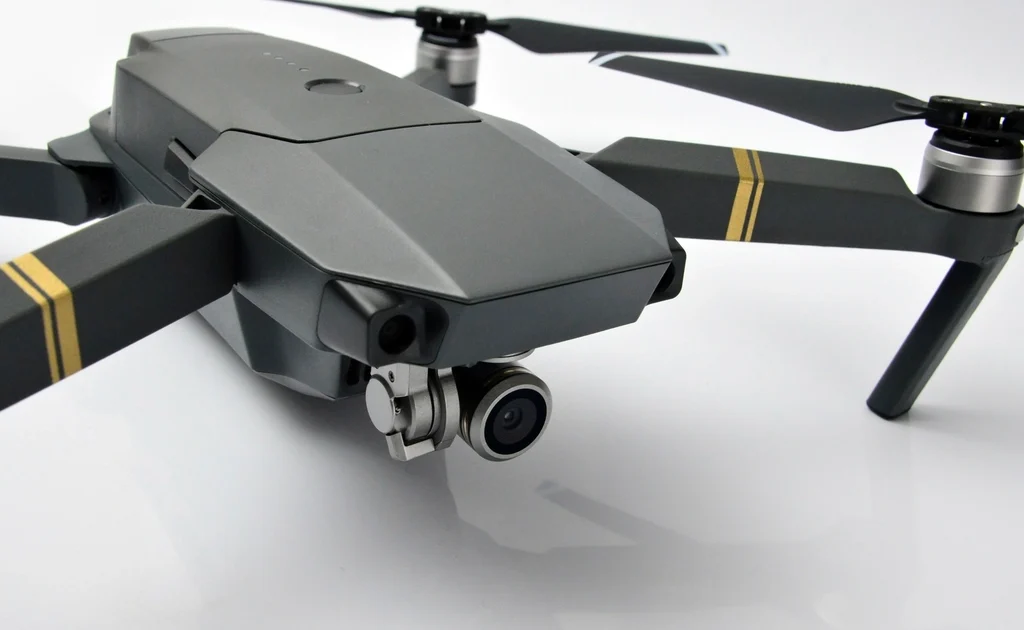
Quick Verdict: In the DJI vs Autel comparison, DJI wins on nearly every technical and ecosystem dimension for consumer buyers in 2026: more current product lineup, more polished software, superior intelligent flight modes, and broader accessory and support availability. Autel’s EVO series remains the most credible DJI alternative for specific use cases — particularly commercial operators with government clients who face restrictions on DJI hardware, or buyers who specifically want a non-Chinese-manufactured ecosystem. For recreational and most professional creative buyers, DJI is the more practical choice; Autel is the right answer when the non-DJI ecosystem is a hard requirement.
| Category | DJI (Mini 4 Pro / Air 3S) | Autel (EVO Lite+) |
|---|---|---|
| Current Consumer Lineup | Active — Mini 4 Pro, Air 3S, Neo 2, Mavic 4 Pro | Discontinued consumer line (EVO Lite+ end-of-life) |
| Top Consumer Sensor | 1-inch CMOS (Air 3S) | 1-inch CMOS (EVO Lite+) |
| Max Consumer Aperture | f/1.7 fixed (Mini 4 Pro) / f/1.8 adj. (Air 3S) | f/1.1–f/2.8 adjustable (EVO Lite+) |
| Max Consumer Video | 4K/120fps (Air 3S) | 6K/30fps (EVO Lite+) |
| Obstacle Sensing | Omnidirectional + LiDAR (Air 3S); Omni (Mini 4 Pro) | Ultra-wide angle sensors (EVO Lite+) |
| Transmission | O4 system — up to 20 km | Up to 7.4 miles (~12 km) at 2.7K |
| Headquarters | Shenzhen, China | Bothell, Washington, USA |
| Government/Military Use | Restricted by some agencies | Generally permitted for US government use |
| Software Ecosystem | DJI Fly — mature, feature-rich | Autel Sky — functional, less polished |
| Long-Term Support | Active development and updates | Reduced — consumer line discontinued |
How We Evaluated This Comparison
This comparison is based on published specifications for both manufacturers’ consumer drone lines, market analysis from GlobalDroneHQ, TechRadar, and SpecDB, and publicly available information about federal regulatory status. We compare both manufacturers at their consumer-focused product tiers. No payment was received from either manufacturer.
DJI: Market Leader with a Comprehensive Ecosystem
DJI is the dominant consumer and prosumer drone manufacturer globally, with an estimated 70–80% market share in the camera drone segment. The company’s products span from the ultra-affordable Neo 2 ($200) through the Mini 4 Pro ($759+), Air 3S ($1,099+), and Mavic 4 Pro at the prosumer tier. The DJI Fly app is the most mature consumer drone control application available, with continuously updated intelligent flight modes, geofencing integration, and a global community of users generating tutorials and support resources.
DJI’s O4 transmission system (up to 20 km) leads the industry at consumer price points. APAS 5.0 omnidirectional obstacle sensing and ActiveTrack 360° subject tracking are reliably best-in-class implementations of those technologies. The LiDAR addition to the Air 3S (2026) puts DJI’s mid-range drone ahead of any consumer competitor for nighttime flying safety.
Autel Robotics: The American Alternative
Autel Robotics was founded in 2004 and is headquartered in Bothell, Washington. The company spent several years building a consumer drone portfolio — the EVO Nano, EVO Lite, and EVO Lite+ — as direct DJI alternatives, competing on sensor size, video resolution (6K on the EVO Lite+), and US-based manufacturing credentials. Autel has since shifted its focus to enterprise and professional products, officially discontinuing the consumer Nano and Lite lines.
The EVO Lite+’s headline specifications remain genuinely impressive: a one-inch CMOS sensor, the widest maximum aperture (f/1.1) in any consumer drone, 6K/30fps video, and 40 minutes of flight time. Its obstacle avoidance and tracking capabilities are functional but less sophisticated than DJI’s equivalent implementations. The Autel Sky app works, but lacks the depth of features, third-party integrations, and update cadence of DJI Fly.
The Data Privacy and Government Use Factor
DJI’s Chinese ownership has generated significant scrutiny from US government agencies. The Department of Defense has listed DJI on its list of Chinese military companies; several federal agencies prohibit use of DJI products on network-connected systems; the US Army banned DJI drones from official use. These restrictions apply primarily to government, military, and certain law enforcement contexts — they do not restrict recreational or private commercial use by US civilians.
Autel Robotics has been explicitly positioned as a DJI alternative for government users who face these restrictions. Its US headquarters, US manufacturing claims, and the absence of similar federal restrictions make it the practical choice for commercial operators working in government contracting, sensitive infrastructure, or public safety contexts where DJI hardware is disallowed or inadvisable.
Software and Ecosystem Comparison
DJI Fly is the consumer drone app standard. It offers a polished interface, reliable connection management, intelligent flight mode execution (MasterShots, QuickShots, Hyperlapse, Waypoints), and tight integration with DJI’s accessories (goggles, motion controllers, RC 2 display). The community of DJI Fly users generates a large volume of tutorials, presets, and troubleshooting resources. Updates are frequent and consistently add meaningful features.
Autel Sky functions adequately for basic flight operations, Follow Me, and returning intelligently to home. It lacks the breadth of DJI Fly’s intelligent modes and the polish of its interface. For buyers who prioritize software experience, DJI is clearly ahead. For buyers who primarily need reliable manual flight control with GPS safety features, the gap is less impactful.
Who Should Choose DJI
- Recreational photographers and videographers who want best-in-class imaging, obstacle safety, and intelligent modes
- Content creators who benefit from True Vertical Shooting, ActiveTrack 360°, and MasterShots
- Buyers who want an actively developed platform with a current product lineup and long-term software support
- Anyone whose use case does not involve data-sensitive government or military contexts
- Beginners who want the largest available community of users and tutorials
Who Should Choose Autel
- Government contractors, law enforcement, or military-adjacent commercial operators who face DJI purchase restrictions
- Buyers who specifically need a one-inch sensor with f/1.1 maximum aperture at a discounted price
- Photographers who find the EVO Lite+ at significant discount and accept the end-of-life platform risk
- Buyers for whom the non-Chinese manufacturer origin is a personal or institutional requirement
Frequently Asked Questions
Is DJI banned in the US?
DJI is not banned for civilian use in the US. There are federal agency and military purchasing restrictions — DJI is on the Department of Defense’s list of Chinese military companies, and several agencies prohibit DJI hardware on government networks. Recreational pilots, commercial operators, and civilian businesses face no legal restriction on purchasing or flying DJI products as of mid-2026. The regulatory situation has evolved over the years and pilots should monitor current FAA and federal guidance.
Does Autel make a comparable drone to the DJI Mini 4 Pro?
Autel discontinued its consumer EVO Nano line, which was the closest competitor to the Mini 4 Pro in terms of weight class. Currently, Autel does not have an active consumer drone in production that competes with the Mini 4 Pro. The EVO Lite+ is a heavier, larger drone (835 g) targeting a different use case. For buyers specifically seeking a sub-250g drone, there is no current Autel alternative.
Are Autel drones safer for data privacy than DJI?
Autel’s US headquarters and the absence of federal purchase restrictions suggest lower institutional data risk compared to DJI for government-context buyers. For recreational users, DJI’s data handling — while the subject of ongoing scrutiny — does not represent a demonstrated personal data risk distinct from other consumer tech products. Buyers with specific concerns should review both manufacturers’ current privacy policies and the FAA’s published guidance on drone data security.
Is the EVO Lite+’s f/1.1 aperture noticeably better than DJI’s f/1.7?
In direct low-light comparisons, the EVO Lite+’s wider aperture admits more light and theoretically produces less noisy images in dim conditions. In practice, DJI’s image processing pipeline and sensor calibration are well-optimized, and expert reviewers note that the real-world difference in typical aerial photography conditions (where ISO, shutter speed, and exposure are interrelated) is less dramatic than the aperture numbers suggest. For controlled low-altitude drone photography at dusk or in shaded conditions, the f/1.1 advantage is more apparent; at altitude in standard daylight, the difference is minimal.
Will Autel release a new consumer drone to compete with DJI?
As of mid-2026, Autel has not announced a replacement for the discontinued EVO Lite consumer series. The company’s current focus appears to be on enterprise thermal imaging drones (EVO Max, EVO Lite 640T Enterprise). New consumer models may emerge but are not confirmed; buyers who require a current-generation consumer drone with ongoing support should plan with DJI’s lineup.
Final Verdict
For the majority of buyers — recreational pilots, content creators, commercial aerial photographers — DJI is the clearer choice in 2026: active product lineup, superior intelligent features, better transmission system, and the most mature software ecosystem in consumer drones. Autel’s strength is specific and meaningful: for government-affiliated commercial operators and buyers with principled objections to DJI’s ownership structure, the EVO Lite+ (while it remains available) is a legitimate one-inch sensor alternative with credible US-based credentials. Outside that specific context, DJI wins the comparison on practical merit.
Last updated: June 2026
See our main guide: Best Drones.