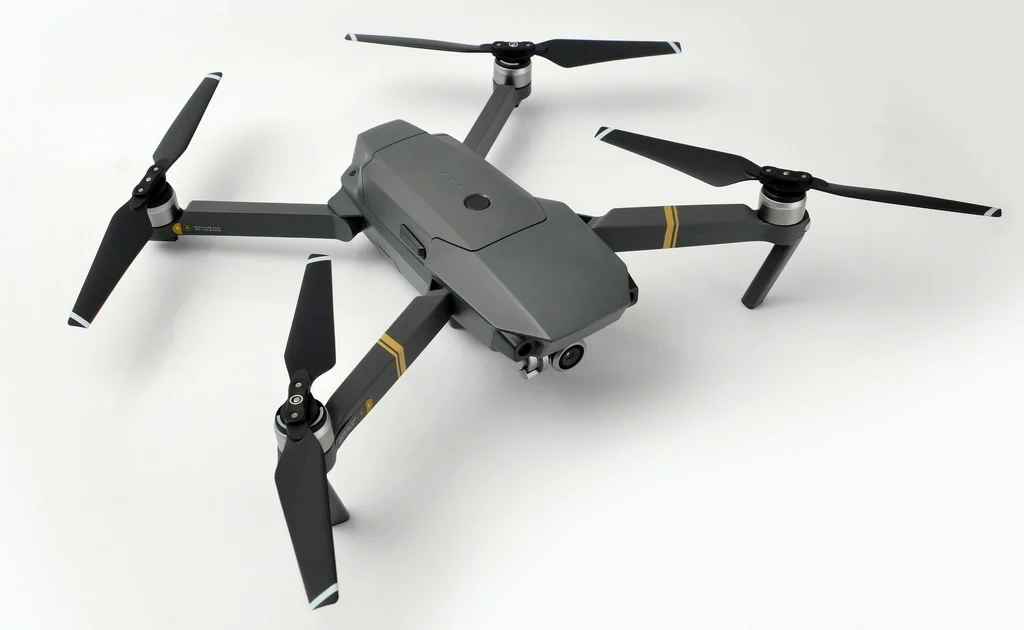
Quick Verdict: In the DJI Mini 3 vs Mini 4 Pro comparison, the Mini 4 Pro is the better drone in every meaningful category — omnidirectional obstacle sensing, faster f/1.7 aperture, better transmission, and improved intelligent tracking. The only reason to choose the Mini 3 Pro over the Mini 4 Pro in 2026 is price: the Mini 3 Pro is available at a significant discount as older stock, and if budget is the hard constraint, it remains a capable, well-regarded drone. Buyers who can stretch to the Mini 4 Pro’s price should do so; the omnidirectional sensing upgrade alone justifies it for anyone flying in complex environments.
| Spec | DJI Mini 3 Pro | DJI Mini 4 Pro |
|---|---|---|
| Weight | 249 g | 249 g |
| Sensor | 1/1.3-inch CMOS, 48MP | 1/1.3-inch CMOS, 48MP |
| Aperture | f/1.7 fixed | f/1.7 fixed |
| Max Video | 4K/60fps | 4K/60fps, HDR, True Vertical Shooting (native) |
| Gimbal | 3-axis; 90° tilt for vertical shooting | 3-axis; True Vertical Shooting native |
| Obstacle Sensing | Tri-directional (forward, backward, downward) — APAS 4.0 | Omnidirectional (6-direction) — APAS 5.0 |
| Max Flight Time | 34 min (standard); 47 min (extended) | 34 min (standard); 45 min (Plus battery) |
| Transmission | O3 — up to 12 km | O4 — up to 20 km |
| Tracking | ActiveTrack 3.0 (forward-facing camera only) | ActiveTrack 360° (omnidirectional) |
| Max Speed | 16 m/s | 16 m/s |
| Price (approx. 2026) | $499–$609 (Fly More discounted) | $759–$911 |
How We Evaluated This Comparison
This comparison is based on published DJI specifications for both models and expert analysis from TechGearLab, DroneDJ, and community reviews. Both drones occupy the same 249-gram class and share the same sensor, aperture, and max speed — making this a comparison of specific generational improvements rather than fundamentally different platforms. No placement fee was received.
What They Share: The 249-Gram Foundation
Both drones weigh exactly 249 grams — the defining commercial feature that places them below the FAA recreational registration threshold in the US. Both use a 1/1.3-inch CMOS sensor at 48MP, the same f/1.7 fixed aperture, the same top speed, and closely similar build design and folded dimensions. For the large majority of casual flying scenarios, both will produce indistinguishable image quality from the same altitude in the same conditions. The differences are real but concentrated in specific capabilities rather than fundamental character.
Obstacle Sensing: The Most Important Upgrade
The Mini 3 Pro uses tri-directional obstacle sensing (forward, backward, downward) powered by APAS 4.0. This means collisions from the sides, above, and during sideways flight are not detected — the drone will fly into an obstacle approaching from those directions unless the pilot manually avoids it. The Mini 4 Pro upgrades to full omnidirectional sensing (all 6 directions) with APAS 5.0, which detects and routes around obstacles from any direction during normal and Cine flight modes.
For pilots who fly in complex environments — among trees, near buildings, over rocky terrain — the omnidirectional sensing difference is significant. Experienced pilots who maintain careful visual line of sight may not trigger this limitation often; beginner pilots in dense environments will notice the Mini 3 Pro’s gaps clearly. The Mini 4 Pro’s omnidirectional sensing is one of its most important practical improvements over its predecessor.
Transmission Range: O3 vs. O4
The Mini 3 Pro uses DJI’s O3 transmission system with a maximum range of approximately 12 km. The Mini 4 Pro uses O4, extending the ceiling to 20 km. In typical recreational flying where pilots rarely exceed 1–2 km from home point, this distinction is academic. For pilots who fly longer-range missions — agricultural surveying, infrastructure inspection, landscape photography over extended terrain — the O4 system provides additional signal stability and interference resistance at range that translates to more reliable video feed quality.
ActiveTrack: 3.0 vs. 360°
The Mini 3 Pro’s ActiveTrack 3.0 uses the forward-facing camera for subject tracking — it locks onto and follows subjects reliably when they are in front of the drone, but loses lock when the subject moves to the side or behind the drone. The Mini 4 Pro’s ActiveTrack 360° uses all obstacle sensing cameras to maintain subject lock through a full 360-degree orbit, including when the subject passes behind the drone’s position. For solo content creators filming themselves cycling, surfing, or hiking, this difference is meaningful: the Mini 4 Pro maintains tracking through directional changes that the Mini 3 Pro loses.
True Vertical Shooting
The Mini 3 Pro achieves vertical (portrait orientation) shooting by rotating its 3-axis gimbal to a 90° tilt position — the camera physically tilts sideways. This works, but the mechanism is a workaround. The Mini 4 Pro shoots natively in True Vertical mode, capturing a full 2160×3840 sensor area in portrait orientation rather than a cropped field. For social media content creators who publish primarily in 9:16 (Reels, TikTok), the Mini 4 Pro’s native vertical framing delivers better resolution and field of view in that orientation.
Should You Upgrade from Mini 3 Pro to Mini 4 Pro?
If you already own a Mini 3 Pro in good condition, the case for upgrading to a Mini 4 Pro is modest unless you specifically need omnidirectional obstacle sensing, extended-range O4 transmission, or ActiveTrack 360° for solo tracking work. The image quality difference is essentially zero — same sensor, same aperture. The omnidirectional sensing is a meaningful safety improvement worth paying for if you fly in complex environments; for open-field recreational flyers, the 3-directional sensing on the Mini 3 Pro covers most real scenarios adequately.
Who Should Choose the Mini 3 Pro
- Budget-constrained buyers who need a 249g drone with quality camera and can find the Mini 3 Pro at a significant discount
- Existing Mini 3 Pro owners who don’t need the specific improvements of the Mini 4 Pro
- Buyers whose flying primarily takes place in open environments where tri-directional sensing is sufficient
Who Should Choose the Mini 4 Pro
- New buyers purchasing a 249g drone for the first time — the omnidirectional sensing is worth the premium
- Solo content creators who need ActiveTrack 360° for continuous tracking through complex movement
- Pilots who fly regularly in wooded, urban, or complex environments where side and overhead obstacle sensing matters
- Social media creators who want native True Vertical Shooting at full resolution
- Anyone who wants the longest-range transmission system available in the 249g class
Frequently Asked Questions
Are the Mini 3 Pro and Mini 4 Pro accessories interchangeable?
Some accessories overlap — both use microSD cards, and some third-party ND filter sets cover both models. However, batteries are not interchangeable: the Mini 3 Pro Intelligent Flight Battery and Mini 4 Pro batteries are different designs. Remote controllers differ between versions. Before purchasing accessories for one drone assuming they’ll work on the other, verify compatibility with the specific model number.
Is the Mini 3 Pro still worth buying in 2026?
At its discounted 2026 pricing (often $499–$600 for the Fly More Combo), the Mini 3 Pro remains a capable and well-supported drone. DJI still provides firmware updates and the DJI Fly app is fully compatible. It is a solid choice for buyers whose budget ceiling does not reach the Mini 4 Pro and who accept the tri-directional sensing limitation. For new buyers without a strong budget constraint, the Mini 4 Pro’s improvements justify the price difference.
Does the Mini 4 Pro take better photos than the Mini 3 Pro?
In direct image quality comparisons, expert reviewers find no meaningful difference between the two drones in standard conditions — both use the same 1/1.3-inch CMOS sensor with the same f/1.7 aperture. The Mini 4 Pro’s HDR video mode and D-Log M color profile may produce marginally more flexible footage for post-production, but for stills, both cameras are virtually identical in real-world output.
What does “True Vertical Shooting” mean on the Mini 4 Pro?
True Vertical Shooting means the Mini 4 Pro captures a native 9:16 portrait-orientation video frame — the full sensor area is used in vertical orientation. The Mini 3 Pro achieves vertical by rotating the camera gimbal 90°, which works but produces a narrower field of view (the 16:9 sensor is used sideways, effectively cropping the vertical frame). For social media content that will be published in portrait format, the Mini 4 Pro’s native vertical capture uses the full sensor area and delivers wider field of view in that orientation.
Final Verdict
The DJI Mini 4 Pro is the definitive winner on technical merit — omnidirectional obstacle sensing, O4 transmission, ActiveTrack 360°, and native True Vertical Shooting are all meaningful improvements over the Mini 3 Pro. For new buyers, the Mini 4 Pro is the recommendation without qualification. For budget-constrained buyers who find the Mini 3 Pro at a substantial discount, it remains a capable platform that delivers excellent image quality in the same 249g weight class. If you already own a Mini 3 Pro and are happy with the image quality, upgrading specifically for the technical improvements only makes sense if you frequently encounter the specific limitations that the Mini 4 Pro addresses.
Last updated: June 2026
See our main guide: Best Drones.