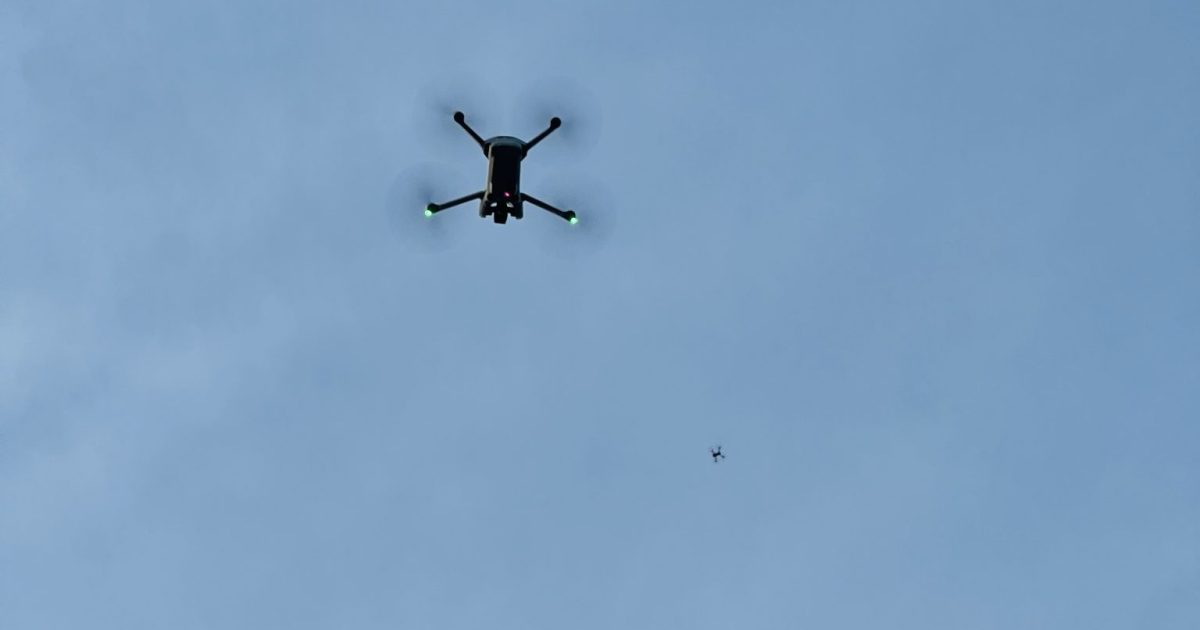
Quick Verdict: US drone law is simpler than most people expect once you understand the three pillars: FAA registration (required for drones over 250 g), Remote ID (required for all registered drones), and TRUST (a free safety test required for all recreational flyers). Commercial operators add a fourth pillar: the Part 107 Remote Pilot Certificate. This guide covers each one accurately. If you’re still choosing a drone, see Best Drones for models that fit each regulatory tier.
The Three Weight Classes That Drive Everything
Nearly every US drone rule flows from a single weight threshold: 250 grams (0.55 lbs).
| Drone Weight | FAA Registration Required? | Remote ID Required? | TRUST Required? |
|---|---|---|---|
| 250 g or under (e.g. DJI Mini 4 Pro at 249 g) | No (recreational) | No (registration not required) | Yes |
| Over 250 g, under 55 lbs (recreational) | Yes — $5, 3 years | Yes — must broadcast Remote ID | Yes |
| Over 250 g, any weight (commercial / Part 107) | Yes — $5 per drone, 3 years | Yes | N/A — Part 107 cert required instead |
| 55 lbs or over | Different certification required | Yes | N/A |
Important clarification: The 250 g threshold is “more than 250 grams” — so a drone that weighs exactly 250 grams does not require registration. The DJI Mini 4 Pro’s 249 g design is deliberate: it sits under this threshold.
FAA Registration: How It Works
Registration is done through the FAA’s official portal at faadronezone.faa.gov. The process takes about 10 minutes online. Here is what you need to know:
- Cost: $5 per registration, valid for 3 years. Recreational flyers pay once and the single registration covers all their drones. Commercial/Part 107 operators pay $5 per individual drone.
- Who is eligible: You must be at least 13 years old to register a drone in your own name. Under 13, a parent or guardian must register.
- What you mark: Your FAA registration number must be displayed on the exterior of your drone — not hidden under a battery or panel. A permanent marker on the body counts. Labels are fine.
- When you need it: Before your first flight of a drone over 250 g. Flying an unregistered drone that requires registration is a federal violation.
Remote ID: The Digital License Plate for Drones
Remote ID became fully mandatory on September 16, 2023. If your drone requires FAA registration, it must also broadcast Remote ID — essentially a real-time identification signal that contains the drone’s ID, its location, altitude, velocity, and the takeoff location of the control station.
Three Ways to Comply with Remote ID
- Built-in Remote ID module: Most drones manufactured or sold in the US after 2023 include this hardware by default. DJI Mini 4 Pro, Air 3, Air 3S, and most current-generation drones have it built in. Check your drone’s spec sheet to confirm.
- Add-on Remote ID broadcast module: For older drones that predate the rule, you can attach an FAA-accepted external broadcast module. These modules must be on the FAA’s accepted equipment list.
- Fly within a FRIA (FAA-Recognized Identification Area): Certain flying fields and clubs have applied for and received FRIA status, within which Remote ID broadcasting is not required. The Academy of Model Aeronautics (AMA) maintains a list of FRIA locations.
The TRUST Test: Required for All Recreational Flyers
The Recreational UAS Safety Test (TRUST) is a free, online safety knowledge test that all recreational drone pilots in the US are required to complete. It is not a license — there is no passing score gate in the sense of keeping you from flying — but you are legally required to have completed it and to carry proof of completion when flying recreationally.
- Cost: Free. No fee.
- Where to take it: Through any FAA-approved test administrator. The FAA’s own website lists approved providers including the Academy of Model Aeronautics, AUVSI, and others.
- What it covers: Airspace categories, safety rules, how to identify restricted areas, line-of-sight requirements, and emergency procedures.
- Proof of completion: After completing TRUST, you receive a certificate. You must have it accessible — printed or digital — when flying.
Part 107: Commercial Drone Operations
Any drone operation that involves compensation, business use, or is not purely recreational requires the FAA Part 107 Remote Pilot Certificate. This includes real estate photography, paid video work, inspections, agricultural use, and any other commercial purpose.
How to Get Part 107 Certification
- Verify you are at least 16 years old.
- Pass the FAA Aeronautical Knowledge Test — a 60-question multiple-choice exam at an FAA-approved testing center. The test costs $175. A passing score is 70% (42 of 60 questions correct).
- Pass a TSA security vetting (handled automatically by the FAA through the application portal).
- Apply for the Remote Pilot Certificate through IACRA (the FAA’s online airmen certification portal).
- Receive your temporary certificate (typically within 10 business days) and your permanent plastic certificate by mail.
Part 107 Renewal
Part 107 certificates do not expire, but recurrent training is required every 24 months to maintain currency. As of 2026, the FAA provides this recurrent training free online through the FAA Safety Team platform (FAASafety.gov). Completion of recurrent training is logged to your airman record.
Where You Can and Cannot Fly
FAA registration and TRUST compliance does not mean you can fly anywhere. Airspace restrictions apply regardless of drone weight or registration status.
| Location Type | Allowed? | Notes |
|---|---|---|
| Class G airspace (uncontrolled, rural) | Yes — below 400 ft AGL | Most open rural areas |
| Within 5 miles of an airport | Requires authorization | Use LAANC (automated approval system) via apps like AirMap or Aloft |
| Class B/C/D airspace (around major airports) | Requires LAANC authorization | Often approved automatically for low altitudes via LAANC |
| National Parks | Prohibited in most | NPS ban on drones; requires special permit |
| Washington DC (SFRA) | Highly restricted | 30-mile Special Flight Rules Area around DC; recreational drones effectively banned without special waiver |
| Over people or moving vehicles | Restricted | Part 107 has specific rules for operations over people; recreational rules prohibit it |
| At night | Part 107: allowed with anti-collision lights; Recreational: allowed with lights | Anti-collision lighting visible to 3 statute miles required |
State and Local Laws
The FAA has federal jurisdiction over airspace, but state and local governments can regulate where drones take off and land (i.e., on their property). Many cities have ordinances prohibiting drone launch from city parks. Some states have additional privacy-related drone laws. Always check local rules before flying in a new location, even if you’re confident about the federal airspace status.
Tools to Check Airspace Before You Fly
- FAA B4UFLY app: Official FAA mobile app. Enter your location, get an instant airspace status.
- Aloft (formerly Kittyhawk): Popular third-party app with LAANC integration for authorization requests.
- AirMap: Detailed airspace maps with LAANC capability.
- SkyVector: Full aeronautical charts — useful for understanding what class of airspace you’re in.
Checking airspace before every flight is a legal and practical requirement. Don’t rely on memory from a previous flight — temporary flight restrictions (TFRs) are common around sporting events, wildfires, and presidential movements.
Frequently Asked Questions
Do I need to register my DJI Mini 4 Pro?
Not for recreational use. The DJI Mini 4 Pro weighs 249 grams, which is under the 250 g FAA registration threshold. You still need to complete the TRUST test and follow all FAA recreational flying rules. If you use it commercially, registration is required regardless of weight.
What happens if I fly without registering a drone that requires it?
Flying an unregistered drone that requires registration is a federal civil violation and can result in penalties up to $27,500. Criminal penalties are also possible in egregious cases. The FAA takes drone compliance seriously — enforcement actions have been pursued.
Does Remote ID mean the government can track me in real time?
Remote ID broadcasts a signal locally (like a radio beacon) that can be detected by equipment in the area — it is not a GPS tracker that reports to a government server in real time. However, authorities in the vicinity could receive the broadcast to identify the drone and its operator’s launch location.
Is the TRUST test hard?
No. The TRUST test is designed to be educational, not gatekeeping. It walks you through safety concepts and most people complete it in 20–30 minutes without studying in advance. It is not a scored pass/fail exam — everyone who completes it receives the certificate.
If I already have a Part 107 certificate, do I also need TRUST?
No. TRUST is only for recreational flyers. Part 107 certification satisfies the knowledge requirements for commercial operations and replaces the TRUST requirement in the commercial context.