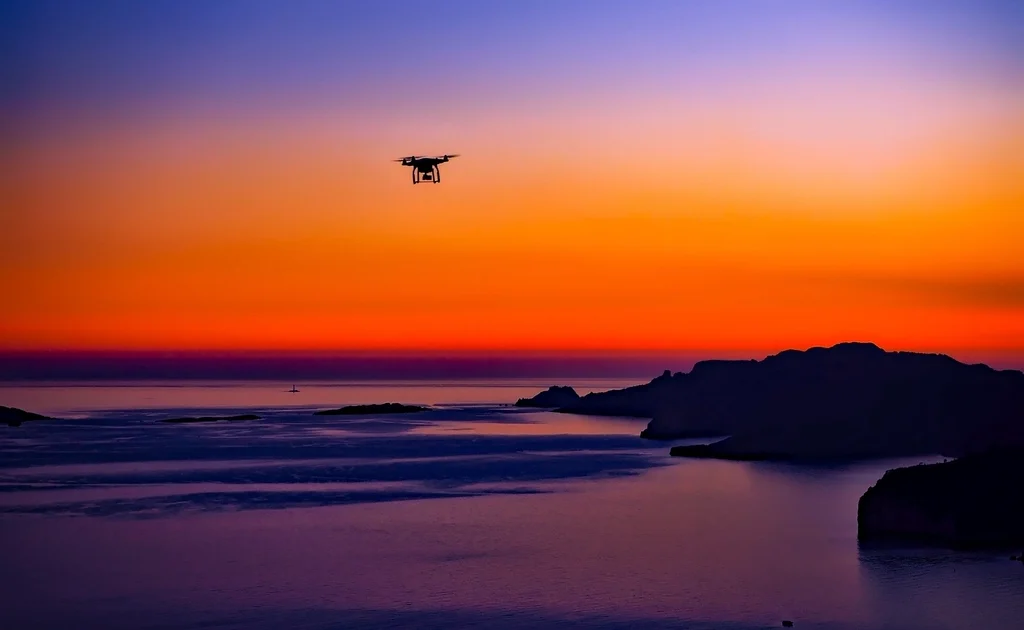
Quick Verdict: Drones are worth it for people who have a clear use case — travel photography, aerial video, real estate, mapping, or pure enjoyment of flying. For casual buyers who think a drone sounds cool, they often end up sitting in a closet after a few flights. The honest answer depends on who you are and what you actually plan to do with it. This guide breaks it down without the hype. For specific model recommendations, see Best Drones.
What Makes Drones Worth It
The core value proposition of a drone is a perspective that was previously only possible from a helicopter or plane. For certain use cases, that perspective is genuinely transformative and difficult to replicate any other way.
Aerial Photography and Video
A mid-range drone like the DJI Mini 4 Pro (249 g, ~$759) puts a stabilized 4K/60fps camera in the sky at an altitude and position no ground-based camera can reach. For travel photographers, landscape videographers, real estate professionals, and content creators, this capability adds something unique and valuable. A cinematic reveal shot pulling back from a mountain trail, an overhead view of a coastline, a slow orbit around a building — these shots require a drone. No substitute exists at reasonable cost.
Real Estate and Professional Video
For professional real estate photographers with a Part 107 certificate, drones pay for themselves quickly. Aerial shots are a standard deliverable for listings at nearly every price point, and many photographers charge a $150–$400 premium for drone coverage. A drone that costs $1,000 can earn back its cost in a handful of shoots. The ROI in this context is straightforward.
Hobby Flying and FPV
Some people simply enjoy flying. The skill ceiling on FPV drones (first-person view) is high and genuinely engaging — it is its own sport with a growing competitive scene. If the activity of piloting is itself enjoyable, a drone delivers real value as a hobby the same way a mountain bike or kayak does. The question is whether you are actually that person, or whether you imagine you are.
When Drones Are Not Worth It
Honesty here prevents a $500–$1,000 mistake:
- You live in a dense urban area: Most cities restrict or effectively prohibit drone flying within their limits due to controlled airspace near airports, local ordinances, and safety rules about flying over people. If you can’t easily drive 20–30 minutes to a park or open area, your drone will fly rarely.
- You want a one-time vacation toy: The learning curve — understanding regulations, flight modes, airspace apps, battery management, editing footage — is non-trivial. If you picture yourself using a drone once or twice on a trip, the time investment to fly safely and legally may not be worth it for occasional use. Consider a drone rental service instead.
- You haven’t thought about the rules: The TRUST test, registration for drones over 250 g, Remote ID requirements, and airspace restrictions are real. They’re not burdensome for regular flyers, but they are a reason drones are not as plug-and-play as a camera. People who haven’t thought about this often fly illegally without realizing it, or stop flying when they learn the restrictions. See Drone Laws & Registration in the US.
- You expect long sessions: Even the best consumer drones fly 34–46 minutes per battery. Packing two batteries doubles that, but it’s still a relatively short window per outing, plus the time to travel, set up, and edit. Occasional use often doesn’t justify the investment.
Honest Pros and Cons
| Pros | Cons |
|---|---|
| Unique aerial perspective no other camera can provide | Regulatory learning curve (registration, TRUST, airspace) |
| Excellent camera quality at mid-range prices (DJI Mini 4 Pro) | Short flight times (30–45 min realistic per battery) |
| Strong ROI for professional real estate / video use | Flying restrictions in many urban and suburban areas |
| Rewarding hobby with high skill ceiling (FPV) | Extra accessories (batteries, cases, ND filters) add cost |
| Sub-250g models easy to travel with domestically | Weather-sensitive — wind, rain limit fly days |
| Content creation differentiation for social/YouTube | Risk of flyaway, crash, or loss; insurance not standard |
Total Cost of Ownership: Beyond the Sticker Price
The drone’s purchase price is not the full cost. Budget for:
- Extra batteries: One spare battery is almost mandatory. DJI Mini 4 Pro batteries cost ~$75–$95 each. Budget $150–$190 for two spares.
- A carry case or backpack: $30–$100. The DJI Fly More Combo includes a shoulder bag; otherwise buy separately.
- ND filters: Essential for smooth-looking video (they control shutter speed in bright light). A set costs $30–$80.
- Spare propellers: Crashes happen. Keep a set on hand. $10–$20.
- DJI Care Refresh (optional): DJI’s accident protection plan. ~$69–$139/year for the Mini series. Worth it for new pilots.
- Memory cards: A fast 64 GB or 128 GB microSD card — $15–$30.
For a DJI Mini 4 Pro setup with two extra batteries, a case, ND filters, and a memory card, expect to spend $950–$1,100 total. The Fly More Combo (~$960) bundles the drone, three batteries, ND filter set, and bag — it’s almost always the better value for anyone planning to fly regularly.
Are Cheap Drones Worth It?
Budget drones in the $100–$200 range (common on Amazon) are suitable as toys and for learning the basics of orientation and control. Their cameras are modest, flight times are short (10–15 minutes), and they lack the GPS stabilization, return-to-home safety, and obstacle avoidance of mid-range models. They’re not worth it as a primary drone for anyone who wants good footage. They are worth it as a learning tool before investing $750+ in a DJI.
The Holy Stone HS720E (~$300) is the credible budget option with GPS, 4K, and acceptable flight time — a reasonable first drone if $760 for the Mini 4 Pro is not feasible now.
The Honest Verdict by User Type
| Who You Are | Worth It? | Recommended Entry Point |
|---|---|---|
| Travel photographer / videographer | Yes — high value add | DJI Mini 4 Pro (~$759) |
| Real estate / commercial photographer | Yes — strong ROI | DJI Air 3S (~$1,099) + Part 107 |
| Hobbyist who genuinely likes flying | Yes — fulfilling hobby | DJI Mini 4 Pro or FPV quad |
| Casual “sounds fun” buyer in a dense city | Maybe not — assess flying access first | Rent first, then decide |
| One-time vacation use | Probably not — try a rental | Drone rental service |
| Parent buying a toy for a kid | Yes at budget level | $100–$200 beginner toy quad |
Frequently Asked Questions
How quickly do most people stop using their drone?
Usage patterns vary widely, but the most common pattern for casual buyers is heavy initial use followed by declining frequency once the novelty passes and the regulatory complexity and battery management overhead becomes clear. People who buy drones with a specific creative purpose tend to fly long-term. People who buy them because drones look cool often use them infrequently after the first few months.
Can I make money with a drone?
Yes — but you need the FAA Part 107 Remote Pilot Certificate for any commercial use. Real estate photography, videography, construction site monitoring, agricultural surveying, and inspection work are established commercial use cases. The certificate costs $175 for the knowledge test and requires passing a 60-question exam. See Do You Need a License to Fly a Drone? for the full process.
What is the best drone for someone who isn’t sure yet?
The DJI Mini 4 Pro is the most forgiving starting point for undecided buyers. Its sub-250g design reduces regulatory hurdles, it holds its resale value well, and its omnidirectional obstacle avoidance reduces the cost of beginner mistakes. If you decide it’s not for you, it resells easily. See How to Choose a Drone for a full comparison.
Are drones safe?
When flown responsibly within FAA rules — in uncontrolled airspace, away from people, within line of sight — drones have a strong safety record. The majority of incidents involve either flying in restricted airspace (near airports) or flying beyond line of sight. Following the rules substantially reduces risk to others.