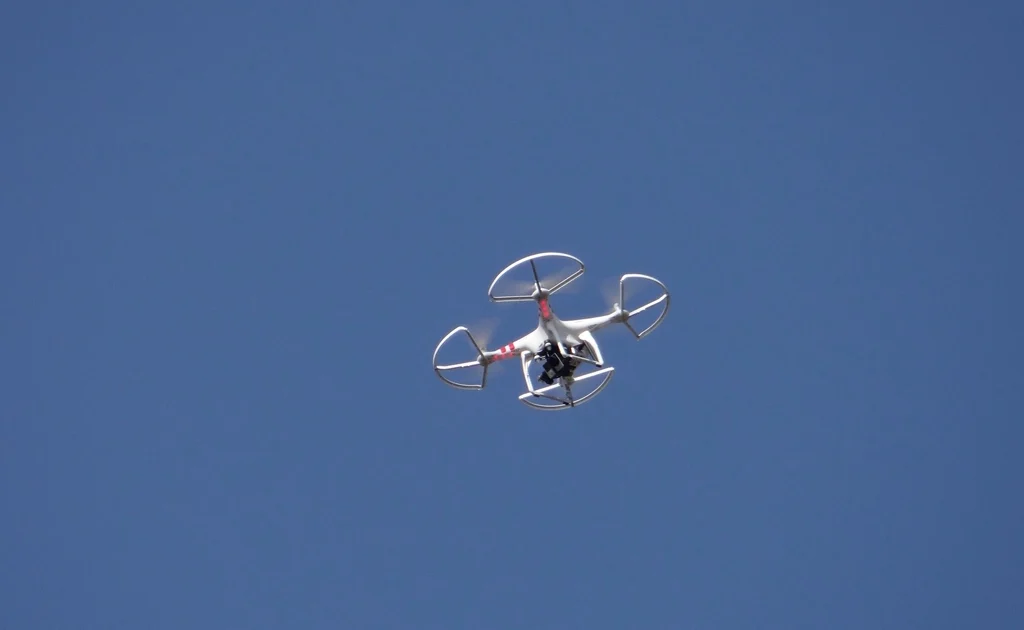
Quick Verdict: Advertised drone flight times are measured in ideal lab conditions — no wind, hovering, moderate temperature, battery at 100% health. Real-world flight times run 15–25% shorter. Understanding why, and what actually determines how long a drone stays in the air, helps you plan better sessions and buy smarter. For specific drone recommendations, see Best Drones and How to Choose a Drone.
Advertised vs. Real-World Flight Times: The Gap Explained
Drone manufacturers test flight time under controlled conditions: no wind, hovering at low altitude, at 77°F (25°C), with a brand-new battery at full capacity. This represents the theoretical maximum, not typical performance.
In practice, actual flight time is shorter due to:
- Wind: Even moderate wind requires motors to work harder to maintain position. 10 mph headwind can cut flight time by 10–20%.
- Active flying vs. hovering: Rapid direction changes, ascending, and flying at high speeds all consume more current than stationary hovering.
- Camera recording: Active 4K recording draws additional power from the battery.
- Temperature: Cold batteries (below 50°F/10°C) deliver significantly less capacity than warm ones. LiPo batteries lose capacity rapidly in cold weather.
- Battery age: Battery capacity degrades with charge cycles. A battery with 100+ cycles will deliver meaningfully less flight time than a new one.
- Safety reserve: You should land at 20–30% battery, not at 0%. This effectively reduces usable flight time by another 20–30%.
Practical rule: Budget for 70–80% of the advertised flight time as your planning ceiling. For a DJI Air 3S rated at 45 minutes, plan 32–36 minutes of usable flight time per battery in reasonable conditions.
Real-World Flight Time Comparison by Popular Model
| Drone | Rated Time | Realistic Time | Battery Capacity | Weight |
|---|---|---|---|---|
| DJI Mini 4 Pro (standard battery) | 34 min | 26–30 min | 2590 mAh | 249 g |
| DJI Mini 4 Pro (Intelligent Flight Battery Plus) | 45 min | 35–38 min | 3850 mAh | Adds ~40 g |
| DJI Mini 3 Pro | 34 min | 26–30 min | 2453 mAh | 249 g |
| DJI Air 3 | 46 min | 36–40 min | 4241 mAh | 720 g |
| DJI Air 3S | 45 min | 35–38 min | 4276 mAh | 724 g |
| Autel EVO Lite+ | ~40 min | 30–34 min | 6175 mAh | ~835 g |
| Holy Stone HS720E | ~26 min | 18–22 min | 2800 mAh | <250 g |
How Drone Batteries Work
Consumer drones use Lithium Polymer (LiPo) or Lithium-Ion (Li-ion) batteries in “Intelligent Battery” form factors. DJI’s Intelligent Flight Batteries include embedded electronics that monitor individual cell voltages, track cycle counts, balance cells during charging, and communicate remaining capacity to the drone’s flight controller. This is why a DJI battery shows a precise percentage in the app rather than a rough estimate.
Key LiPo Battery Facts
- Nominal voltage: LiPo cells operate at ~3.7V nominal, fully charged to ~4.2V per cell, and should not be discharged below ~3.0V per cell (deep discharge damages the battery permanently).
- Capacity (mAh): Milliamp-hours is a measure of how much charge the battery holds. Higher mAh = more energy = longer flight time, but also more weight.
- C-rating: A measure of how fast the battery can discharge. Drone batteries are high-C-rate cells capable of delivering high currents at takeoff and in aggressive flight.
- Cycle life: Most consumer drone batteries are rated for 200–400 charge cycles before significant capacity degradation. A cycle is one full charge from near-empty to full.
Factors That Shorten Battery Life (Degradation)
- Storing at full charge for extended periods: LiPo batteries stored at 100% charge degrade faster than those stored at 50–60% (storage charge). DJI Intelligent Batteries auto-discharge to ~60% if left unused for several days — this is correct behavior, not a malfunction.
- Storing in extreme heat or cold: Heat accelerates chemical degradation. Leaving a battery in a hot car is one of the fastest ways to reduce its capacity.
- Deep discharging: Discharging below 10–15% repeatedly stresses the cells. Land at 20–30% minimum.
- Charging too fast: Using uncertified fast chargers that exceed the battery’s rated C-rate stresses cells. Use the manufacturer’s charger or a certified equivalent.
How to Maximize Flight Time Per Battery
- Fly in calm conditions: Wind is the largest real-world variable. A calm day adds 15–25% to practical flight time versus a breezy one.
- Avoid aggressive flight: Rapid acceleration, high-speed flight, and frequent sharp direction changes drain batteries faster. Smooth, deliberate flight is more efficient.
- Fly at moderate altitude: Ground effect (lift benefit close to the ground) and drag increase both have altitudinal components. For most camera drones, efficiency differences across normal operating altitudes are small, but extremely high altitudes in thin air require more rotor RPM.
- Warm up batteries in cold weather: Keep batteries in an inner jacket pocket until immediately before flight. In sub-freezing temperatures, a battery pre-heated to at least 50°F (10°C) delivers meaningfully more capacity.
- Turn off unnecessary features: If you’re not recording video, disable it. In very low-wind, hovering scenarios, even obstacle avoidance processing draws minor power — though the practical impact is marginal.
Battery Maintenance Best Practices
| Practice | Recommendation |
|---|---|
| Storage charge level | 40–60% (DJI batteries auto-discharge to this) |
| Storage temperature | 59–77°F (15–25°C) |
| Charging supervision | Do not leave charging unattended; use the official charger |
| Minimum landing charge | 20–30% — never deplete below 10% |
| Cold weather use | Pre-warm batteries before flight; monitor voltage closely in the app |
| Inspect before each flight | Check for swelling (puffing) — a swollen battery should not be flown or charged |
| Replace when capacity drops | Replace when you notice consistent flight time significantly below expected, or app shows degraded health |
How Many Batteries Do You Need?
One battery is the minimum for casual flying. For any serious photography or video session, two batteries is the practical standard — it roughly doubles your available shooting window before needing to return home. Three batteries is comfortable for a half-day outdoor shoot. DJI’s Fly More Combos bundle three batteries plus a hub charger at a discount, and for most buyers represent the right approach.
Battery charging time: DJI standard chargers fully charge a Mini 4 Pro battery in about 60–80 minutes. Hub chargers (charge multiple batteries sequentially) are convenient but don’t charge faster per battery. The DJI 65W car charger is useful for field charging between sessions.
Frequently Asked Questions
Why does my DJI battery self-discharge when stored?
DJI Intelligent Batteries automatically discharge to approximately 60% if left unused for a set number of days (typically 10 days by default, adjustable in DJI Fly). This is a protective feature — LiPo batteries degrade faster when stored at full charge. It is normal behavior, not a malfunction.
Can I fly my drone in cold weather?
Yes, but with precautions. Cold temperatures reduce battery capacity significantly — below 32°F (0°C), some batteries refuse to charge until they warm up, and capacity can drop by 30–40% in very cold conditions. Warm the batteries to at least 50°F (10°C) before flying. The DJI Mini 4 Pro is rated for operating temperatures above 14°F (-10°C). Monitor voltage closely in the app and land earlier than usual.
Why is my flight time shorter than advertised even on a new drone?
Real-world conditions always differ from lab testing conditions. Any wind, any active flying (as opposed to hovering), recording video, using obstacle avoidance, and normal ambient temperature variation all reduce flight time below the lab maximum. 15–25% below the rated spec in normal real-world conditions is expected and normal.
How many charge cycles do DJI batteries last?
DJI rates most consumer drone batteries for approximately 200 charge cycles before significant capacity degradation begins. With good care (proper storage, avoiding deep discharge, appropriate charging temperatures), batteries often remain serviceable well past 200 cycles at somewhat reduced capacity. DJI Fly’s battery section shows your cycle count.
Is it worth buying the Intelligent Flight Battery Plus for the DJI Mini 4 Pro?
Yes, if flight time is a priority. The Plus battery extends rated flight time from 34 to 45 minutes at the cost of adding approximately 40 g, pushing the drone to ~289 g — above the 250 g FAA registration threshold for recreational flyers. For most travel and photography use cases, the longer flight time is worth the regulatory overhead. The standard battery is the better choice if staying sub-250 g is a priority for you.