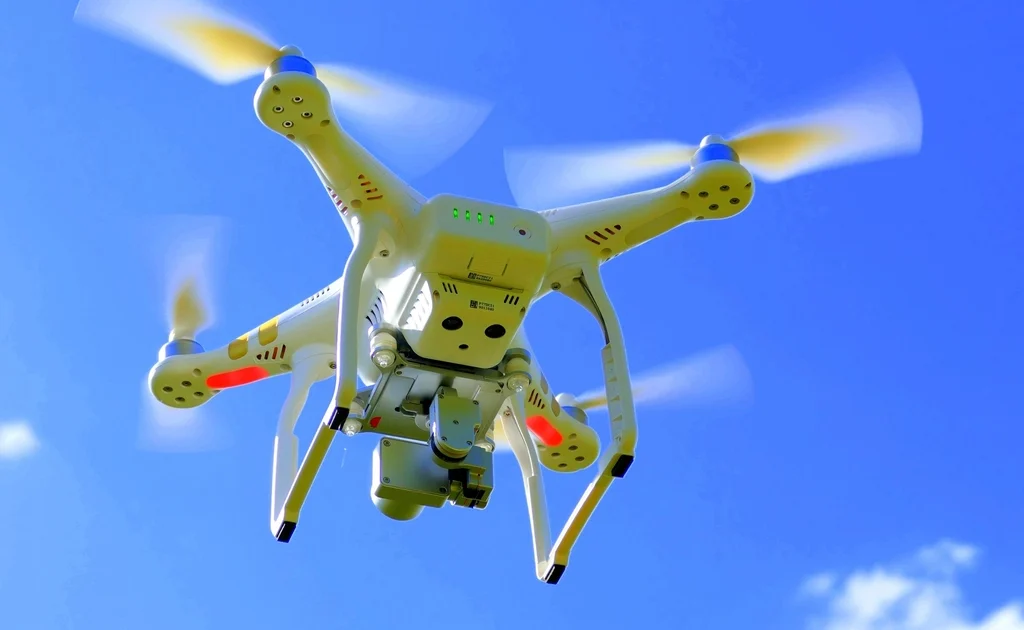
Quick Verdict: The best long-range drones in 2026 push transmission distances to 30–32 km using DJI’s O4+ system, with flight times reaching 51 minutes on the Mavic 4 Pro. For most pilots, the DJI Air 3S (32 km range, 45-min flight) offers the best combination of range, image quality, and value. Professional pilots needing true long-endurance coverage should look at the Mavic 4 Pro or specialized platforms.
| Award | Drone | Transmission Range | Flight Time | Price Tier |
|---|---|---|---|---|
| Best Overall Range | DJI Air 3S | 32 km (O4+) | 45 min | Mid-Premium (~$1,099) |
| Best Premium | DJI Mavic 4 Pro | 30 km (O4+) | 51 min | Premium (~$2,199) |
| Best Mid-Range | DJI Air 3 | 20 km (O4) | 46 min | Mid (~$1,099) |
| Best Lightweight Long-Range | DJI Mini 5 Pro | 13 km (O4) | 52 min (Plus battery) | Mid (~$759) |
| Best Non-DJI | Autel EVO II Pro V3 | 15 km | 42 min | Premium (~$1,699) |
How We Chose the Best Long-Range Drones
Long-range drone capability is one of the most frequently misunderstood specifications in the category. Published transmission range figures represent maximum distances under FCC test conditions — clear line of sight, minimal radio frequency interference, optimal atmospheric conditions. Real-world effective range is typically 30–60% of the stated maximum in urban and suburban environments. We evaluated each model on:
- Transmission system — O4 vs O4+ vs proprietary systems; newer O4+ provides enhanced signal stability and range over standard O4.
- Flight time — Range means little if the battery runs out before you can return. We matched transmission range against flight endurance for realistic round-trip estimates.
- Video quality at range — Some drones compress video heavily at long distances; we noted systems that maintain HD or better quality across their range.
- Legal considerations — Most recreational regulations (FAA Part 107, EASA) require visual line of sight. Stated transmission ranges far exceed VLOS limits; effective operational range for legal flying is a separate calculation.
- Real-world reliability — Based on reported pilot experiences and expert reviews, not manufacturer-only claims.
Best Overall Range — DJI Air 3S
Best for: Pilots who want the longest consumer transmission range available combined with professional-grade imaging.
The DJI Air 3S leads all current consumer drones with a quoted 32 km O4+ transmission range — the longest of any DJI consumer model as of mid-2026. Its 1-inch CMOS sensor captures 50-megapixel stills and 4K/60fps video, and the 45-minute flight time provides substantial operational endurance. O4+ maintains stable HD video transmission with low latency across its rated range. The Air 3S also features omnidirectional obstacle sensing (APAS 5.0) and dual cameras (wide + medium telephoto). For pilots who need the furthest consumer transmission range combined with genuine image quality, nothing currently matches it at this price point.
- 32 km O4+ transmission — longest consumer range in 2026
- 45-minute flight time for extended operational coverage
- 1-inch sensor with 4K/60fps for professional-quality footage at range
- Omnidirectional APAS 5.0 obstacle avoidance
- 32 km range far exceeds visual line-of-sight limits in most jurisdictions
- Heavier than mini-class drones; requires FAA registration in the US
Best Premium — DJI Mavic 4 Pro
Best for: Professional pilots who need the longest flight time, best camera, and premium obstacle avoidance in a single package.
The DJI Mavic 4 Pro reaches 30 km on its O4+ transmission system while delivering the industry-leading 51-minute flight time. Its triple Hasselblad camera system (100MP main sensor) produces the finest consumer aerial imagery available, and LiDAR-powered APAS 6.0 with 0.1-lux sensitivity maintains reliable obstacle detection even at dusk. For professional cinematographers, surveyors, and inspectors who need extended operational time at distance, the Mavic 4 Pro is the most capable consumer platform in 2026.
- 51-minute flight time — the longest of any consumer drone
- 100MP Hasselblad triple-camera for the highest-quality aerial imaging
- LiDAR APAS 6.0 works reliably in low-light conditions
- 30 km O4+ transmission matches near all practical operational needs
- ~$2,199 is a significant investment for most recreational pilots
- Added weight and size compared to mid-range alternatives
Best Mid-Range — DJI Air 3
Best for: Pilots who want proven long-range performance with dual cameras at a mid-range price.
The DJI Air 3 offers 20 km O4 transmission range with a 46-minute flight time and dual 48MP cameras (wide and medium telephoto). It provides a well-proven platform for pilots who need extended range capability without the premium price of the Air 3S or Mavic 4 Pro. The 46-minute flight time is excellent for its class, and the dual-camera setup gives compositional flexibility during long-range flights where repositioning is time-consuming. Omnidirectional obstacle avoidance (APAS 4.0) is included.
- 20 km O4 range covers most practical long-distance recreational scenarios
- 46-minute flight time for extended operations
- Dual 48MP cameras for wide and telephoto perspective flexibility
- Proven platform with wide accessory and support ecosystem
- 20 km range trails the Air 3S (32 km) and Mavic 4 Pro (30 km)
- O4 rather than O4+ means slightly lower transmission stability at extreme distances
Best Lightweight Long-Range — DJI Mini 5 Pro
Best for: Pilots who want the longest flight time in a sub-250g drone with reasonable transmission range.
The DJI Mini 5 Pro’s 52-minute flight time with the Plus battery is the longest of any sub-250g consumer drone, while its O4 transmission system reaches 13 km. For most recreational pilots flying within line of sight, 13 km transmission range is more than sufficient. Its 1-inch sensor, LiDAR obstacle avoidance, and sub-249g weight provide an exceptional capability package in a class with few peers. The extended flight time is particularly valuable for landscape and nature photography applications where extended hover time matters more than raw transmission distance.
- 52-minute flight time (Plus battery) — longest in the sub-250g class
- Sub-249g design avoids FAA registration requirements
- 1-inch sensor with 4K/60fps HDR
- 13 km O4 range covers recreational visual line-of-sight operations easily
- 13 km range is lower than larger models
- O4 system (not O4+) — standard rather than enhanced transmission
Best Non-DJI — Autel EVO II Pro V3
Best for: Professional pilots who prefer a non-DJI platform with strong long-range performance.
The Autel EVO II Pro V3 delivers approximately 15 km transmission range with a 42-minute flight time and a 1-inch Sony sensor capable of 6K video. Autel’s SkyLink 2 transmission system provides stable HD video within its range envelope. The EVO II Pro V3 is a popular choice among commercial pilots who need a non-DJI option due to procurement restrictions or platform preference. Its obstacle avoidance covers forward, backward, and downward detection — not fully omnidirectional, which is a consideration for complex environments.
- ~15 km range on SkyLink 2 transmission
- 1-inch Sony sensor with 6K video capability
- Strong non-DJI alternative with US-based Autel support
- 42-minute flight time for extended operations
- 15 km range trails DJI O4+ models significantly
- Not fully omnidirectional obstacle avoidance (forward/backward/down only)
Long-Range Drone Buying Guide
Transmission Range vs. Flight Range
Transmission range is how far the controller can communicate with the drone. Flight range is how far the drone can physically travel on a battery charge. These are separate specs that must both be evaluated. A drone with a 30 km transmission range and 45-minute flight time at typical cruising speed of ~40 km/h has a practical round-trip flight range of roughly 15 km — enough for most scenarios, but not 30 km in reality.
Visual Line of Sight Requirements
Under FAA Part 107 and most international regulations, pilots must maintain visual line of sight with their drone during flight. This practical limit — typically 500–1,500 meters depending on atmospheric conditions and drone size — is far shorter than the stated transmission ranges. Long transmission range primarily provides reliability and low-latency video within legal operating distances, not a license to fly further than you can see.
O4 vs O4+ Transmission Systems
DJI’s O4+ system (Air 3S, Mavic 4 Pro) extends transmission range to 30–32 km and provides enhanced signal stability compared to standard O4 (20 km on the Air 3, 13 km on the Mini 5 Pro). For most recreational pilots flying within line of sight, both O4 and O4+ provide more than adequate range. O4+ matters primarily for professional operations in environments with significant RF interference, where the enhanced signal performance makes a practical difference.
Battery and Endurance Planning
Flight time figures are measured under controlled conditions with no wind. Real-world flight time in moderate wind (15–20 mph headwinds) can be 20–30% shorter than quoted. Plan missions assuming 75% of the stated flight time for safe return margins, and always land with a comfortable battery reserve.
Frequently Asked Questions
What drone has the longest range in 2026?
Among consumer drones, the DJI Air 3S leads with a 32 km O4+ transmission range under FCC conditions. The DJI Mavic 4 Pro reaches 30 km. Professional and industrial drones from platforms like DJI Matrice series can achieve much greater distances but are not consumer products.
Can I legally fly my drone 20 km away?
In most jurisdictions, no. Visual line of sight requirements under FAA Part 107 and equivalent international regulations limit legal flight to distances where the pilot can see the drone unaided. This is typically 500–1,500 meters depending on conditions, far shorter than 20 km. Beyond Visual Line of Sight (BVLOS) operations require specific waivers and authorizations in most countries.
Does transmission range affect video quality?
Yes, at or near the edges of a drone’s transmission range, video compression typically increases and latency rises. DJI’s O4+ system maintains HD quality and low latency across a larger portion of its rated range than standard O4. For practical operations within visual line of sight, this difference is rarely noticed — both systems deliver smooth HD video at normal flying distances.
Is the DJI Air 3S worth the upgrade over the Air 3 for range?
If long transmission range is a priority, yes. The Air 3S’s O4+ system extends range from 20 km (Air 3) to 32 km and provides better signal stability in congested RF environments. The Air 3S also offers a 1-inch sensor (vs. 1/1.3-inch on the Air 3) and APAS 5.0 over APAS 4.0. At similar price points, the Air 3S is the stronger current buy.
Browse our full comparison of top drones across all categories in our best drones guide for 2026.