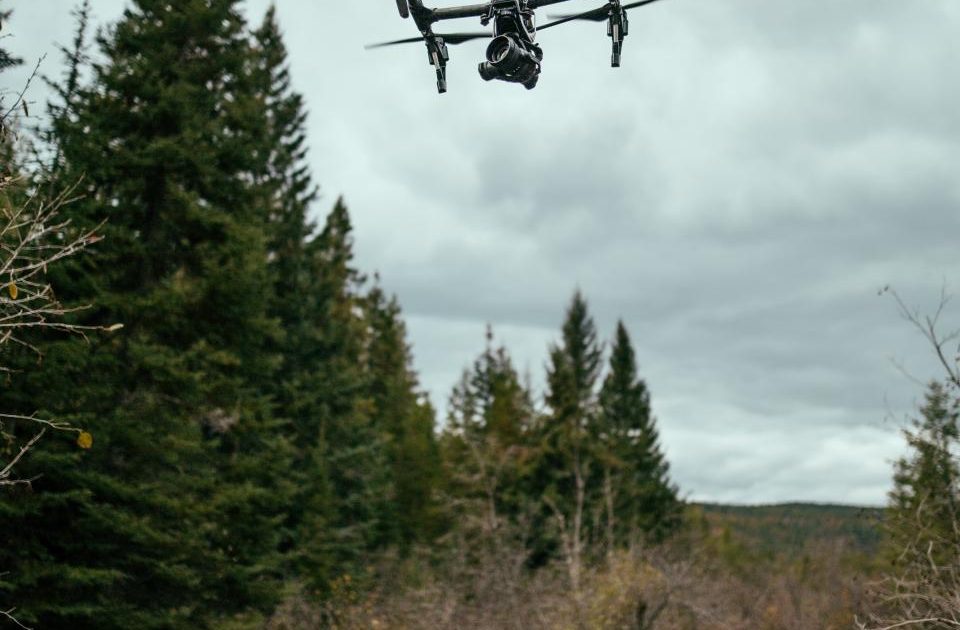
Quick Verdict: The best drones with obstacle avoidance in 2026 range from the LiDAR-powered DJI Mavic 4 Pro (best-in-class APAS 6.0 with night sensing) to the sub-250g DJI Mini 5 Pro (Nightscape omnidirectional sensing) and the DJI Air 3S (APAS 5.0 at a mid-range price). Every pick on this list detects obstacles from all six directions — forward, backward, left, right, up, and down.
| Award | Drone | Obstacle Avoidance System | Coverage | Price Tier |
|---|---|---|---|---|
| Best OA Overall | DJI Mavic 4 Pro | APAS 6.0 + LiDAR + 6-side fisheye | Omnidirectional + night | Premium (~$2,199) |
| Best Mid-Range OA | DJI Air 3S | APAS 5.0 omnidirectional vision | Omnidirectional | Mid-Premium (~$1,099) |
| Best Sub-250g OA | DJI Mini 5 Pro | Nightscape (LiDAR + binocular vision) | Omnidirectional + low-light | Mid (~$759) |
| Best Alternative OA | Skydio 2+ | 6×200° color cameras, autonomous nav | Omnidirectional | Premium (~$999) |
| Best Budget OA | DJI Mini 4 Pro | APAS 4.0 omnidirectional vision | Omnidirectional | Mid (~$759) |
How We Chose the Best Obstacle Avoidance Drones
Obstacle avoidance is one of the most safety-critical features in consumer drones, but the term covers a wide range of capability — from basic downward sensors that prevent ground crashes to true omnidirectional systems that detect thin branches from every angle including above and below. We evaluated each model on the completeness, reliability, and intelligence of their obstacle avoidance systems:
- Omnidirectional coverage — Full six-direction detection (forward, back, left, right, up, down) versus partial coverage (forward-only or forward+down only).
- Sensing technology — LiDAR-based sensing provides significantly better performance in low light and against thin obstacles (branches, wires) compared to vision-only systems.
- APAS intelligence — Advanced Pilot Assistance Systems versions (4.0, 5.0, 6.0) determine how intelligently the drone routes around detected obstacles rather than just stopping.
- Low-light performance — Most obstacle avoidance systems degrade in poor lighting; systems that maintain reliable detection at dusk are noted specifically.
- Active tracking integration — Obstacle avoidance that works seamlessly during ActiveTrack/Follow Me modes is more valuable than systems that disable during tracking.
Best OA Overall — DJI Mavic 4 Pro
Best for: Pilots who demand the most advanced obstacle avoidance available in any consumer drone, including reliable operation in low-light conditions.
The DJI Mavic 4 Pro leads the consumer market on obstacle avoidance with APAS 6.0 — the most advanced iteration of DJI’s Automatic Pilot Assistance System. It combines six low-light fisheye sensors (rated to 0.1-lux sensitivity) with a forward-facing LiDAR unit that detects thin obstacles like branches and wires even in near-darkness. The result is a system that reportedly does not degrade at dusk or in shaded environments where competing vision-only systems lose reliability. APAS 6.0 actively routes around detected obstacles during autonomous flight modes, rather than simply stopping — enabling complex subject-tracking missions in wooded or built environments.
- LiDAR + six fisheye sensors — the most comprehensive consumer OA system in 2026
- 0.1-lux sensitivity — reliably detects obstacles in near-darkness
- APAS 6.0 actively routes around obstacles during autonomous tracking
- Forward LiDAR specifically designed to detect thin branches and wires
- ~$2,199 is premium pricing for the obstacle avoidance upgrade alone
- Heavier and less portable than mini-class alternatives
Best Mid-Range OA — DJI Air 3S
Best for: Pilots who want near-flagship obstacle avoidance performance at half the price of the Mavic 4 Pro.
The DJI Air 3S uses APAS 5.0 with omnidirectional vision sensors covering all six sides of the drone. It provides 90% of the Mavic 4 Pro’s obstacle avoidance capability according to expert evaluations, at half the price. APAS 5.0 actively routes around detected obstacles during ActiveTrack and autonomous flight modes, enabling confident tracking flights in environments with trees, structures, and other hazards. The vision-only system (no LiDAR) means some degradation in very low light — a distinction that matters primarily for operators flying at dusk or dawn rather than in typical daylight conditions.
- APAS 5.0 omnidirectional sensing on all six sides
- Active obstacle routing during AutoTrack and autonomous modes
- Rated as delivering ~90% of Mavic 4 Pro OA performance at $1,099
- Combined with 1-inch sensor and 32 km range for a complete capability package
- Vision-only system (no LiDAR) — some low-light degradation vs. Mavic 4 Pro
- Requires FAA registration at 300g+
Best Sub-250g OA — DJI Mini 5 Pro
Best for: Pilots who need omnidirectional obstacle avoidance in a sub-250g drone, including low-light performance.
The DJI Mini 5 Pro’s Nightscape obstacle sensing system combines binocular vision sensors with a LiDAR unit for omnidirectional detection that works reliably in low-light conditions — a capability previously available only in heavier, more expensive drones. This makes it the most capable sub-250g obstacle avoidance system available in 2026. For pilots who regularly fly in wooded areas, around complex architecture, or at dawn and dusk, the Nightscape system provides substantially better protection than the vision-only APAS 4.0 of the Mini 4 Pro, without exceeding the 250g registration threshold.
- LiDAR + binocular vision Nightscape system — low-light capable
- Omnidirectional detection in a 249g frame — best-in-class for sub-250g
- Reliable obstacle detection at dusk and in shade where vision-only systems fade
- 52-minute Plus battery flight time for extended complex-environment operations
- LiDAR sensing does not match Mavic 4 Pro’s 0.1-lux fisheye system in extreme low light
- Newer model with firmware still being refined
Best Alternative OA — Skydio 2+
Best for: Pilots who want autonomous obstacle avoidance from a US-made drone with the most advanced visual navigation system available outside DJI’s ecosystem.
The Skydio 2+ uses six 200-degree color cameras arranged to provide complete spherical visual coverage — theoretically no blind spots from any angle. Its machine-learning-based autonomous navigation system is designed to maintain active subject tracking through complex, obstacle-dense environments including tree lines, buildings, and bridges. The Skydio 2+ was designed from the ground up around autonomous flying rather than manual piloting, making it the strongest choice for operators whose primary use case is hands-free subject tracking in demanding environments. As an American-made drone, it is also free of US federal procurement restrictions that apply to DJI products.
- Six 200-degree color cameras for complete spherical obstacle detection
- Best-in-class autonomous tracking through complex obstacle environments
- US-made — no federal procurement restrictions
- Designed around autonomous navigation rather than manual piloting
- Camera quality not on par with DJI’s comparable price tier on image sensors
- App and ecosystem less polished than DJI Fly for non-tracking use cases
- Battery life and transmission range trails comparable DJI models
Best Budget OA — DJI Mini 4 Pro
Best for: Pilots who want proven sub-250g omnidirectional obstacle avoidance at the most accessible price point with a capable camera.
The DJI Mini 4 Pro offers omnidirectional APAS 4.0 vision-based obstacle sensing in a 249g foldable frame. Its six-direction detection covers the full obstacle envelope from any direction in typical daylight conditions. APAS 4.0 includes active routing around detected obstacles during subject tracking modes — a meaningful upgrade from older versions that only stopped when an obstacle was detected. With a 1/1.3-inch f/1.7 sensor, 4K/60fps HDR video, and 34-minute flight time, the Mini 4 Pro remains one of the most complete sub-250g drones with full omnidirectional obstacle avoidance available at its price point.
- Omnidirectional APAS 4.0 in a 249g sub-registration-threshold frame
- Active obstacle routing during subject tracking
- Mature platform with extensive firmware refinement and accessory ecosystem
- 1/1.3-inch f/1.7 sensor for capable low-light performance
- Vision-only (no LiDAR) — degrades in low-light compared to Nightscape systems
- 34-minute flight time shorter than Mini 5 Pro
Obstacle Avoidance Buying Guide
Omnidirectional vs. Partial Obstacle Sensing
Forward-only obstacle sensing (common on older and budget drones) only protects against objects directly in your flight path during forward motion. Lateral objects, overhead hazards, and obstacles encountered during sideways and backward flight go undetected. True omnidirectional sensing — covering all six sides — provides comprehensive protection regardless of flight direction, which matters most during active subject tracking, sideways orbit shots, and reversals.
LiDAR vs. Vision-Based Sensing
Vision-based obstacle sensing uses cameras and computer vision algorithms to detect objects. LiDAR (Light Detection And Ranging) emits laser pulses and measures the time of return, providing distance information independent of ambient light. Vision systems degrade in low light (dusk, shade, overcast), while LiDAR maintains accuracy. For most daylight flying, vision-based omnidirectional systems like APAS 4.0 and 5.0 are adequate. For dawn, dusk, or dense canopy flying, LiDAR-supplemented systems like the Mini 5 Pro’s Nightscape and the Mavic 4 Pro’s APAS 6.0 provide meaningfully better protection.
Does Obstacle Avoidance Work During Active Tracking?
Not always — this is a key distinction to verify before purchase. Older systems disable obstacle avoidance during ActiveTrack to maintain subject lock. APAS 4.0, 5.0, and 6.0 all maintain active obstacle routing during tracking modes. If you plan to use your drone primarily for subject tracking in complex environments, confirm that obstacle avoidance remains active during your intended flight modes.
Frequently Asked Questions
What drone has the best obstacle avoidance in 2026?
The DJI Mavic 4 Pro has the most advanced obstacle avoidance system in the consumer market in 2026, combining six low-light fisheye sensors with forward LiDAR and APAS 6.0 intelligence. It reliably detects thin branches and wires in near-darkness — a capability no competing consumer drone matches as of mid-2026.
Does the DJI Mini 3 have obstacle avoidance?
No. The DJI Mini 3 does not include obstacle avoidance sensing. If obstacle avoidance is important for your flying style or environment, the DJI Mini 4 Pro (APAS 4.0) or DJI Mini 5 Pro (Nightscape) are the correct choices in the Mini series.
Is obstacle avoidance worth the extra cost?
For pilots who fly in environments with trees, structures, or complex terrain — yes, clearly. For pilots who only fly in open, unobstructed areas, the practical value is lower. As omnidirectional obstacle avoidance has become available at the $759 price point (Mini 4 Pro, Mini 5 Pro), the cost premium for this capability has dropped significantly from earlier generations.
Does obstacle avoidance prevent all crashes?
No. Obstacle avoidance systems have limitations: they may not detect very thin objects (wires, fishing line), reflective surfaces (glass, water), fast-moving objects, or objects at the extremes of their sensor range. Low light degrades vision-only systems. Obstacle avoidance reduces crash risk substantially but does not eliminate it — always maintain manual awareness of your surroundings and fly within your skill level.
Compare all our featured drones in the Drone Ear best drones guide for 2026.