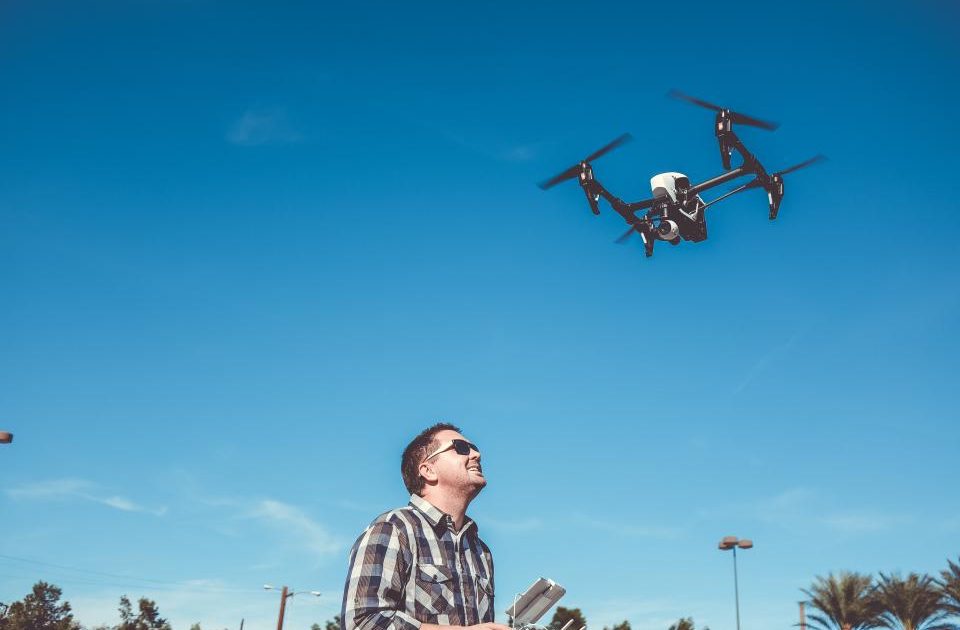
Quick Verdict: The best beginner camera drones in 2026 combine GPS stability, capable cameras, and safety features that make first flights successful rather than stressful. The DJI Mini 4K leads at $299 for most beginners, the DJI Flip adds obstacle avoidance and a better sensor at $439, and the Potensic ATOM SE offers a capable non-DJI alternative at $229.
| Award | Drone | Best For | Camera / Sensor | Price Tier |
|---|---|---|---|---|
| Best Overall Beginner | DJI Mini 4K | First drone for most beginners | 4K / 3-axis gimbal, GPS | Budget (~$299) |
| Best Step-Up Beginner | DJI Flip | Beginners wanting OA & better sensor | 1/1.3-inch, 48MP, 4K/60fps HDR | Budget (~$439) |
| Best for Absolute Beginners | DJI Lito X1 | Total beginners who want LiDAR OA | 1/1.3-inch, 48MP, 4K HDR | Budget (~$379) |
| Best Budget Alternative | Potensic ATOM SE | Non-DJI option under $250 | Sony sensor, 4K, 3-axis gimbal | Budget (~$229) |
| Best Mid-Range Beginner | DJI Mini 3 | Beginners wanting extended flight time | 1/1.3-inch, 48MP, 4K/30fps | Budget-Mid (~$469) |
How We Chose the Best Beginner Camera Drones
Beginner drone selection involves a different set of priorities than professional aerial photography. The most important factors for first-time pilots are stability, safety, and ease of learning — not maximum camera specs. A drone that’s easy to fly, hard to crash, and forgiving of beginner mistakes will produce better results and more enjoyment than a technically superior drone that intimidates or overwhelms a new pilot. We evaluated each model on:
- GPS stabilization — GPS hold keeps the drone stationary in the air without constant stick input, allowing beginners to focus on framing and learning controls rather than fighting drift.
- Return-to-Home — Automatic RTH when the battery is low or the signal is lost prevents the most common beginner loss scenario.
- Camera quality appropriate for the price — 4K video and a 3-axis gimbal are achievable at beginner price points and make a meaningful difference in footage quality over budget camera drones.
- Weight and regulatory compliance — Sub-250g drones avoid mandatory FAA registration for recreational use, reducing the administrative barrier for casual beginners.
- Obstacle avoidance — Not all beginner drones include it, but those that do substantially reduce crash risk during learning.
- App and learning ecosystem — A well-designed companion app with flight tutorials and automated flight modes accelerates learning.
Best Overall Beginner — DJI Mini 4K
Best for: Most beginners who want a reliable, capable first drone from a trusted manufacturer at a clear and accessible price.
The DJI Mini 4K at $299 provides the most compelling beginner entry point in 2026. It packs a true 4K camera with a 3-axis stabilized gimbal into a sub-249g foldable design with GPS positioning and DJI’s Return-to-Home system. The DJI Fly app provides guided beginner flight modes, automated QuickShots (Dronie, Circle, Helix, Boomerang, Rocket), and extensive tutorial content. GPS stabilization holds the drone position even when the pilot releases the sticks — the single feature that most reduces beginner anxiety and crashes. The Mini 4K also benefits from DJI’s mature support ecosystem, with widely available replacement parts and an active community for troubleshooting.
- $299 — clearest value proposition in the beginner category
- True 4K with 3-axis gimbal for stable, professional-looking footage
- Sub-249g with GPS and Return-to-Home
- DJI Fly app with beginner tutorials and automated QuickShots
- Well-established support and parts ecosystem
- No obstacle avoidance — relies on pilot awareness for collision prevention
- No 4K/60fps — limited to 4K/30fps for video
Best Step-Up Beginner — DJI Flip
Best for: Beginners who want obstacle avoidance and a better sensor than the Mini 4K, and are willing to spend $140 more for meaningful safety and camera upgrades.
The DJI Flip adds two critical capabilities over the DJI Mini 4K at $439: obstacle avoidance (front-facing sensors that prevent collisions during forward flight) and a 1/1.3-inch CMOS sensor with 48-megapixel resolution and 4K/60fps HDR video. For beginners who anticipate flying in environments with trees or structures, the obstacle avoidance alone is a meaningful safety investment that can prevent costly crashes during the learning phase. The 4K/60fps HDR camera delivers substantially better video quality than the Mini 4K in high-contrast and low-light conditions.
- Obstacle avoidance — significantly reduces crash risk for new pilots
- 1/1.3-inch sensor with 4K/60fps HDR — major video quality upgrade
- Sub-249g with GPS and DJI Fly app ecosystem
- $439 — meaningful upgrades for $140 more than the Mini 4K
- Newer model with less community documentation than the Mini 4 Pro
- Obstacle avoidance is front-facing, not omnidirectional
Best for Absolute Beginners — DJI Lito X1
Best for: Complete beginners with no prior drone experience who want the most crash-resistant beginner drone available.
The DJI Lito X1 is specifically designed for pilots with zero prior experience. It weighs under 250g, features front-facing LiDAR obstacle avoidance for highly reliable collision prevention (LiDAR works in bright sunlight and shade where vision-only systems can struggle), and captures 4K HDR video with 48 megapixels from a 1/1.3-inch sensor. Its beginner-mode flight restrictions limit speed and range during initial flights, and the DJI Fly app provides step-by-step guided first-flight tutorials. The combination of LiDAR obstacle avoidance and beginner flight modes makes it the most forgiving first drone available for pilots who expect their first flights to involve some disorientation.
- Front-facing LiDAR obstacle avoidance — more reliable than vision-only in varied lighting
- Beginner flight mode with speed and range restrictions
- Sub-250g with 4K HDR and 48MP camera
- Step-by-step first-flight tutorials in DJI Fly app
- ~$379 is higher than the Mini 4K for pilots with some prior RC experience who may not need LiDAR OA
- Newer platform with less community support content than established models
Best Budget Alternative — Potensic ATOM SE
Best for: Beginners who prefer a non-DJI option, or those shopping on the tightest possible budget for a GPS-equipped camera drone.
The Potensic ATOM SE at $229 is the strongest non-DJI beginner drone in 2026, featuring a Sony CMOS sensor, 4K video with a 3-axis electronic gimbal, GPS hold, and sub-249g weight. It provides beginner-friendly features including GPS return-to-home, altitude hold, and intelligent flight modes. For beginners who want to avoid the DJI ecosystem or are on a tighter budget than the Mini 4K’s $299, the ATOM SE delivers capable performance with meaningful GPS stability.
- $229 — most accessible GPS camera drone on this list
- Sony CMOS sensor for solid image quality
- Sub-249g with GPS hold and return-to-home
- Strong non-DJI alternative with US-based Potensic support
- App and ecosystem less polished than DJI Fly
- 3-axis electronic gimbal is less effective than mechanical 3-axis on DJI models
- No obstacle avoidance
Best Mid-Range Beginner — DJI Mini 3
Best for: Beginners who want a proven, well-supported drone with extended flight time and an excellent camera for a price between the Mini 4K and the Flip.
The DJI Mini 3 is a proven platform that sits between the Mini 4K and the Flip in both price and capability. Its 1/1.3-inch sensor captures 48MP stills and 4K/30fps video with a 3-axis gimbal in a sub-249g design. The 38-minute standard flight time (extendable with a Plus battery) gives beginners comfortable flight sessions without constant battery swapping. Automated QuickShots and the DJI Fly app ecosystem make capturing polished aerial footage accessible from the first flight. Its established parts and accessory ecosystem is an advantage over newer models for beginners who want easy access to upgrades and replacements.
- 38-minute flight time for comfortable beginner sessions
- 1/1.3-inch sensor with 4K/30fps and 3-axis gimbal
- Sub-249g with proven DJI Fly app and extensive accessory ecosystem
- Automated QuickShots for easy cinematic results
- No obstacle avoidance — pilot must maintain situational awareness
- 4K/30fps only — the Flip’s 4K/60fps and better sensor are available at a similar price
Beginner Camera Drone Buying Guide
What Budget Should a Beginner Set?
Most drone experts recommend beginners spend between $200 and $450 on their first drone. Under $200, GPS stabilization is typically absent or unreliable — making the drone significantly harder to fly safely. The $299–$439 sweet spot provides GPS stability, 4K cameras, and beginner safety features without overcommitting to a platform before you know whether drone flying will become a serious hobby. Spending $750+ on a first drone before developing basic piloting skills increases the financial risk of a crash during the learning phase.
GPS vs. Non-GPS Drones for Beginners
GPS positioning is the single most important feature for beginner safety. Without GPS, the drone drifts with wind and requires constant stick corrections to maintain hover position. With GPS, the drone holds its position automatically, allowing new pilots to focus on learning controls, framing shots, and situational awareness rather than fighting constant drift. Every drone on this list includes GPS as a baseline feature — we do not recommend non-GPS drones for beginner camera work.
Do Beginners Need Obstacle Avoidance?
It depends on where you fly. In open spaces (parks, fields, beaches), obstacle avoidance provides less practical benefit — there’s little to avoid. In environments with trees, buildings, and structures, obstacle avoidance substantially reduces the risk of a beginner crash during a disorienting moment. If you expect to fly in complex environments, the DJI Flip or Lito X1 are better choices. If you’ll fly primarily in open areas, the Mini 4K’s lower price is justified.
FAA Registration for Beginners
In the US, recreational drone pilots operating drones weighing 0.55 lbs (250g) or more must register with the FAA. The registration fee is $5 per drone. All drones on this list — with the exception of potentially some configurations — weigh under 250g, keeping recreational flyers below the mandatory registration threshold. FAA Part 107 certification is required for any commercial use of drone footage, including selling or licensing photos or videos.
Frequently Asked Questions
What is the best drone for a complete beginner with a $300 budget?
The DJI Mini 4K at $299 is the clearest recommendation for beginners with a $300 budget. It provides GPS stability, 4K video with a 3-axis gimbal, Return-to-Home, and the DJI Fly app ecosystem in a sub-249g design. No non-DJI option at this price point offers a comparable combination of reliability, camera quality, and app experience as of mid-2026.
How long does it take to learn to fly a drone?
Most beginners can achieve basic flight control — hover, forward/backward, left/right, rotation — within 2–3 hours of practice with a GPS-equipped drone. Comfortable cinematic flying (smooth orbits, precise altitude control, confident framing) typically takes 10–20 hours of practice. Automated QuickShots available in DJI drones produce polished results even during early learning, reducing the performance gap between a beginner and an experienced pilot for standard shots.
Is DJI the best brand for beginner drones?
DJI dominates the beginner drone market in 2026 due to the combination of the DJI Fly app’s beginner guidance, mature GPS and safety systems, and strong parts and support availability. Potensic and Autel offer capable alternatives at various price points. For a first drone purchase, DJI’s ecosystem reduces the friction of getting started and provides the broadest community of support resources for new pilots.
See our full guide to top drones across all categories at Drone Ear — best drones for 2026.