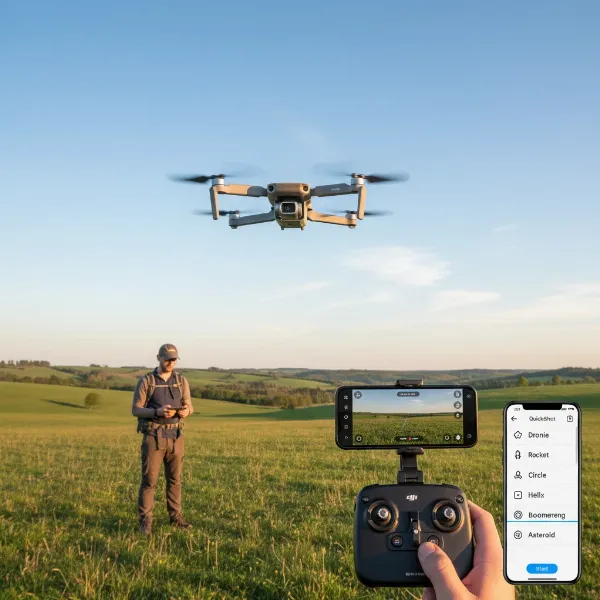
Have you ever yearned for the sheer exhilaration of FPV drone racing, the blur of speed, and the precise control needed to navigate challenging courses? The Walkera F210 emerged as a formidable contender in this high-octane sport, designed to deliver an adrenaline-pumping experience right out of the box. This review dives deep into what made the Walkera F210 a noteworthy FPV racing drone, exploring its robust design, blistering performance, and the overall flying experience for pilots of all skill levels.
Walkera F210: An Introduction to a Racing Legend
What exactly is the Walkera F210? It’s a 210mm class FPV (First-Person View) racing quadcopter, meaning the diagonal distance between its motors is 210 millimeters. This size class is a sweet spot for agility and speed, making it highly competitive on race tracks. Unlike many drones designed for aerial photography, the F210 was built with one primary purpose: winning races.
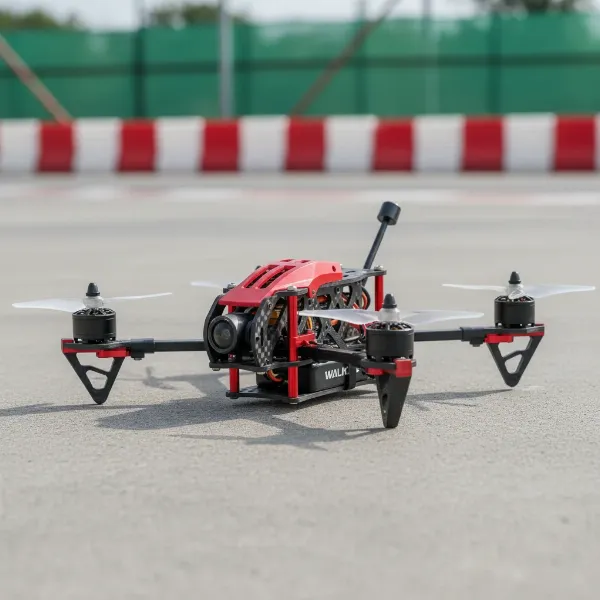 Walkera F210 210mm class FPV racing drone, sleek design, ready for high-speed competition.
Its design philosophy revolved around a balance of speed, agility, and crucial durability. In drone racing, crashes are not a matter of “if” but “when,” so a resilient frame is paramount. Walkera engineers crafted the F210 to withstand significant impacts, aiming to minimize downtime and keep pilots in the air. This focus on ruggedness immediately set it apart in a demanding sport.
At a glance, the Walkera F210 showcased several key features. It was powered by high-performance brushless motors, providing the raw thrust necessary for rapid acceleration and top speeds. An F3 flight controller served as its brain, allowing for precise and responsive handling. For the FPV experience, a 700TVL camera with low-latency real-time video transmission was integrated, essential for navigating courses with immediate visual feedback. An On-Screen Display (OSD) also provided vital flight data directly in the pilot’s view.
Unleashing the Beast: Performance and Flight Characteristics
The true test of any racing drone lies in its performance, and the Walkera F210 certainly aimed to impress. Equipped with powerful KV2500 brushless motors and designed to run on a 4S LiPo battery, the F210 boasted impressive speed and agility. Pilots consistently reported it as a remarkably fast and nimble flyer, capable of sharp turns and quick maneuvers that are critical for competitive racing. The low latency between controller inputs and drone response meant that pilots felt a direct connection to the aircraft, enhancing precision.
The F210 offered multiple flight modes, catering to a range of pilot proficiencies. The “Stabilize” mode provided a gentle, self-leveling experience, making it manageable for those new to FPV racing. Moving up, the “Intermediate” mode allowed for more aggressive flying, including basic flips and rolls, while still offering some self-leveling assistance. For seasoned racers and those seeking ultimate control, the “Advanced” (Acro) mode unlocked the drone’s full potential, disengaging stabilization for complete manual control, essential for advanced aerobatics and competitive speed.
The FPV experience was a core strength of the F210. Its 700TVL camera, while not providing cinematic resolution, offered a wide 120-degree field of view and, notably, infrared night vision capabilities. This meant pilots could engage in FPV flying not just during the day but also in low-light conditions, adding another dimension to the racing possibilities. Real-time image transmission allowed for an immersive experience, making pilots feel truly connected to the drone’s perspective.
Built to Endure: Durability and Build Quality
One of the most praised aspects of the Walkera F210 was its exceptional durability. Constructed primarily from high-quality carbon fiber, the frame was engineered to absorb impacts and resist damage. Reviews frequently highlighted its ability to withstand numerous crashes, a testament to its robust design. The F210’s “bow” body design and thick arms contributed significantly to its structural integrity, protecting internal components during rough landings or collisions.
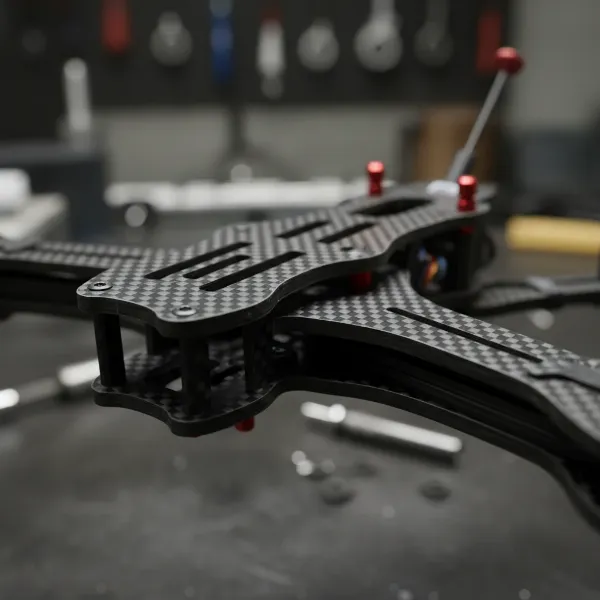 Walkera F210's durable carbon fiber frame, showing its robust construction and crash resistance.
Beyond its inherent strength, the F210 also featured a thoughtful modular design. Racing drones inevitably require repairs, and Walkera made it as simple as possible. Components like motors and ESCs (Electronic Speed Controllers) were designed to be easily replaceable, often with plug-in connections that eliminated the need for soldering. This modularity was a huge benefit, allowing pilots to quickly get back in the air after an incident, minimizing downtime and frustration.
The Pilot’s Perspective: Pros and Cons
Like any piece of specialized technology, the Walkera F210 had its strengths and areas for improvement.
Advantages:
- Exceptional Durability: The carbon fiber frame and “bow” design offered remarkable crash resistance, a must-have for FPV racing.
- High Speed and Agility: Powered by potent brushless motors and a 4S battery, it delivered thrilling speed and responsive handling.
- Ready-to-Fly (RTF) Option: Many versions came as RTF packages, including the drone and a Devo 7 transmitter, making it accessible for those eager to fly without extensive building.
- Night Vision Camera: The 700TVL FPV camera featured infrared capability, allowing for unique night flying experiences.
- Configurable Flight Controller: The F3 flight controller was configurable, offering flexibility for pilots to fine-tune settings.
- Multiple Flight Modes: From stabilized beginner modes to full acro, it catered to various skill levels.
- Modular Design: Simplified repairs and component replacement, reducing maintenance headaches.
Disadvantages:
- Learning Curve for Beginners: While it had beginner modes, its raw power and responsiveness could still be challenging for absolute novices.
- Proprietary Propellers: The F210 used specific two-blade props, which some pilots found limited power compared to popular triblades and restricted customization with aftermarket options.
- Earlier Fail-Safe Bug: Some early versions were reported to have a fail-safe bug that could lead to flyaways if connection was lost. Firmware updates usually addressed this.
- FPV Camera Resolution: The 700TVL camera provided clear real-time video for FPV racing, but it lacked high-definition recording capabilities for capturing cinematic footage.
- Devo 7 Controller: While functional, the included Devo 7 transmitter was sometimes perceived as less intuitive or feature-rich compared to higher-end alternatives, with some users noting a lack of clear indications for all knobs and buttons.
- Dim LED Indicators: Some users reported issues with dim or non-functioning turn indicator LEDs on certain units.
“The Walkera F210 redefined what a ready-to-fly racing drone could be, combining raw power with surprising resilience. It lowered the barrier to entry for FPV racing while still offering the performance demanded by competitive pilots.” – DroneEar Team, Drone Technology Specialists
Specifications Breakdown: What’s Under the Hood
Understanding the core specifications of the Walkera F210 provides insight into its capabilities.
| Feature | Specification |
|---|---|
| Main Rotor Diameter | 128mm |
| Overall Dimensions | 182x182x103mm (L x W x H) |
| Weight | 370g (including battery) |
| Remote Controller | DEVO 7 (various modes available) |
| Receiver | DEVO-RX713 |
| Main Controller | FCS-F210 (F3) / FCS-F210(F3D) for 3D version |
| Transmitter | TX5825 (FCC) / TX5824 (CE) 5.8G video |
| OSD | F210 OSD |
| Brushless Motor | WK-WS-28-014A (CW/CCW) KV2500 |
| Brushless ESC | F210 (CW/CCW) |
| Battery | 14.8V 1300mAh 40C 4S Li-PO |
| Flight Time (2D) | 8-9 minutes |
| Flight Time (3D) | Approximately 5 minutes (for 3D version) |
| Camera | 700TVL HD with night vision, 120° FOV, adjustable |
| Working Environment | -10℃ to +40℃ |
Comparing the F210: Standing Against the Competition
In the competitive landscape of FPV racing drones, the Walkera F210 carved out its own niche. When compared to its predecessor, the Walkera Runner 250, the F210 was widely considered quicker, more stable, and significantly tougher. It addressed many of the Runner’s shortcomings, particularly in durability and flight characteristics. The F210’s robust build made it a more forgiving platform for learning the ropes of aggressive FPV flying.
Against other racing drones of its era, the F210 stood out as a reliable “ready-to-fly” option that didn’t compromise on performance. While more advanced pilots might build custom drones for peak performance and ultimate customization, the F210 offered a compelling package for those who wanted to jump straight into racing without the complexities of sourcing and assembling individual components. Its combination of speed, durability, and out-of-the-box readiness made it a strong choice, particularly for intermediate pilots looking to sharpen their skills without constant repairs.
Getting Started: Tips for Flying and Maintenance
If you’re ready to take the Walkera F210 for a spin, a few tips can enhance your experience and ensure longevity:
- Initial Setup and Binding: Always follow the manual carefully for initial setup and binding the drone to the Devo 7 transmitter. Ensure all trims are neutral before arming the motors to avoid unexpected behavior.
- Pre-flight Checks: Before every flight, thoroughly inspect your F210. Check for any loose propellers, damaged arms, or signs of wear on the battery or connectors. Confirm your battery is fully charged.
- Flight Environment Considerations: Choose open, unobstructed areas for flying, especially when you’re still getting accustomed to its speed. Be mindful of wind conditions, as even a durable drone can be affected by strong gusts. Always check local drone regulations and no-fly zones.
- Basic Maintenance and Spares: Regularly clean your drone, especially after crashes, removing any dirt or debris from motors and props. Keep spare propellers and an extra battery or two on hand; props are the most common replacement item. Familiarize yourself with how to replace easily modular components.
- Practice in Stabilize Mode: If you’re newer to FPV racing, start with the “Stabilize” mode to build confidence before venturing into “Intermediate” or “Advanced” modes.
Essential Accessories for Your F210
To truly get the most out of your Walkera F210 racing experience, consider these essential accessories:
- Extra Batteries: The F210’s flight time is around 8-9 minutes (less for aggressive 3D flying), so multiple 4S 1300mAh LiPo batteries are crucial for extended sessions.
- Spare Propellers: Crashes happen, and propellers are often the first to go. Keeping several sets of spare props is vital for uninterrupted flying.
- FPV Goggles: While you can use a monitor, FPV goggles offer a far more immersive and precise racing experience. Walkera offered its own Goggle2/Goggle4 systems, but many aftermarket options exist.
- Battery Charger: A good quality balance charger is essential for safely and efficiently charging your LiPo batteries.
- Protective Case/Bag: A dedicated case or bag will protect your F210 and accessories during transport to your flying spot.
- Toolkit: A basic toolkit with hex keys and a prop wrench will be invaluable for minor adjustments and repairs.
Conclusion
The Walkera F210 carved a significant niche in the FPV racing drone market, offering an attractive blend of speed, agility, and remarkable durability. Its carbon fiber frame and modular design made it a robust and repair-friendly option, perfect for the often-intense world of drone racing. While it might have presented a learning curve for absolute beginners and had some minor limitations like the FPV camera resolution, its overall performance and ready-to-fly nature made it an excellent choice for aspiring and intermediate FPV pilots. If you’re looking for a drone that can take a beating and still deliver thrilling race-day performance, the Walkera F210 remains a benchmark.
Are you ready to experience the pure exhilaration that only FPV drone racing can provide?
Frequently Asked Questions
Is the Walkera F210 suitable for beginner drone pilots?
While the Walkera F210 offers a “Stabilize” flight mode designed for easier control, its powerful motors and high responsiveness mean it’s generally better suited for pilots with some prior drone flying experience. Absolute beginners might find its speed and agility challenging initially, but dedicated practice can overcome this.
What is the typical flight time of the Walkera F210?
The Walkera F210, equipped with its standard 14.8V 1300mAh 4S LiPo battery, typically achieves a flight time of 8-9 minutes in 2D flight mode. When performing aggressive 3D maneuvers, the flight time can be shorter, often around 5 minutes. Carrying spare batteries is highly recommended for extended flying sessions.
Can the Walkera F210 fly at night?
Yes, the Walkera F210 is equipped with a 700TVL FPV camera that features low-light level technology and infrared (IR) emitters. This allows the drone to transmit a clear video feed even in dark conditions, making night FPV flying possible and adding a unique dimension to your racing or cruising experience.
Is the Walkera F210’s camera capable of recording video?
The Walkera F210’s integrated 700TVL camera is primarily designed for real-time FPV video transmission, crucial for racing. While it provides a clear live feed, it does not have built-in recording capabilities. To record footage, pilots would need to attach a separate, small action camera to the drone, typically requiring a custom mount.