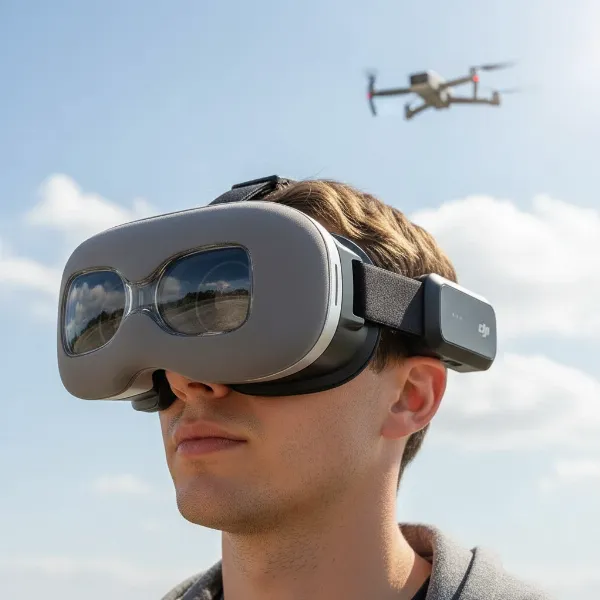
Are you looking to dive into the exciting world of drones without breaking the bank? Or perhaps you need a lightweight, fun-to-fly companion for indoor adventures? The Ryze Tello, a compact drone born from a collaboration between Ryze, DJI, and Intel, has long been touted as an ideal entry-level option. But does it truly live up to its reputation as the best toy drone on the market? Let’s take a comprehensive look at what makes the Tello soar and where it might fall short.
The allure of drone technology has grown exponentially, transforming from niche military applications to widespread consumer enjoyment. Yet, for many enthusiasts, the initial investment and learning curve can be daunting. This is precisely where the Ryze Tello aims to shine, offering an accessible and engaging experience designed for both kids and adults to learn about flying and even coding drones.
Ryze Tello: A Closer Look at the Compact Marvel
So, what exactly is the Ryze Tello? It’s a small, intelligent quadcopter developed by Ryze Technology, featuring DJI’s advanced flight control systems and an Intel processor. This collaboration ensures a level of stability and smart features rarely found in its price category, making it more than just a simple toy.
From a design perspective, the Tello is remarkably compact, measuring just 98×92.5×41 mm and weighing approximately 80g with propellers and battery included. This feather-light design not only enhances its portability but also means it often falls below the weight threshold requiring FAA registration in many regions, adding to its beginner-friendliness. Its robust plastic body is built to withstand minor bumps and crashes, further reassuring new pilots. Propeller guards are included as standard, providing an extra layer of protection against accidental collisions, especially when navigating tight indoor spaces.
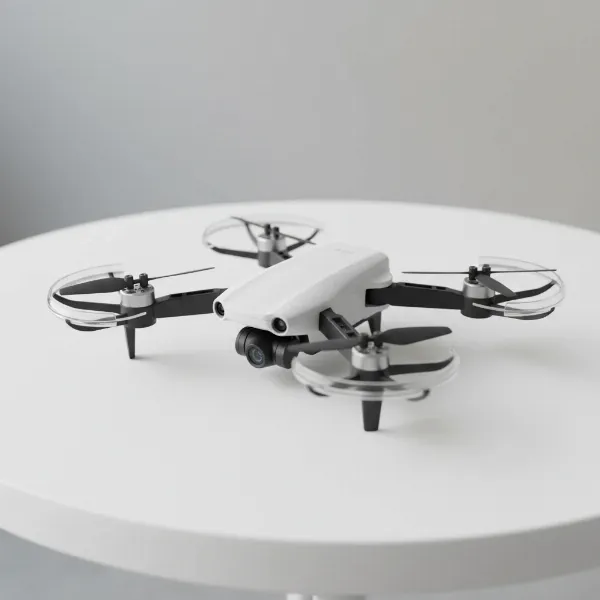 Ryze Tello drone with propeller guards on a white background, highlighting its compact and safe design for beginners.
Underpinning its impressive flight capabilities is DJI’s renowned flight technology, which includes a Vision Positioning System (VPS). This smart tech allows the Tello to hover precisely indoors by analyzing downward visual patterns, ensuring stable flights even without GPS. This advanced positioning system is a key differentiator, providing a smooth and controlled flying experience that sets it apart from many other toy drones.
Performance and Flight Experience
One of the Tello’s most compelling attributes is its exceptional ease of use, making it an ideal choice for first-time pilots. Controlling the drone is remarkably intuitive via a smartphone app (available for both iOS and Android), which features a clean user interface and responsive on-screen joysticks. Setting up is straightforward: simply download the app, power on the drone, connect to its Wi-Fi, and you’re ready to fly. Automatic take-off and landing functions simplify the most challenging aspects of initial flight, building confidence quickly.
The Tello truly excels in indoor environments. Its lightweight design and Vision Positioning System allow for remarkably stable and precise flight within confined spaces. You can confidently navigate around furniture and through doorways, making it perfect for exploring your home from a new perspective or practicing flight maneuvers on a rainy day. However, taking the Tello outdoors presents a different challenge. Due to its minimal weight, the drone struggles significantly in anything more than a whisper of wind. Even a slight breeze can sweep it off course, making outdoor flights feel less controlled and increasing the risk of losing or crashing the drone.
“The Tello flies beautifully, but a limited range and inability to deal with wind restrict its aerial capabilities. Its video camera isn’t great, but decent battery life and a simple app make it appealing as a first drone.” – Sam Kieldsen, TechRadar Reviews Editor
Beyond basic flight, the Tello packs a punch with several engaging flight modes that add an element of fun and creativity. These include:
- Throw & Go: Simply toss the Tello into the air, and it will automatically start hovering.
- 8D Flips: Perform cool aerial stunts by swiping your finger across the screen.
- Bounce Mode: The drone automatically flies up and down from your hand.
- EZ Shots: Record coordinated short videos with pre-programmed movements like Circle, 360, and Up & Away, allowing beginners to capture “pro-level” footage with ease.
With a maximum flight time of approximately 13 minutes per charge, the Tello offers respectable airtime for a drone of its size, though serious users may want extra batteries. It can achieve a maximum flight distance of 100 meters and speeds of up to 8m/s (about 17 mph), providing a lively and responsive flying experience.
Camera Capabilities: Capturing Your World from Above
For a drone in its price range, the Tello’s camera capabilities are surprisingly decent. It’s equipped to capture 5-megapixel photos (2592×1936 resolution) and record 720p HD video at 30 frames per second. While not suitable for professional-grade cinematography, this is more than adequate for sharing quick aerial shots and videos on social media or with friends and family.
A crucial feature for smoother footage is Electronic Image Stabilization (EIS), which helps to reduce camera shake and deliver consistently clearer images. This is a significant advantage over many toy drones that often produce shaky, unusable video. However, it’s important to manage expectations. The video quality, while good for its class, can sometimes suffer from compression artifacts and appears choppy during rapid panning movements. A notable limitation is the absence of onboard memory; videos are streamed directly to your connected smartphone, which can lead to frame rate issues if the Wi-Fi connection weakens as the drone flies further away. For the best video results, flying in close proximity with a strong Wi-Fi signal is recommended.
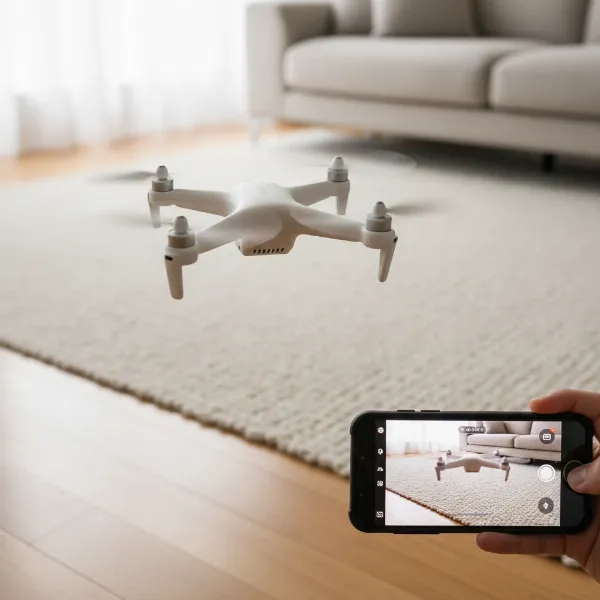 Ryze Tello drone flying, capturing video, with a smartphone displaying the live feed.
Pros and Cons: A Balanced Perspective
To help you decide if the Ryze Tello is the right drone for you, let’s summarize its advantages and disadvantages:
Pros
- Budget-Friendly: One of the most affordable entry-level drones with advanced features.
- Incredibly Easy to Fly: Perfect for beginners and kids, with intuitive app controls and automated functions like auto take-off/landing.
- Excellent for Indoor Use: Its lightweight design, propeller guards, and Vision Positioning System make it stable and safe for indoor flight.
- Fun Flight Modes: Features like Throw & Go, 8D Flips, and EZ Shots add excitement and ease to capturing unique aerial shots.
- Educational Potential: Programmable with Scratch and Tello SDK, making it a great tool for learning the basics of coding and STEM.
- Safety Features: Includes low battery protection, failsafe protection, and vision positioning for confident flying.
- Decent Camera for the Price: 5MP photos and 720p HD video with EIS are impressive for its cost.
- Highly Portable: Its small size and light weight make it easy to carry anywhere.
|
Our Picks for the Best Drone in 2026
As an Amazon Associate I earn from qualifying purchases.
|
||
| Num | Product | Action |
|---|---|---|
| 1 | Drone with 1080P Camera - Foldable Remote Control Quadcopter with Gesture Control, 3D Flip, One Key Start, Emergency Stop, 2 Batteries, Easier to use, Toy for Kids Adult Beginners |

|
| 2 | Drone with Camera, Drones for Adults and Beginners, 1080P HD FPV Foldable Mini Drones for Kids, with 2 Batteries, Carrying Case, Trajectory Flight, Gravity Control, One-Key Takeoff/Landing, 360° Flip, Toys for Gift |
|
| 3 | GPS Drones with Camera for Adults 4K, FPV Drone Under 249g with Brushless Motor, GPS Auto Return, Follow Me, Circle Fly, Waypoint Flight, Foldable Drone with Gesture Control, 46Mins with 2 Batteries |
|
| 4 | DJI Mini 3 Fly More Combo (DJI RC), Drones with Camera for Adults 4K, 3 Batteries for 114-min Flight Time, Vertical Shooting, 32800ft (10km) Video Transmission, Lightweight Mini Drone for Beginners |
|
| 5 | DJI Mini 4K Camera Drone Combo, Drone with 4K UHD Camera for Adults, Under 249 g, 3-Axis Gimbal Stabilization, 10km Video Transmission, Auto Return, 2 Batteries for 62-Min Max Flight Time, QuickShots |
|
| 6 | DJI Air 3S Fly More Combo (RC 2 Screen Remote Controller), Drone with 1" CMOS Wide-Angle & Medium Tele Camera for Adults, 4K/60fps, Omnidirectional Sensing & 3 Batteries for Extended Flight Time |
|
| 7 | DJI Mini 4K, Drone with 4K UHD Camera for Adults, Under 249 g, 3-Axis Gimbal Stabilization, 10km Video Transmission, Auto Return, Wind Resistance, 1 Battery for 31-Min Max Flight Time, Intelligent |
|
| 8 | Drone with Camera for Adults 4K, Brushless Motor Drones for Kids Beginners, 60 Mins Flight, 130° Lens, FPV Foldable RC Quadcopter, Gesture Photography, Toys Gifts for Teen Boys Girls, Black |
|
| 9 | Drone with Camera 1080P HD FPV Foldable Mini Drone for Beginners Kids Adults, Drone with One Key Take Off/Landing, Gesture Selfie, Altitude Hold, 3D Flip, Easy to Fly, 2 Batteries, Toys for Boys Girls |
|
| 10 | Drone with Camera - Drone with Screen on Controller for Beginners, Foldable Remote Control Quadcopter with Gesture Control, 3D Flip, One Key Start, Emergency Stop, 2 Batteries, Easier to use to use |
|
Cons
- Poor Wind Resistance: Struggles severely in windy conditions, making outdoor flights challenging and potentially risky.
- Limited Battery Life: Approximately 13 minutes of flight time, requiring multiple batteries for extended sessions.
- Video Quality Limitations: 720p video can be choppy with fast movements and lacks dynamic range; no onboard storage means reliance on Wi-Fi transmission quality.
- Restricted Control Range: Practical control distance is often less than the advertised 100 meters.
- Programming Implementation: While offering Scratch support, some users find its implementation limited or challenging to set up.
Ryze Tello vs. The Competition: Is It Truly the Best Toy Drone?
When considering the “best toy drone,” it’s crucial to compare the Tello with alternatives in its class. A common comparison is with entry-level drones like the DJI Mini SE.
| Feature | Ryze Tello | DJI Mini SE |
|---|---|---|
| Weight | 80g | 242g |
| Max Flight Time | 13 minutes | 30 minutes |
| Video Resolution | 720p HD (30fps) | 2.7K HD (30fps) |
| Photo Resolution | 5MP | 12MP |
| Obstacle Sensing | Vision Positioning System (downward) | Downward Vision System (more advanced) |
| Transmission Range | 100m (Wi-Fi) | 4km (OcuSync) |
| Wind Resistance | Level 1 (struggles with light wind) | Level 5 (much better) |
| Price Point | Sub-$100 | Significantly higher (entry-level DJI) |
As the table illustrates, the DJI Mini SE offers superior camera quality, significantly longer flight time, and much better wind resistance, making it a more versatile option for serious aerial photography and outdoor use. However, it also comes at a higher price point and, at 242g, still requires registration in some regions.
For pure indoor fun, educational programming, and sheer affordability, the Tello stands out. While other toy drones exist, few integrate DJI’s flight stability and Intel’s processing power at such an accessible price. It’s important to acknowledge that the “best” drone depends entirely on your priorities. If your focus is high-quality aerial cinematography or flying in varied outdoor conditions, more advanced (and expensive) drones are necessary. However, if you seek an enjoyable, safe, and educational introduction to drones, the Tello is a strong contender for the title of “best toy drone.”
Who is the Ryze Tello For?
The Ryze Tello is perfectly suited for several types of users:
- First-time Drone Pilots: Its intuitive controls and robust safety features make it an excellent learning platform.
- Children and Teenagers: With its coding capabilities via Scratch, it serves as a fantastic educational tool for STEM learning.
- Indoor Enthusiasts: Those who primarily want to fly a drone indoors will appreciate its stability and maneuverability in confined spaces.
- Budget-Conscious Buyers: Offering remarkable features for its price, it’s an accessible entry point into the hobby.
- Travelers: Its ultra-compact size and light weight make it easy to pack and carry anywhere.
Tips for Getting the Most Out of Your Ryze Tello
To enhance your Ryze Tello experience and ensure longevity, consider these practical tips:
- Master Indoor Flight First: Utilize its excellent indoor stability to practice controls and maneuvers before venturing outside.
- Invest in Extra Batteries: With a 13-minute flight time, additional batteries are essential for uninterrupted fun.
- Choose Calm Days for Outdoor Flights: Avoid any significant wind to prevent loss of control and potential crashes.
- Keep Propeller Guards On: These add crucial protection, especially for beginners and during indoor flights.
- Maintain Clear Wi-Fi Connection: Keep your smartphone close to the drone for the best video transmission quality and control responsiveness.
- Explore the Tello EDU App: Dive into Scratch programming to unlock creative flight patterns and learn coding basics.
Conclusion
The Ryze Tello undeniably holds a unique position in the drone market. It may not boast the 4K cameras or extended ranges of professional drones, nor can it brave strong winds. However, it delivers an unparalleled combination of affordability, user-friendliness, stable indoor flight, and educational value, largely thanks to its integrated DJI flight technology and Intel processing. For anyone looking for a low-risk, high-fun entry into the world of flying cameras—be it a curious child, a STEM student, or an adult seeking a new hobby—the Tello is an exceptional choice. It’s an impressive little machine that proves you don’t need to spend a fortune to experience the joy of drone flight.
So, is the Ryze Tello the best toy drone? For sheer accessibility, educational potential, and indoor flying prowess at its price point, it’s certainly a front-runner, if not the outright champion. What kind of aerial adventures will you embark on with your Tello?
Frequently Asked Questions
Is the Ryze Tello suitable for complete beginners?
Absolutely! The Ryze Tello is designed with beginners in mind, offering intuitive smartphone controls, automatic take-off and landing, and stable flight thanks to DJI technology. Its safety features, like propeller guards, also minimize the risk of damage during learning.
Can the Ryze Tello fly well outdoors?
While capable of outdoor flight, the Ryze Tello struggles significantly in windy conditions due to its lightweight design. It performs best outdoors on very calm days. For consistent outdoor performance, especially in light breezes, more robust drones are generally recommended.
What is the battery life and charging time for the Tello?
The Ryze Tello offers approximately 13 minutes of flight time on a single charge. Recharging a single battery typically takes around 1.5 hours. For extended flying sessions, investing in multiple spare batteries and a charging hub is highly advisable.
Does the Ryze Tello have a good camera for its price?
Yes, for its affordable price, the Tello’s 5MP camera for photos and 720p HD video with Electronic Image Stabilization is quite good. While not professional quality, it’s perfectly suitable for capturing fun aerial footage and sharing on social media.
Can I program the Ryze Tello?
Yes, the Ryze Tello is programmable! It supports Scratch, an MIT-developed visual coding system, making it an excellent tool for kids and teens to learn basic programming. More advanced users can also develop applications using the Tello SDK.
What are the main differences between the Ryze Tello and DJI Mini SE?
The Ryze Tello is lighter (80g vs 242g), more affordable, and ideal for indoor/beginner use with 720p video. The DJI Mini SE offers superior 2.7K video, 12MP photos, longer flight time (30 min), better wind resistance, and a longer transmission range, catering to more serious outdoor photography.