Have you ever dreamt of capturing stunning aerial footage and breathtaking photos without the hassle of a bulky drone or complex regulations? The sub-250g drone market has seen incredible innovation, making professional-grade aerial photography and videography accessible to a wider audience. Among the leading contenders is the Autel EVO Nano+, a sophisticated mini-drone that packs a remarkable punch for its size. This review delves into its capabilities, comparing it against rivals and providing a comprehensive guide to help you decide if this compact powerhouse is the perfect flying companion for your adventures.
What is the Autel EVO Nano+? Overview of a Mini Drone Marvel
The Autel EVO Nano+ is a marvel of modern drone engineering, weighing in at just under 249 grams. This crucial detail means that in many regions, including the United States, it bypasses the need for FAA registration, offering unparalleled freedom for recreational pilots and content creators. Designed with portability in mind, its foldable arms allow it to shrink down to an incredibly compact form, easily fitting into a backpack or even a coat pocket. But don’t let its diminutive size fool you; the Nano+ is engineered to deliver a stable and powerful flight experience, combined with an advanced camera system that sets it apart in the mini-drone category. It’s built for those who demand high-quality results without the bulk, appealing to everyone from beginners seeking ease of use to seasoned hobbyists desiring a highly capable travel drone.
Key Features and Specifications
Understanding the Autel EVO Nano+’s core features and specifications is essential to appreciate its capabilities. From its sleek design to its advanced camera and flight performance, every aspect is crafted to enhance the user experience.
Design and Portability
The EVO Nano+ boasts a minimalist yet robust design, featuring foldable arms that make it exceptionally portable. Weighing less than 249g, it avoids registration requirements in many countries, offering unmatched convenience. Autel also provides a range of attractive color options, including Classic Orange, Deep Space Gray, Blazing Red, and Arctic White, allowing pilots to choose a drone that reflects their style.
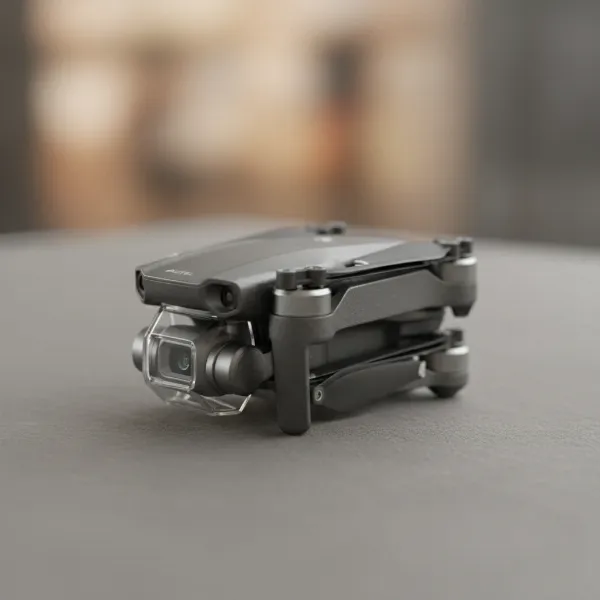 A compact, folded Autel EVO Nano+ drone in deep space gray color, showcasing its portability.
Camera System
At the heart of the Autel EVO Nano+ is its impressive camera system. It features a 1/1.28-inch CMOS sensor with a native resolution of 12.5MP, capable of outputting detailed 50MP JPG photos. The sensor utilizes an RYYB (Red, Yellow, Yellow, Blue) color filter array, designed to capture more light than traditional RGGB sensors, which theoretically enhances low-light performance. Paired with a fast f/1.9 fixed aperture and a 23mm equivalent focal length, the camera excels at capturing vibrant stills and clear video.
For videographers, the Nano+ records stunning 4K video at 30 frames per second (fps), 2.7K at 30fps, and full HD (1080p) at up to 60fps, with a maximum bitrate of 100Mbps. It also supports an 8-bit Log color profile, offering greater flexibility for color grading in post-production. While its raw (DNG) photo output is 12MP, it allows for more detailed editing.
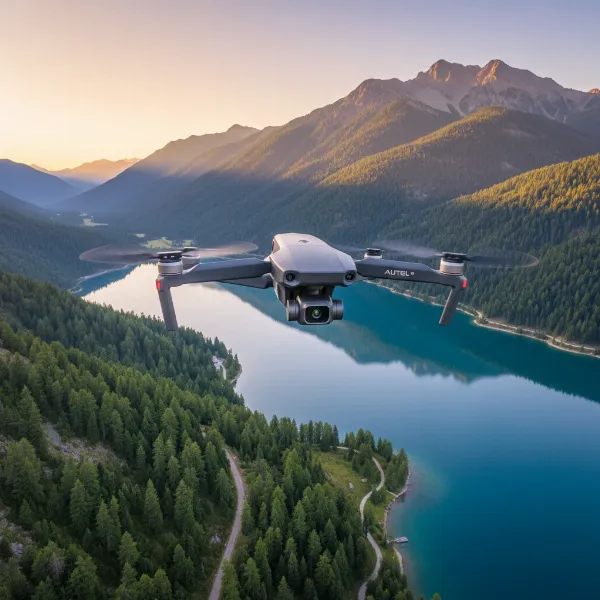 Autel EVO Nano+ drone flying above a scenic landscape, capturing high-resolution photos and videos.
Flight Performance
Despite its lightweight design, the Autel EVO Nano+ offers a remarkably stable and responsive flight experience. It can achieve flight times of approximately 28 minutes, providing ample opportunity for capturing extensive footage. The drone boasts an impressive transmission range of up to 10 kilometers, ensuring a strong and reliable connection. It also handles moderate wind conditions with relative ease, offering confidence to pilots in various environments. For those who enjoy speed, the “Ludacris mode” pushes the drone to its maximum velocity, though it’s best reserved for experienced pilots as it disables obstacle avoidance.
Obstacle Avoidance
A standout feature for a drone in this weight class is its 3-way obstacle avoidance system, with sensors covering the forward, backward, and downward directions. This system effectively detects obstructions in the flight path, bringing the drone to a stop to prevent collisions. While it doesn’t autonomously navigate around obstacles like some higher-end models, its ability to halt in place provides a significant safety net, especially for newer pilots.
Intelligent Flight Modes
The Autel EVO Nano+ comes equipped with a suite of intelligent flight modes designed to simplify complex shots and enhance creative possibilities. These include:
- Cinematic Shots: Pre-programmed flight paths like Rocket, Fade Away, Orbit, and Flick that generate dynamic video clips with a single tap. “Flick” is particularly praised for its unique swoop-and-track motion.
- SkyPortrait: Automatically captures cinematic selfies by having the drone fly back and blur the background.
- Dynamic Track: An intelligent subject tracking function that can follow a person, vehicle, or even an animal. (Note: This feature was delivered via firmware update after initial release).
- SoundRecord: Utilizes your smartphone’s microphone to record ambient sounds while filming.
- SuperDownload: Allows for quick transfer of videos to your phone by placing it close to the drone, similar to DJI’s QuickTransfer.
Controller
The standard remote controller for the Autel EVO Nano+ is a streamlined unit designed to hold your smartphone, which acts as the drone’s display via the Autel Sky app. It features removable joysticks for enhanced portability. While functional and comfortable, it lacks a built-in screen found on some premium controllers, meaning pilots rely solely on their smartphone for flight information and camera view.
Autel EVO Nano+ vs. DJI Mini 3 Pro: A Head-to-Head Comparison
The Autel EVO Nano+ often finds itself in direct competition with the DJI Mini 3 Pro, a formidable rival in the sub-250g category. Both drones offer exceptional portability and advanced features, but there are key differences that might sway your decision.
Camera Performance
The Nano+ boasts a 50MP photo resolution, slightly higher than the Mini 3 Pro’s 48MP, which can result in slightly sharper stills with greater detail. Its 1/1.28-inch RYYB sensor, combined with an f/1.9 aperture, also gives it an edge in low-light conditions. However, for video, the Mini 3 Pro generally pulls ahead, offering 4K video recording at 60fps and 1080p at 120fps for impressive slow-motion capabilities, compared to the Nano+’s 4K at 30fps and 1080p at 60fps. The Mini 3 Pro also offers 10-bit D-Log M color, which provides more grading flexibility than the Nano+’s 8-bit Log.
Flight and Obstacle Avoidance
Both drones offer stable flight performance, but the Mini 3 Pro provides slightly longer flight times per charge and better wind resistance due to its greater power. In terms of obstacle avoidance, the Nano+ offers 3-way sensing that brings the drone to a stop, preventing collisions. The Mini 3 Pro, however, features APAS 4.0, which can actively bypass obstacles, offering a more advanced level of autonomous navigation.
Controller Options
One significant differentiator is the controller. While the Nano+ uses a standard controller that requires a smartphone, the Mini 3 Pro offers an optional DJI RC Smart Controller with a bright, built-in OLED screen, eliminating the need to connect your phone. This can significantly enhance the user experience by simplifying setup and providing a more dedicated flying interface.
Price and Value
The Autel EVO Nano+ and DJI Mini 3 Pro are often similarly priced, especially when considering bundles. The Nano+ might appeal to those prioritizing high-resolution stills and unique color options (Classic Orange, Deep Space Gray, Blazing Red, Arctic White), while the Mini 3 Pro often wins for video enthusiasts seeking higher frame rates and the convenience of a smart controller. Ultimately, the “better” drone depends on your specific needs and priorities.
Pros and Cons of the Autel EVO Nano+
Like any piece of advanced technology, the Autel EVO Nano+ comes with its own set of advantages and limitations.
Pros:
- Sub-250g Weight: No registration required in many regions, offering legal flexibility and peace of mind.
- Exceptional Camera for its Size: The 1/1.28-inch 50MP RYYB sensor delivers highly detailed photos and performs well in low light, making it a strong contender for aerial photography.
- Stable and Responsive Flight: For its compact size, the Nano+ is surprisingly robust, handling moderate winds and offering an enjoyable flight experience.
- Effective 3-Way Obstacle Avoidance: Provides a crucial layer of safety, stopping the drone before potential collisions.
- Useful Intelligent Flight Modes: Features like “Flick” offer creative possibilities for cinematic shots with minimal effort.
- Highly Portable and Foldable: Its compact design makes it incredibly easy to carry for travel and spontaneous shoots.
- Fast Charging: Batteries and the controller charge quickly, minimizing downtime.
Cons:
- Video Frame Rate Limitations: The absence of 4K 60fps or 2.7K 60fps might be a drawback for videographers who require higher frame rates for smooth footage or slow-motion effects.
- RYYB Sensor Challenges: While good for low light, the RYYB sensor can sometimes lead to color shifts in RAW (DNG) files, requiring custom profiles in editing software like Lightroom for accurate colors.
- Obstacle Avoidance Stance: The drone stops rather than actively bypassing obstacles, which, while safe, is less advanced than some competitors.
- Basic Remote Controller: The controller lacks a built-in screen, relying entirely on a smartphone, which some users might find less convenient than integrated displays.
- Initial Feature Rollout: Some advertised features, such as Dynamic Track, were not available at launch and required subsequent firmware updates.
- Minor Hover Drift: Some users have reported a slight drift in precise GPS hovering in specific conditions.
- Premium Price Point: While feature-rich, its price point can be a consideration, especially when compared to entry-level alternatives.
Real-World Applications: Who is the Autel EVO Nano+ For?
The Autel EVO Nano+ is a versatile tool that caters to a diverse range of users, making it suitable for various real-world applications. Its unique blend of portability, advanced camera capabilities, and intelligent features positions it as an excellent choice for:
- Travel Vloggers and Content Creators: Its sub-250g weight means you can take it almost anywhere without regulatory headaches, making it ideal for capturing stunning travel content on the go. The high-resolution photos and engaging cinematic modes streamline content creation.
- Hobbyists Seeking Advanced Features: If you’re a drone enthusiast looking for a drone that goes beyond basic flight but still remains easy to manage, the Nano+ offers obstacle avoidance, intelligent flight modes, and a capable camera in a user-friendly package.
- Photographers Prioritizing Stills and Low-Light: With its 50MP photo capability and RYYB sensor designed for low-light performance, photographers who prioritize high-quality aerial stills will find the Nano+ particularly appealing.
- Alternative to DJI: For those looking for a high-quality mini drone outside of the dominant DJI ecosystem, Autel Robotics offers a compelling alternative with its own unique strengths and features.
- Real Estate Agents and Small Businesses: Its ease of use and ability to capture impressive aerial visuals make it suitable for showcasing properties or creating marketing content without needing extensive piloting experience.
“The Autel EVO Nano+ excels in environments where portability and regulatory freedom are paramount, delivering professional-grade stills in a remarkably compact form.” – DroneEar.com Admin, Drone Technician
Tips for Flying and Maintaining Your Autel EVO Nano+
To maximize your experience and ensure the longevity of your Autel EVO Nano+, follow these essential tips:
- Perform Pre-Flight Checks: Always inspect your drone for any damage, ensure propellers are securely attached, and check battery levels for both the drone and the remote controller before every flight.
- Choose Safe Flight Locations: Fly in open areas away from people, buildings, and other obstructions. Always be aware of local drone regulations and no-fly zones.
- Monitor Weather Conditions: Avoid flying in strong winds, rain, or extreme temperatures. While the Nano+ handles moderate winds well, clear conditions ensure the best stability and image quality.
- Understand Flight Modes: Familiarize yourself with the intelligent flight modes in the Autel Sky app. Practice them in a safe, open environment to get a feel for their capabilities before using them for critical shots.
- Battery Care is Crucial: Properly charge and store your drone batteries. Avoid overcharging or fully depleting them, and store them at roughly 50-60% charge for extended periods to maintain battery health.
- Stay Updated with Firmware: Regularly check for and install firmware updates for both your drone and its controller. These updates often bring performance improvements, new features, and bug fixes.
- Clean Your Drone Regularly: Use a soft, dry cloth to clean the drone body and propeller blades. Ensure the camera lens is free of dust and smudges for optimal image clarity.
- Proper Storage: When not in use, store your EVO Nano+ in a protective carrying case to shield it from dust, impacts, and environmental elements.
Essential Accessories for the Autel EVO Nano+
Enhancing your Autel EVO Nano+ experience often involves a few key accessories that can improve convenience, flight time, and creative output.
- Extra Batteries: Essential for longer shooting sessions, allowing you to quickly swap out depleted batteries and keep flying.
- Spare Propellers: Accidents happen, and having spare propellers on hand means you can quickly replace damaged ones and continue your flight.
- High-Capacity SD Card: A fast, high-capacity microSD card is critical for recording 4K video and storing numerous 50MP photos without running out of space. Look for V30 or higher speed ratings.
- Charging Hub: A multi-battery charging hub can significantly reduce charging time by allowing you to charge several batteries simultaneously.
- Carrying Case: While a basic case might come with the drone, investing in a robust carrying case or backpack (like those included in the Premium Bundle) provides superior protection and organized storage for your drone and all its accessories.
Conclusion: Is the Autel EVO Nano+ the Right Drone for You?
The Autel EVO Nano+ carves out a significant niche in the highly competitive mini-drone market. It brilliantly combines extreme portability with an impressively capable camera system, making it an excellent choice for aerial photographers and casual videographers alike. Its sub-250g weight offers unparalleled freedom from registration in many regions, while features like 3-way obstacle avoidance and intelligent flight modes enhance both safety and creativity.
While it may not match the highest video frame rates of some rivals, its 50MP photo resolution and solid low-light performance are undeniable strengths. For those who prioritize high-quality stills, ease of travel, and a compelling alternative to mainstream brands, the Autel EVO Nano+ stands as a strong contender. Ultimately, if you’re seeking a compact, feature-rich drone that delivers professional results without the regulatory burden, the Autel EVO Nano+ is definitely worth considering. What aerial adventures will you embark on with this impressive mini drone?
Frequently Asked Questions
What is the main advantage of the Autel EVO Nano+ over its competitors?
The Autel EVO Nano+’s primary advantage lies in its combination of a sub-250g weight, avoiding registration requirements in many areas, and its exceptional 50MP RYYB camera sensor, which delivers high-resolution stills and performs well in low-light conditions, rivaling larger drones.
Can the Autel EVO Nano+ shoot 4K at 60fps?
No, the Autel EVO Nano+ does not support 4K video recording at 60 frames per second. Its maximum video resolution is 4K at 30fps, and for 60fps footage, you would need to drop down to 1080p (Full HD) resolution.
Is the Autel EVO Nano+ good for beginners?
Yes, the Autel EVO Nano+ is generally considered good for beginners due to its intuitive controls, robust 3-way obstacle avoidance system that helps prevent crashes, and intelligent flight modes that simplify complex aerial maneuvers and filming.
Does the Autel EVO Nano+ have obstacle avoidance?
Yes, the Autel EVO Nano+ is equipped with a 3-way obstacle avoidance system that includes forward, backward, and downward sensors. This system detects obstructions in its flight path and will stop the drone to prevent collisions, enhancing flight safety.
What’s the battery life like?
The Autel EVO Nano+ offers a respectable flight time of approximately 28 minutes on a single charge. This provides ample time for capturing photos and videos, and extra batteries are available to extend your flying sessions.