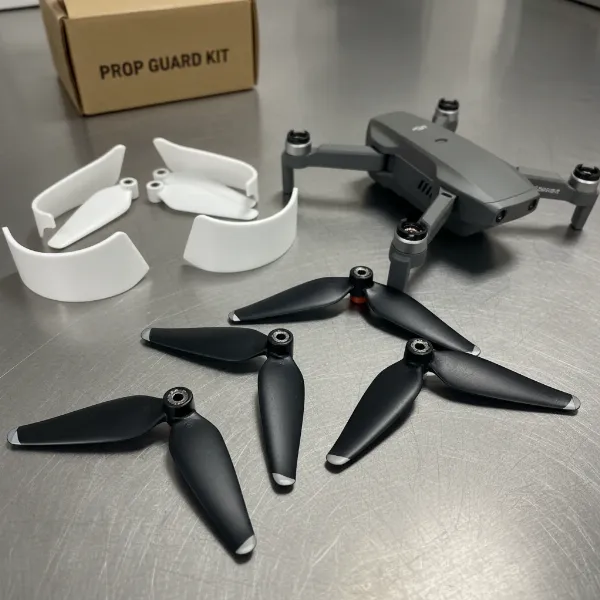
As a drone enthusiast with over a decade of experience, I’ve seen countless debates surrounding drone accessories. One of the most persistent questions I encounter is about propeller guards: are they a crucial safety feature or an unnecessary hindrance? Drones, whether for professional photography or recreational fun, represent a significant investment and can pose risks if not operated carefully. Understanding the role of propeller guards is essential for every pilot to maximize safety and optimize flight performance. This comprehensive guide will help you determine if drone propeller guards are the right choice for your flying style and environment.
What are Drone Propeller Guards? An Overview of Propeller Guard Technology
Drone propeller guards, often simply called prop guards or blade protectors, are protective frames designed to encase or partially cover a drone’s rotating propellers. Their primary function is to create a physical barrier between the fast-spinning blades and the surrounding environment, including people, objects, and the drone itself. This simple yet effective accessory aims to mitigate potential damage and enhance safety during drone operations.
The evolution of propeller guards has mirrored the advancements in drone technology. Early designs were often bulky, but modern guards are typically lightweight and engineered for specific drone models, allowing for easier attachment and removal. They come in various configurations, from basic clip-on rings that surround each propeller to full cage systems that envelop the entire drone, providing maximum protection. Materials range from flexible plastics to more rigid, impact-resistant composites, chosen to balance durability with minimal added weight.
Definition of Drone Propeller Guards: What they are and their primary function.
Propeller guards are physical barriers attached to a drone’s motor arms, forming a protective ring or cage around each propeller. Their main goal is to prevent propellers from striking obstacles or people, reducing the risk of injury and minimizing damage to the drone’s blades and motors during minor bumps or collisions. They act as a first line of defense, absorbing impact before it reaches the more delicate components.
History of Drone Propeller Guards: From military to civilian.
While drones themselves have roots in military applications, the widespread use of propeller guards became prominent with the rise of consumer and commercial drones. As drones became more accessible for recreational use, aerial photography, and indoor inspections, the need for enhanced safety features grew. Manufacturers began integrating guards or offering them as essential accessories, particularly for models likely to be flown in environments with obstacles or near people.
Common types of Propeller Guards: Classification by purpose, size, and features.
Propeller guards can be broadly categorized by their design and coverage. Ring-style guards are the most common, encircling each propeller individually. Full cage guards offer more comprehensive protection by completely enclosing the drone’s frame and propellers, ideal for highly confined spaces or aggressive flight. Some guards are quick-release for convenience, while others feature integrated lighting for improved visibility. The choice often depends on the drone model and the specific flight conditions anticipated.
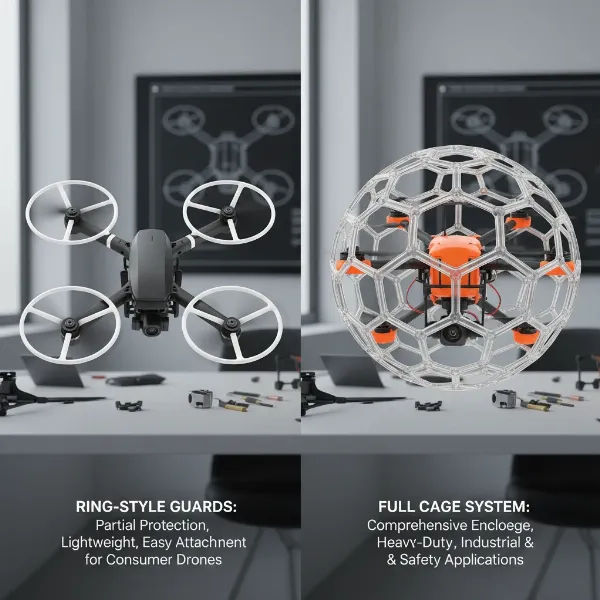 Various drone propeller guard types, including ring-style and full cage designs, for enhanced safety.
Advantages and Disadvantages of Using Drone Propeller Guards
The decision to use propeller guards involves weighing their benefits against their drawbacks. While they offer significant safety enhancements, they can also impact a drone’s flight performance. Understanding this trade-off is crucial for making an informed choice.
Advantages:
- Enhanced safety for people and property: This is arguably the most significant advantage. Propeller guards reduce the risk of injury from spinning blades to bystanders, pilots, or pets. They also protect walls, furniture, and other property from accidental nicks and scratches during close-proximity flights. For professional operators flying near people, they can be a mandatory safety measure.
- Protection for propellers and drone body: Guards act as a buffer, preventing direct impact to fragile propellers, which can easily crack or break. This protection extends to the drone’s motor arms and body, significantly reducing repair costs and downtime after minor collisions.
- Improved flight stability in certain conditions: In some instances, particularly with lighter drones or in environments with slight air currents, propeller guards can add a small amount of stability by subtly altering airflow. They also allow a drone to “bounce” off obstacles rather than crashing, giving the pilot a chance to regain control.
- Ideal for beginner pilots and training: New pilots are more prone to accidental bumps and scrapes. Propeller guards provide a forgiving learning environment, reducing the immediate consequences of control errors and building confidence without frequent damage.
Disadvantages:
- Increased weight and reduced flight time: Propeller guards, despite being lightweight, add extra mass to the drone. This increased weight demands more power from the motors, leading to shorter battery life and reduced flight time. For smaller drones, this impact can be quite noticeable.
- Potential impact on aerodynamics and maneuverability: The added surface area and altered airflow caused by guards increase drag. This can result in reduced top speed, slower acceleration, and decreased responsiveness. In windy conditions, guards can act like sails, making the drone harder to control and less stable.
- Can interfere with some sensors: On certain advanced drones, propeller guards can obstruct or interfere with optical flow sensors, obstacle avoidance systems, or vision positioning systems, potentially compromising the drone’s autonomous flight capabilities. Always check compatibility with your drone model.
- Cost consideration: While often affordable, the cost of a good set of propeller guards adds to the overall investment in your drone gear. For pilots who rarely fly in high-risk environments, this might be an unnecessary expense.
Common Scenarios for Using Drone Propeller Guards in Everyday Life
Propeller guards aren’t a one-size-fits-all accessory. Their utility shines brightest in specific flying scenarios where the risks of collision or injury are elevated. Understanding these common applications helps pilots decide when to equip their drones with this protective gear.
- Indoor flying and confined spaces: Navigating a drone indoors, whether in a home, office, or large venue, means constant proximity to walls, furniture, and other tight spaces. Guards allow the drone to gently bump against surfaces without immediate propeller damage or loss of control, making indoor operations much safer and less stressful.
- Flying near people or animals: Safety is paramount when operating a drone close to individuals or pets. Propeller guards provide a vital barrier, preventing accidental contact with spinning blades that could cause severe lacerations. This is particularly relevant for events, gatherings, or any scenario where a drone operates in a shared space.
- Beginner pilots and training: For those new to drone piloting, crashes are an almost inevitable part of the learning curve. Propeller guards offer a crucial layer of protection during initial flights, reducing the likelihood of breaking propellers or damaging motors while developing essential flying skills and spatial awareness.
- Flying in areas with obstacles (trees, walls): When flying in environments dense with trees, branches, or buildings, guards can prevent minor brushes from turning into catastrophic crashes. Instead of propellers snagging and causing a fall, the guards may allow the drone to deflect off the obstacle and continue flying.
- Specific commercial applications (e.g., inspection in tight spaces): Industries using drones for inspections of infrastructure, warehouses, or hard-to-reach areas often benefit from propeller guards. They protect the drone in tight quarters and prevent it from damaging sensitive equipment or surfaces during operations.
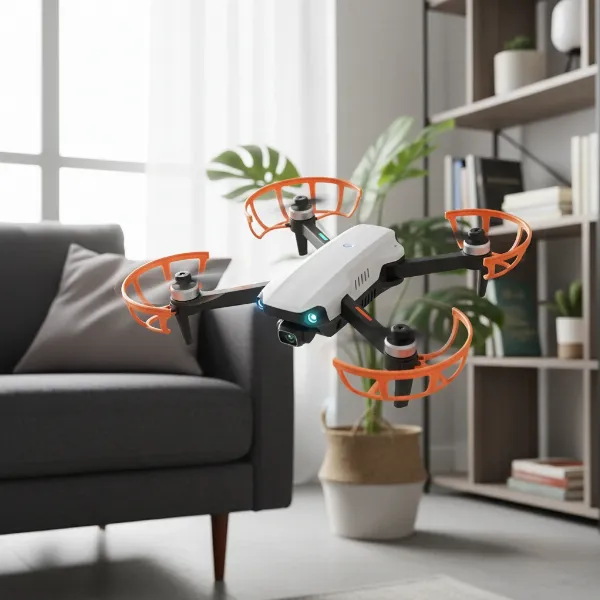 Drone with propeller guards safely flying indoors near furniture, showcasing collision protection.
Comparison of Different Propeller Guard Designs and Materials
The market offers a variety of propeller guard designs, each with its own benefits and suitable applications. Choosing the right type depends on your drone, flying environment, and desired level of protection.
| Guard Type | Material | Protection Level | Impact on Performance | Ease of Installation | Best Use Case |
|---|---|---|---|---|---|
| Ring-Style | ABS Plastic, Nylon | Moderate | Low to Moderate | Very Easy (Clip-on) | Beginners, indoor flying, light outdoor obstacles |
| Full Cage/Ducts | ABS, Carbon Fiber | High | Moderate to High | Moderate | Highly confined spaces, professional inspections |
| Integrated | Drone body material | High | Minimal | N/A (Built-in) | Specific small drones (e.g., some FPV cinewhoops) |
Ring-style guards are popular due to their balance of protection and minimal impact on flight. They typically snap onto the drone’s arms or landing gear. Full cage guards, while offering superior protection by fully enclosing the drone, add more weight and drag, significantly affecting flight time and maneuverability. Materials like ABS plastic are common for their durability and affordability, while carbon fiber offers a lighter, stronger alternative for high-performance applications.
How to Choose the Right Propeller Guards for Your Drone
Selecting the appropriate propeller guards involves a careful assessment of your needs and your drone’s capabilities. A poorly chosen guard can hinder more than it helps.
- Identify your flying environment and purpose: Are you primarily flying indoors, training in open fields, or navigating complex outdoor spaces? Your most frequent flying scenarios should dictate the type and robustness of the guards you need. For indoor use or flying near people, guards are almost essential. For open-sky, high-altitude flights, they are often unnecessary.
- Consider drone model compatibility: Not all propeller guards fit every drone. Always check for guards specifically designed for your drone model to ensure a secure fit, proper balance, and to avoid interference with sensors. Many major manufacturers like DJI offer their own compatible guards.
- Budget and material quality: Guards vary in price based on material and brand. While cheaper options exist, investing in durable, well-made guards from reputable brands can offer better protection and last longer. Consider the material – lighter materials like certain plastics reduce performance impact.
- Impact on flight performance: Be realistic about how guards will affect your drone. They will reduce flight time and potentially affect speed and responsiveness. For professional applications requiring maximum flight performance, guards might be a compromise. For beginners or safety-critical tasks, the trade-off is often worthwhile.
- Check for sensor interference: Some propeller guards, especially larger ones, can block or confuse a drone’s vision sensors or obstacle avoidance systems. Consult your drone’s manual or manufacturer’s guidelines to ensure compatibility and understand any potential limitations.
Popular Drone Brands and Propeller Guard Recommendations
Many leading drone manufacturers and third-party accessory makers offer propeller guards. Here’s a look at some of the prominent players and what to consider.
- DJI: As the world’s leading consumer drone manufacturer, DJI offers official propeller guards for most of its popular models, including the Mini series, Mavic series, and Air series. These are typically designed for perfect fit and minimal interference.
- Autel Robotics: A strong competitor to DJI, Autel also provides dedicated propeller guards for its EVO series drones, emphasizing safety and compatibility with their advanced obstacle avoidance systems.
- Third-Party Manufacturers (e.g., PGYTECH, Craznick): Numerous third-party brands produce propeller guards, often at a more competitive price point. PGYTECH is well-regarded for its quality drone accessories. While these can be a cost-effective alternative, ensure they are compatible and do not compromise your drone’s balance or sensor functionality. Always read reviews to ensure quality and fit.
- Skydio: Known for its advanced autonomous flight capabilities and obstacle avoidance, Skydio drones often have less of a need for guards in many scenarios, but specific accessories might exist for extreme close-proximity work.
When choosing, prioritize guards from your drone’s manufacturer or reputable third-party brands known for quality and compatibility. This ensures the best fit and performance.
Legal Aspects and Safety Regulations for Drone Use
While propeller guards themselves aren’t typically subject to specific regulations, their use often intersects with broader drone safety laws. Understanding these guidelines, particularly in your region, is crucial for responsible piloting.
In many countries, drone operations are regulated to ensure public safety and privacy. For instance, in the United States, the FAA’s Part 107 regulations for commercial drone operations may require protective measures like propeller guards when flying over people. Additionally, adding propeller guards can increase the overall weight of a drone. For mini drones (like the DJI Mini series) that fall under a specific weight threshold (e.g., 250 grams in the US) to avoid registration requirements, adding guards might push them over this limit, necessitating registration and compliance with Remote ID regulations.
It is the responsibility of the drone operator to be aware of and adhere to all local, national, and international laws concerning drone flight. This includes understanding no-fly zones, altitude restrictions, and privacy considerations. While guards contribute to physical safety, they do not replace the need for vigilant piloting and adherence to established rules.
Tips for Using and Maintaining Drone Propeller Guards
To get the most out of your propeller guards and ensure the longevity of both the guards and your drone, proper usage and maintenance are key.
- Inspect Before Flight: Always check your propeller guards for any cracks, bends, or damage before each flight. Damaged guards can become loose, interfere with propellers, or break off mid-flight, potentially causing a crash.
- Install Correctly: Ensure guards are securely attached according to the manufacturer’s instructions. Loose guards can cause vibrations, affect flight stability, or fall off.
- Clean Regularly: Dust, dirt, and debris can accumulate on guards, especially after flying in dusty or grassy areas. Clean them with a soft cloth to prevent buildup that could add weight or interfere with drone sensors.
- Store Properly: When not in use, store your guards in a protective case or bag to prevent them from getting bent or broken. Avoid leaving them exposed to extreme temperatures or direct sunlight for extended periods.
- Know When to Remove Them: While useful in certain situations, propeller guards are not always necessary. For open-field flying with no obstacles or people, consider removing them to maximize flight time and performance. They are a tool; use them when appropriate, and don’t when they are detrimental.
Essential Accessories for Your Drone (and how guards fit in)
Beyond the drone itself, a suite of accessories can significantly enhance your flying experience, safety, and the quality of your aerial work. Propeller guards are just one component of a well-rounded drone kit.
- Extra Batteries: The most crucial accessory. Longer flight sessions require multiple fully charged batteries to avoid downtime.
- Spare Propellers: Accidents happen. Having replacement propellers on hand means you can quickly get back in the air after a minor mishap, even if you use guards.
- High-Capacity Memory Cards: For capturing stunning photos and videos, a fast, large-capacity microSD card is indispensable.
- Chargers and Charging Hubs: Efficient charging solutions keep your batteries ready for action. Multi-chargers are particularly useful for simultaneously preparing several batteries.
- Carrying Case: A durable, custom-fit case protects your drone and all its accessories, including propeller guards, during transport and storage.
- Landing Pad: A portable landing pad provides a clean, visible surface for takeoff and landing, protecting your drone from dust, dirt, and uneven terrain.
Propeller guards integrate into this ecosystem as a fundamental safety accessory, particularly valuable for new pilots, indoor operations, or flying in obstacle-rich environments. They complement other gear by directly addressing the vulnerability of propellers and the risk they pose.
“Propeller guards are a beginner’s best friend, offering a cushion for inevitable bumps. But for seasoned pilots, knowing when to shed that extra weight for performance is key.” – Alex Chen, Professional Drone Cinematographer
Conclusion
The question of whether you truly need drone propeller guards doesn’t have a simple yes or no answer. Instead, it’s a dynamic consideration influenced by your skill level, the environment you fly in, and your specific objectives. For novice pilots, indoor enthusiasts, or those operating in congested areas, propeller guards are an invaluable safety net, protecting both your drone and those around it. They absorb impacts, reduce the risk of costly repairs, and instill confidence.
However, experienced pilots flying in open outdoor spaces might find that the added weight and drag of propeller guards diminish flight performance, reduce battery life, and even interfere with sensitive sensors. Ultimately, the decision comes down to a calculated trade-off between maximizing safety and optimizing performance. By understanding the pros and cons, and assessing your unique flying circumstances, you can make the right choice for your drone.
What’s your preferred approach to drone safety – always guarded, or only when necessary?
Frequently Asked Questions
Do propeller guards significantly reduce drone flight time?
Yes, propeller guards add weight and increase aerodynamic drag, which requires the drone to expend more energy to stay aloft. This typically results in a noticeable reduction in flight time, often by 10-20% depending on the drone model and guard design.
Can propeller guards interfere with a drone’s obstacle avoidance sensors?
In some cases, yes. Larger or poorly designed propeller guards can physically block or confuse a drone’s vision-based obstacle avoidance sensors, leading to reduced effectiveness or even requiring the pilot to disable the feature. Always check your drone’s manual for compatibility.
Are propeller guards mandatory for flying drones over people?
Regulations vary by region. In the United States, commercial drone operators flying under FAA Part 107 rules may be required to use propeller guards or other protective systems when operating drones over people to mitigate risk. Always consult your local aviation authority’s guidelines.
Are propeller guards effective against hard crashes?
Propeller guards are designed primarily for minor bumps and glancing blows, allowing the drone to deflect off surfaces without immediate damage. They offer limited protection against high-speed impacts or significant crashes, where structural damage to the drone itself is still very likely.
Should beginner drone pilots always use propeller guards?
For beginner pilots, propeller guards are highly recommended. They provide a crucial layer of protection during the learning phase, reducing damage from accidental collisions and helping new pilots build confidence and refine their control skills without constant worry about propeller breakage.
Do propeller guards protect drone motors as well as propellers?
Yes, by absorbing impact and preventing direct strikes to the propellers, guards indirectly protect the drone’s motors from stress and damage that could occur if a propeller were to bind or break during a collision.
What materials are best for drone propeller guards?
Common materials include ABS plastic for a good balance of durability and lightweight design, and sometimes carbon fiber for superior strength and even lighter weight, though at a higher cost. The best material often depends on the drone’s size and intended use.