Choosing the right drone remote controller can profoundly impact your flight experience, whether you’re a seasoned professional or a passionate hobbyist. For pilots of popular DJI drones like the Mini 4 Pro, two primary options stand out: the advanced DJI RC 2 with its integrated screen and the more traditional DJI RC-N2, which relies on your smartphone. Many pilots find themselves at a crossroads, pondering whether the convenience and enhanced features of the RC 2 justify its higher price tag. This comprehensive guide aims to dissect their differences, allowing you to make an informed decision tailored to your flying habits and workflow needs.
Understanding the DJI RC 2: The Integrated Experience
The DJI RC 2 represents the pinnacle of user convenience for drone pilots. At its core, it’s a dedicated remote controller featuring a vibrant 5.5-inch 1080p Full HD touchscreen display. This integrated screen eliminates the need to attach your smartphone, streamlining your setup and keeping your personal device free. The RC 2’s design emphasizes a refined feel, boasting a larger grip area and a matte finish that resists fingerprints, enhancing comfort during extended flights. With the DJI Fly app pre-installed, it offers a plug-and-play experience, ensuring you’re ready to fly as soon as the drone and controller are powered on.
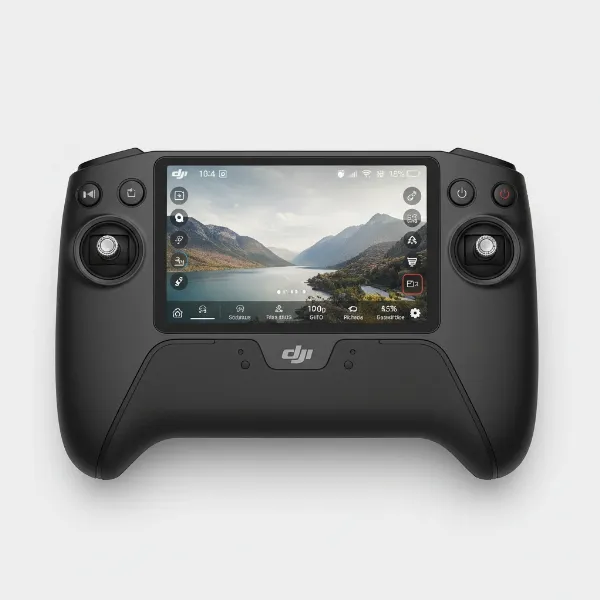 DJI RC 2 drone remote controller with integrated screen and large grip for professional pilots.
Exploring the DJI RC-N2: The Smartphone-Powered Choice
In contrast, the DJI RC-N2 maintains a more classic approach, requiring users to connect their smartphone via a built-in clamp and cable. Your smartphone then serves as the display, running the DJI Fly app to provide telemetry and live video feed. This design offers a degree of versatility, allowing pilots to use various smartphone models and screen sizes. For those who already carry a high-end smartphone with a bright display, the RC-N2 can leverage that technology without adding another dedicated screen to their gear. It’s a reliable companion that has served countless entry-level to mid-tier DJI drone users effectively.
Head-to-Head: DJI RC 2 vs. RC-N2 Feature Comparison
Delving into the specifics reveals where each controller truly shines and where compromises are made.
Display & Visual Experience
The most significant difference lies in the display. The DJI RC 2 features a dedicated 5.5-inch, 1920×1080 FHD screen with an impressive brightness of 700 nits. This brightness is a crucial upgrade over older integrated screens, significantly improving visibility when flying under direct sunlight. A clear, bright screen is paramount for maintaining visual line of sight and accurately framing shots in challenging lighting conditions.
The RC-N2, on the other hand, relies entirely on your connected smartphone. While this offers flexibility in screen size and resolution based on your phone, it also introduces variables. Many high-end smartphones boast screens brighter than 700 nits (some reaching 2000 nits), which can offer superior visibility in bright conditions. However, phone screens can also dim due to overheating during prolonged use or direct sunlight exposure, potentially impacting your flight experience. Furthermore, incoming calls or notifications on your phone can interrupt your flight.
Transmission Technology & Range
For optimal drone performance, especially with newer models like the Mini 4 Pro, transmission technology is critical. The DJI RC 2 comes equipped with upgraded O4 video transmission, featuring an improved 2T4R antenna configuration. This enables dual-frequency support (both 2.4 GHz and 5.8 GHz) with intelligent switching, leading to enhanced stability and extended range. This advanced antenna design significantly reduces signal dropouts, even in environments with urban interference, ensuring a more reliable and consistent video feed.
While the RC-N2 also supports O4 transmission with compatible drones like the Mini 4 Pro, its antenna configuration is less advanced (typically 1T2R). This means that while it offers robust connectivity for most casual flights, it may experience signal degradation more readily beyond approximately twelve kilometers or in areas with high RF noise. For pilots pushing the boundaries of range or operating in complex signal environments, the RC 2 provides a noticeable advantage in transmission reliability.
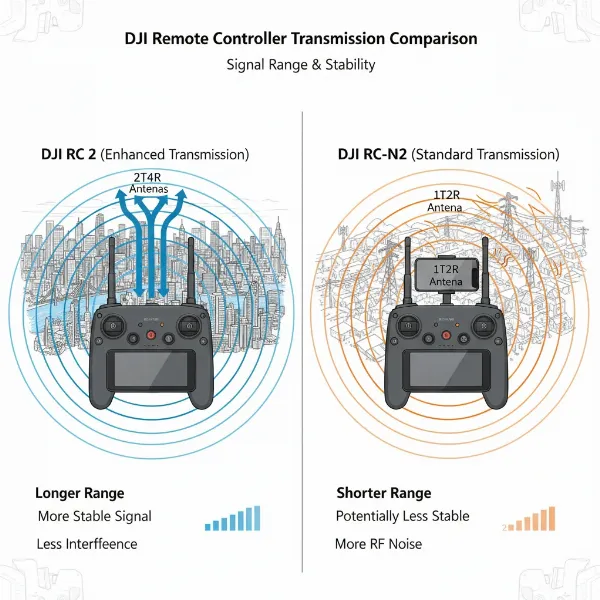 Comparative illustration of DJI RC 2 and RC-N2 drone controller transmission range and antenna differences.
Design, Ergonomics, and Build Quality
Ergonomics play a vital role in pilot comfort during extended flight sessions. The RC 2 boasts a more refined and premium feel. Its larger grip area provides enhanced comfort, and the matte finish helps prevent fingerprints and slippage, contributing to a more secure hold. This attention to detail in its build quality elevates the overall user experience.
The RC-N2, while functional, typically features a glossy plastic shell that can become slippery over time and is prone to fingerprints. Its design is more focused on practicality, with the collapsible phone clamp being a key component. While both controllers are relatively close in overall size, the RC 2’s dedicated screen allows for a cleaner, more integrated aesthetic.
Convenience & Workflow
The convenience factor is where the DJI RC 2 truly shines. By integrating the screen, it eliminates several pre-flight hassles. There’s no need to mount your phone, worry about compatible cables, or ensure your phone is adequately charged. Your smartphone remains free for other uses, like making calls or responding to messages. Post-flight, the RC 2 can connect directly to your drone via Wi-Fi for quick footage transfers to your smartphone, further streamlining your workflow.
The RC-N2 demands a few extra steps. You must attach your phone, connect the cable, and manage your phone’s battery life alongside the controller’s. While not a significant burden for casual users, these minor inconveniences can add up for frequent flyers or those in a hurry. However, for users who prefer the larger screen of a tablet, the RC-N2 offers that versatility, provided the tablet fits the clamp.
Battery Life & Charging
Both controllers offer a comparable operational battery life, typically around four hours on a full charge, which is generally sufficient for multiple drone battery swaps. However, the DJI RC 2 holds an advantage in its charging capabilities. It features faster USB-C charging and, critically, pass-through charging functionality. This allows you to power other devices like smartphones or tablets directly through the controller, a useful feature absent in the older RC-N2 model.
Internal Storage
The DJI RC 2 includes 32 GB of built-in storage. While you’ll still want to use a Micro SD card for primary footage storage, this internal memory serves as a valuable backup in case you forget your card or run out of space mid-flight. The RC-N2 does not have built-in storage and relies entirely on your connected smartphone’s storage.
Compatibility
Both the DJI RC 2 and RC-N2 are primarily compatible with newer DJI drones, most notably the DJI Mini 4 Pro, DJI Air 3, and DJI Mavic 3 series (with specific firmware updates for some models). Always check the latest compatibility lists from DJI to ensure your drone model is supported.
Price Point
The integrated screen and advanced features of the DJI RC 2 come at a higher price. It is typically sold as a bundle option with compatible drones, or as a standalone upgrade. The RC-N2, being a simpler, smartphone-dependent controller, is more affordable and often included in the basic drone packages, making it a budget-friendly entry point into DJI’s ecosystem. The decision often boils down to whether the added cost of the RC 2 translates into sufficient value for your specific needs.
The Verdict: Is the DJI RC 2 Worth the Investment?
The question of whether the DJI RC 2 is worth the investment depends heavily on your profile as a drone pilot and your priorities.
The DJI RC 2 is undeniably the superior controller for:
- Professional and Frequent Flyers: Those who fly regularly, in varied conditions, and demand consistent performance and reliability.
- Pilots in Challenging Environments: The brighter screen and enhanced transmission are invaluable for flying in direct sunlight or areas with signal interference.
- Efficiency-Focused Users: The dedicated nature of the RC 2 streamlines the pre-flight process, freeing up your smartphone and simplifying your workflow.
- Users Prioritizing Immersion: The dedicated screen offers a more focused and uninterrupted flying experience.
As UAV Systems Engineer Lin Zhao succinctly puts it, “Upgrading isn’t merely about having a better screen—it’s about unlocking full potential within your drone.” This sentiment is echoed by real-world experiences, such as landscape photographer Sarah, who transitioned to the RC 2. “During her last shoot near Rocky Mountain National Park she was able maintain consistent feeds throughout challenging terrains without experiencing packet loss!” Her ability to maintain stable feeds and improve efficiency in fieldwork highlights the tangible benefits of the RC 2’s upgrades.
The DJI RC-N2, conversely, remains an excellent choice for:
- Casual or Hobbyist Pilots: If your flights are infrequent, primarily in open areas, and you don’t require the absolute peak of transmission stability.
- Budget-Conscious Buyers: The lower price point makes it an attractive option for getting into the DJI ecosystem without a significant upfront investment in the controller.
- Users Who Value Smartphone Versatility: If you prefer using your high-end phone’s potentially brighter display or the option to use a larger tablet, the RC-N2 offers that adaptability.
Expert Insights on Controller Choice
“Upgrading isn’t merely about having a better screen—it’s about unlocking full potential within your drone.” – Lin Zhao, UAV Systems Engineer
This quote underscores that the RC 2’s value extends beyond its built-in display. It integrates a suite of enhancements that collectively contribute to a more robust and reliable connection, allowing the drone itself to perform at its best. For pilots pushing their drone’s capabilities, these integrated improvements become a gateway to more ambitious and successful flights.
Tips for Choosing Your Ideal DJI Controller
- Assess Your Flying Frequency and Environment: Do you fly daily or occasionally? Are you typically in open fields or complex urban landscapes with potential interference?
- Consider Your Budget: Factor in the initial cost difference and decide if the RC 2’s features align with your financial comfort zone.
- Prioritize Convenience vs. Versatility: Do you prefer a dedicated, hassle-free setup, or do you value the flexibility of using your smartphone with the option for different screen sizes?
- Evaluate Your Smartphone: If opting for the RC-N2, consider your phone’s screen brightness, battery life, and tendency to overheat.
Conclusion
Both the DJI RC 2 and RC-N2 are capable controllers designed to offer a seamless drone piloting experience. The DJI RC 2, with its integrated high-brightness screen, enhanced transmission, and refined ergonomics, provides a dedicated, professional-grade flying experience that many find invaluable. It offers unparalleled convenience and reliability, particularly for demanding users. The RC-N2, while requiring a smartphone, remains a highly effective and more affordable option, providing excellent performance for casual users and those who appreciate its inherent versatility. Ultimately, the best controller is the one that aligns perfectly with your specific flying style, operational needs, and budget. Which controller will elevate your drone adventures?
Frequently Asked Questions
Is the DJI RC 2 compatible with older drones?
The DJI RC 2 is primarily designed for newer DJI drone models such as the Mini 4 Pro, Air 3, and select Mavic 3 series drones. It is generally not compatible with older drone generations that use different transmission systems. Always check DJI’s official compatibility list for your specific drone model.
Can I use a tablet with the RC-N2?
Yes, the DJI RC-N2’s phone clamp is designed to accommodate a range of smartphone sizes and, in many cases, smaller tablets. This offers versatility for pilots who prefer a larger screen real estate than a typical smartphone. Ensure your tablet fits the clamp and has the necessary USB port.
How much brighter is the RC 2 screen compared to a typical smartphone?
The DJI RC 2’s screen boasts 700 nits of brightness. While this is significantly brighter than many older phone screens, some high-end modern smartphones can reach peak brightness levels of 1000-2000 nits. Therefore, a premium smartphone might offer a brighter display, though it comes with the trade-offs of phone integration.
Does the RC 2 improve drone range?
The DJI RC 2 features an upgraded 2T4R antenna configuration and enhanced O4 video transmission, which contributes to more stable and robust signal integrity. This can effectively improve the usable range and reduce signal dropouts compared to the RC-N2’s less advanced antenna system, especially in challenging environments.