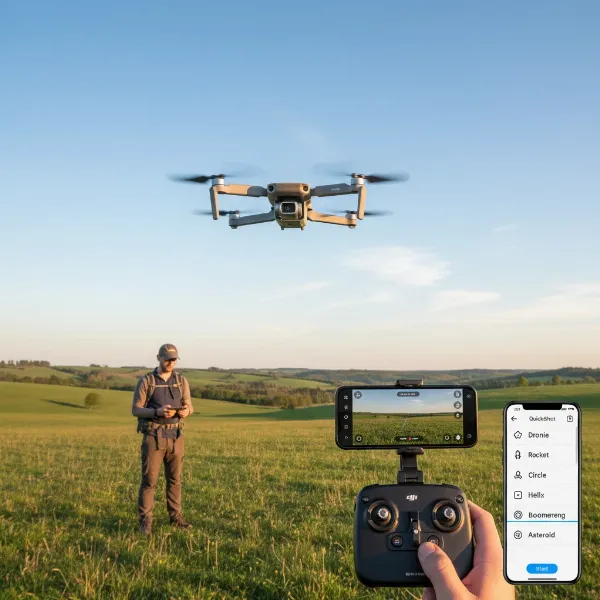
In the dynamic world of drones, finding the perfect balance between power, portability, and regulatory compliance is a constant challenge. DJI has consistently led this charge, and with the release of the Mini 4 Pro, they once again aim to redefine what a sub-250g drone can achieve. This comprehensive review dives deep into the DJI Mini 4 Pro, exploring its groundbreaking features, performance, and whether it truly maintains its reign as the ultimate choice for creators and enthusiasts alike. If you’re pondering your next drone purchase, especially one that slips under critical weight restrictions without compromising on capability, read on.
DJI Mini 4 Pro: Overview of DJI’s Latest Ultra-Light Drone
The DJI Mini 4 Pro stands as the flagship model in DJI’s acclaimed Mini series, representing a significant leap forward in merging advanced functionalities with an ultra-light design. This foldable, compact drone weighs in at less than 250 grams, a crucial factor that often exempts it from complex registration and licensing requirements in many global regions. Building on the foundation laid by its predecessor, the Mini 3 Pro, the Mini 4 Pro integrates sophisticated safety and flight features traditionally found in DJI’s larger, more professional-grade Mavic series, making high-end drone technology more accessible than ever before.
Advantages and Disadvantages of the DJI Mini 4 Pro
Understanding the full scope of the Mini 4 Pro requires a look at both its strengths and limitations. This drone packs an impressive punch for its size, but like any technology, it comes with trade-offs.
Advantages
- Regulatory Freedom: Weighing under 250g is its most celebrated feature, allowing pilots to bypass intricate drone registration and licensing processes in numerous countries. This makes it a fantastic travel companion.
- Omnidirectional Obstacle Avoidance: A game-changer for the Mini series, this drone features 360-degree obstacle sensing. This dramatically boosts flight safety and confidence, especially in more complex or unpredictable environments, safeguarding your investment.
- Exceptional Camera Performance: Equipped with a 1/1.3-inch sensor, the Mini 4 Pro captures stunning 4K/60 HDR video and 12/48MP RAW photos. It also introduces 4K/100fps slow-motion capabilities and the professional 10-bit D-Log M color profile, offering greater flexibility in post-production. True vertical shooting is a boon for social media content creators.
- Enhanced O4 Transmission: The upgraded O4 video transmission system provides a more stable and extended range, ensuring a reliable connection even in challenging conditions and allowing for more confident long-distance flights.
- Advanced Tracking Capabilities: ActiveTrack 360° offers more reliable and sophisticated subject tracking, enabling dynamic and cinematic shots that seamlessly follow your chosen subject through intricate paths.
- Unmatched Portability: Its feather-light and foldable design means the Mini 4 Pro can easily fit into a small camera bag or even a jacket pocket, ready for spontaneous aerial adventures.
- Broad User Appeal: With its blend of advanced features and user-friendly operation, it’s an excellent choice for both beginners entering the drone world and seasoned professionals needing a highly capable, discreet secondary drone.
|
Our Picks for the Best Drone in 2026
As an Amazon Associate I earn from qualifying purchases.
|
||
| Num | Product | Action |
|---|---|---|
| 1 | DJI Mini 3 Fly More Combo (DJI RC), Drones with Camera for Adults 4K, 3 Batteries for 114-min Flight Time, Vertical Shooting, 32800ft (10km) Video Transmission, Lightweight Mini Drone for Beginners |

|
| 2 | Drone with 1080P Camera - Foldable Remote Control Quadcopter with Gesture Control, 3D Flip, One Key Start, Emergency Stop, 2 Batteries, Easier to use, Toy for Kids Adult Beginners |
|
| 3 | DJI Mini 4K Camera Drone Combo, Drone with 4K UHD Camera for Adults, Under 249 g, 3-Axis Gimbal Stabilization, 10km Video Transmission, Auto Return, 2 Batteries for 62-Min Max Flight Time, QuickShots |
|
| 4 | GPS Drones with Camera for Adults 4K, FPV Drone Under 249g with Brushless Motor, GPS Auto Return, Follow Me, Circle Fly, Waypoint Flight, Foldable Drone with Gesture Control, 46Mins with 2 Batteries |
|
| 5 | DJI Air 3S Fly More Combo (RC 2 Screen Remote Controller), Drone with 1" CMOS Wide-Angle & Medium Tele Camera for Adults, 4K/60fps, Omnidirectional Sensing & 3 Batteries for Extended Flight Time |
|
| 6 | Drone with Camera - Drone with Screen on Controller for Beginners, Foldable Remote Control Quadcopter with Gesture Control, 3D Flip, One Key Start, Emergency Stop, 2 Batteries, Easier to use to use |
|
| 7 | DJI Mini 4K, Drone with 4K UHD Camera for Adults, Under 249 g, 3-Axis Gimbal Stabilization, 10km Video Transmission, Auto Return, Wind Resistance, 1 Battery for 31-Min Max Flight Time, Intelligent |
|
| 8 | Drone with Camera, Drones for Adults and Beginners, 1080P HD FPV Foldable Mini Drones for Kids, with 2 Batteries, Carrying Case, Trajectory Flight, Gravity Control, One-Key Takeoff/Landing, 360° Flip, Toys for Gift |
|
| 9 | Drone with Camera for Adults 4K, Brushless Motor Drones for Kids Beginners, 60 Mins Flight, 130° Lens, FPV Foldable RC Quadcopter, Gesture Photography, Toys Gifts for Teen Boys Girls, Black |
|
| 10 | Drone with Camera 1080P HD FPV Foldable Mini Drone for Beginners Kids Adults, Drone with One Key Take Off/Landing, Gesture Selfie, Altitude Hold, 3D Flip, Easy to Fly, 2 Batteries, Toys for Boys Girls |
|
Disadvantages
- Incremental Update for Some: For current DJI Mini 3 Pro owners, the Mini 4 Pro’s upgrades, while significant, might feel incremental. The decision to upgrade largely depends on the individual’s need for omnidirectional obstacle avoidance, D-Log M, or higher frame rates.
- Fixed Aperture Lens: The f/1.7 fixed aperture means that in very bright conditions, neutral density (ND) filters are essential to achieve cinematic motion blur, adding an extra accessory to your kit.
- Vulnerability to Strong Winds: Due to its ultra-light design, the Mini 4 Pro can be more susceptible to strong winds than heavier drones, potentially impacting stability and flight time in adverse weather.
- Intelligent Flight Battery Plus Restriction: While an optional Intelligent Flight Battery Plus extends flight time, it pushes the drone’s weight above 250g, negating some regulatory benefits, and is not available in all regions (e.g., Europe).
- Not the Ultimate in Image Quality: While excellent for its class, it cannot compete with the larger Four Thirds sensors found in professional drones like the DJI Mavic 3 series for absolute image quality, particularly in complex lighting scenarios or for extreme detail retention.
Popular Applications of the DJI Mini 4 Pro in Everyday Life
The DJI Mini 4 Pro’s blend of compact design and advanced capabilities opens up a world of possibilities for diverse users.
- Aerial Photography and Videography: Its high-quality 12/48MP stills and 4K/60 HDR video, coupled with the D-Log M profile, make it a powerful tool for capturing breathtaking landscapes, architectural shots, and dynamic action sequences. Content creators can elevate their visual storytelling with professional-grade aerial footage.
- Travel and Adventure Documentation: For globetrotters and outdoor enthusiasts, the Mini 4 Pro is an ideal companion. Its minimal weight and size make it easy to carry without adding bulk to luggage, allowing for stunning captures of journeys and scenic locations.
- Social Media Content Creation: With true vertical shooting capabilities, the Mini 4 Pro is perfectly optimized for creating engaging content for platforms like Instagram Reels, TikTok, and YouTube Shorts, eliminating the need for extensive cropping or post-processing rotation.
- Personal Use and Learning: The advanced safety features, especially omnidirectional obstacle avoidance, make it a forgiving and excellent platform for beginners to learn drone piloting and aerial photography skills with enhanced peace of mind.
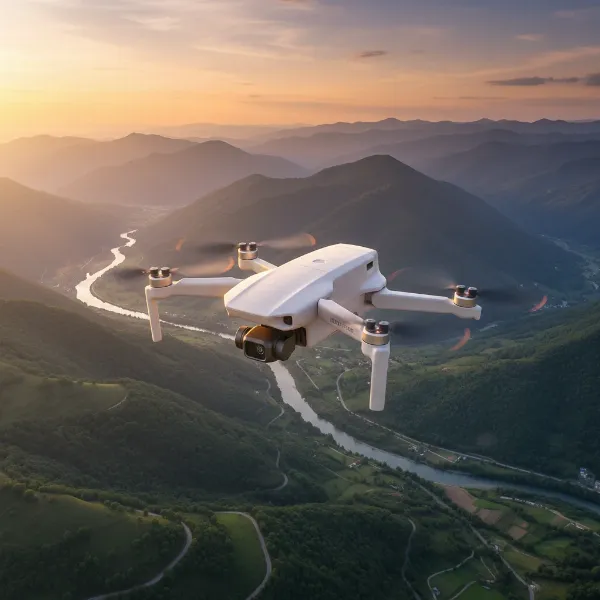 DJI Mini 4 Pro drone in flight over a scenic landscape at sunset, capturing cinematic video
Comparison Table: DJI Mini 4 Pro vs. Key Competitors
To truly appreciate the DJI Mini 4 Pro, it’s helpful to see how it stacks up against its closest siblings and other relevant drones in DJI’s lineup.
| Feature | DJI Mini 4 Pro | DJI Mini 3 Pro | DJI Mini 3 | DJI Air 3 |
|---|---|---|---|---|
| Weight | Under 250g | Under 250g | Under 250g | Over 700g (Heavier) |
| Obstacle Avoidance | Omnidirectional (360°) | Tri-directional | None | Omnidirectional (360°) |
| Video Transmission | O4 (Enhanced) | O3 | O2 | O4 (Enhanced) |
| Max Video Resolution | 4K/60 HDR, 4K/100fps | 4K/60fps, 4K/30 HDR | 4K/30fps | 4K/60 HDR, 4K/100fps |
| Color Profile | 10-bit D-Log M | D-Cinelike | Normal | 10-bit D-Log M, HLG |
| Subject Tracking | ActiveTrack 360° | ActiveTrack 4.0 | N/A | ActiveTrack 5.0, Spotlight 2.0 |
| Camera Sensor | 1/1.3-inch CMOS | 1/1.3-inch CMOS | 1/1.3-inch CMOS | 1/1.3-inch CMOS (Dual) |
| True Vertical Shot | Yes | Yes | Yes | Yes |
| Dual Camera | No | No | No | Yes (Wide & Medium Tele) |
The Mini 4 Pro clearly surpasses the Mini 3 Pro in key areas like obstacle avoidance, video frame rates, and the professional D-Log M color profile. While the Mini 3 remains a budget-friendly option, it lacks many advanced features. The Air 3 is a significant step up in weight and features, particularly its dual camera system, but it falls outside the sub-250g category and comes with a higher price tag.
Guide to Choosing the Right Drone (with a focus on Mini 4 Pro)
Selecting the ideal drone can be daunting, but by focusing on your specific needs, the DJI Mini 4 Pro often emerges as a top contender, especially within the sub-250g category.
First, define your primary purpose. Are you a frequent traveler needing a compact, regulation-friendly device? A content creator seeking high-quality aerial shots for social media? Or perhaps a professional looking for a highly capable secondary drone? The Mini 4 Pro excels across these scenarios, offering a powerful camera and advanced safety features in a small form factor.
Next, consider your budget. The Mini 4 Pro is a premium offering within its class. While its features often justify the cost, evaluate if you truly need omnidirectional obstacle avoidance, 4K/100fps, or D-Log M. If budget is a stricter constraint and you can forgo some advanced safety and video options, a Mini 3 or Mini 3 Pro might be more suitable.
Finally, evaluate technical factors crucial to your use case:
- Camera Quality: The Mini 4 Pro’s 4K/60 HDR and 10-bit D-Log M provide excellent image fidelity for most creators.
- Obstacle Avoidance: Its omnidirectional system is a significant safety net, invaluable for less experienced pilots or complex flight paths.
- Transmission Reliability: The O4 system ensures a robust connection, crucial for long-range or urban flights.
- Portability: If flying under 250g is a priority for travel or regulatory ease, the Mini 4 Pro is unmatched in its feature set at this weight.
Regarding controllers, the DJI RC 2 smart controller with its integrated screen is highly recommended. It offers a much more convenient and faster setup experience compared to the RC-N2, which requires a smartphone.
Notable Drone Brands and Models
In the consumer and prosumer drone market, DJI stands as the undisputed leader, consistently pushing the boundaries of technology and user experience. Their ecosystem, ranging from entry-level models to professional-grade cinematic drones, is unparalleled.
Within the crucial sub-250g category, DJI’s Mini series dominates the landscape. The DJI Mini 4 Pro is currently the benchmark, setting the standard for what’s possible in an ultra-light package. Its combination of advanced safety features, professional video capabilities, and regulatory advantages places it firmly at the top. The DJI Mini 3 Pro remains a highly capable and popular choice, still offering excellent performance, and can be a strong alternative if the latest features of the Mini 4 Pro aren’t absolutely essential for your workflow.
While other brands like Autel Robotics offer competitors such as the Evo Nano+ in the sub-250g space, DJI’s comprehensive feature set, robust app experience, and extensive accessory ecosystem generally give the Mini series a significant edge in user preference and market share.
Laws and Regulations for Drone Use
Understanding drone regulations is paramount for any pilot, and this is where the DJI Mini 4 Pro truly shines. Its under 250g take-off weight is a critical advantage, as drones in this category often benefit from significantly more lenient regulations worldwide. In many countries and regions, this means there’s no need for formal training, examinations, or complex registration processes, making it a highly accessible option for a broad range of users.
“The sub-250g classification of the Mini 4 Pro simplifies global travel and compliance, removing many barriers for aspiring and professional drone pilots alike.” – Admin, DroneEar.com
However, it is crucial for all pilots to always check and comply with local aviation authority guidelines. While the drone itself might be exempt from certain registration requirements, rules regarding no-fly zones (e.g., near airports, government buildings), maximum altitude limits, visual line of sight, and privacy concerns still universally apply. Ignorance of these laws is not an excuse, and responsible piloting ensures both your safety and the longevity of drone-friendly regulations.
Tips for Using and Maintaining Your DJI Mini 4 Pro
To maximize your experience and ensure the longevity of your DJI Mini 4 Pro, adhering to best practices for usage and maintenance is essential.
Before every flight, perform a thorough pre-flight checklist. Verify that the propellers are free from damage, both the drone and controller batteries are sufficiently charged, and a high-speed microSD card is correctly inserted. These simple steps can prevent common issues.
Choose a safe and open flying environment. Despite the advanced omnidirectional obstacle avoidance, avoiding dense areas with many obstacles is always advisable, especially for new pilots. Be mindful of wind conditions; while the Mini 4 Pro is stable for its size, its light weight means strong gusts can significantly affect its flight performance and battery life.
Battery care is crucial. Always charge your Intelligent Flight Batteries using DJI-approved chargers and store them at appropriate levels (around 50-60%) if you don’t plan to fly for an extended period. This prolongs battery health.
Regularly update the drone’s firmware through the DJI Fly app. These updates often introduce new features, improve performance, and address any known bugs, ensuring your drone operates at its peak potential.
For maintenance, gently clean the drone’s body, camera lens, and vision sensors with a soft, lint-free cloth. Dust and smudges can impair sensor performance and image quality. When not in use, store your Mini 4 Pro in a protective carrying case or bag to shield it from dust, impacts, and environmental elements.
Essential Accessories for Your DJI Mini 4 Pro
Enhancing your DJI Mini 4 Pro experience often involves a few key accessories that boost functionality, safety, and convenience.
Firstly, consider the Fly More Combo if you’re purchasing. It typically includes extra Intelligent Flight Batteries, a two-way charging hub, and a shoulder bag, offering significant value and greatly extending your flight sessions without constant recharges.
ND (Neutral Density) filters are virtually indispensable for any serious videographer. Due to the Mini 4 Pro’s fixed f/1.7 aperture, ND filters allow you to control the amount of light entering the lens, enabling slower shutter speeds for cinematic motion blur in bright conditions.
High-speed, high-capacity microSD cards are a must. With the drone’s capability to record 4K/60 HDR and even 4K/100fps video, you’ll need cards that can handle large file sizes and high write speeds to avoid dropped frames or recording errors. Look for cards rated V30 or higher.
For beginners or those frequently flying in tighter indoor spaces or near obstacles, propeller guards can provide an added layer of protection against minor collisions, though they do add weight and can slightly affect flight characteristics. An optional wide-angle lens attachment is also available, which can expand the camera’s field of view from 82.1 degrees to 100 degrees, offering new creative perspectives for expansive landscapes or confined spaces.
Conclusion
The DJI Mini 4 Pro unequivocally solidifies its position as the preeminent sub-250g drone on the market. It masterfully blends cutting-edge technology, unparalleled portability, and sophisticated safety features into a package that respects global regulatory frameworks. From its omnidirectional obstacle avoidance and enhanced O4 transmission to its professional-grade 4K/60 HDR video with D-Log M and true vertical shooting, the Mini 4 Pro empowers creators and enthusiasts to capture breathtaking aerial content with confidence and ease.
While existing Mini 3 Pro owners may weigh the incremental upgrades, for anyone new to the Mini series, upgrading from an older model, or a professional seeking a highly capable, discreet secondary drone, the Mini 4 Pro offers an irresistible proposition. It’s not just a drone; it’s a gateway to effortless aerial storytelling, setting a new benchmark for what ultra-light drones can achieve without compromise. Are you ready to elevate your aerial perspective and redefine your creative boundaries with the DJI Mini 4 Pro?
Frequently Asked Questions
Is the DJI Mini 4 Pro worth it if I already own a Mini 3 Pro?
The decision depends on your needs. The Mini 4 Pro offers omnidirectional obstacle avoidance, the D-Log M color profile, and 4K/100fps slow-motion, which are significant upgrades for safety and professional video editing. If these features are crucial for your workflow or peace of mind, it’s a worthwhile upgrade.
What are the main camera improvements in the Mini 4 Pro compared to its predecessor?
The Mini 4 Pro maintains the same excellent 1/1.3-inch sensor but improves video capabilities with 4K/60 HDR and 4K/100fps for smoother slow-motion. It also introduces the 10-bit D-Log M color profile, offering greater color grading flexibility, and features enhanced image processing for better overall quality.
Does the DJI Mini 4 Pro require registration in most countries?
Generally, no. A major advantage of the Mini 4 Pro is its sub-250g weight, which often exempts it from complex drone registration and licensing requirements in many countries and regions. However, pilots should always verify local aviation laws for specific regulations in their flying area.
How does the Mini 4 Pro perform in windy conditions?
Due to its lightweight design (under 250g), the Mini 4 Pro can be more susceptible to strong winds than heavier drones. While it maintains stability well for its class, flying in very gusty conditions is generally not recommended, as it can affect flight stability, battery life, and overall control.
What is the difference between the DJI RC-N2 and RC 2 controllers?
The DJI RC-N2 is a standard controller that requires you to connect your smartphone as a display. The DJI RC 2, on the other hand, is a smart controller featuring a built-in 5.5-inch high-brightness screen, offering a more convenient, quicker-to-deploy, and often more reliable flying experience by eliminating reliance on a separate phone.