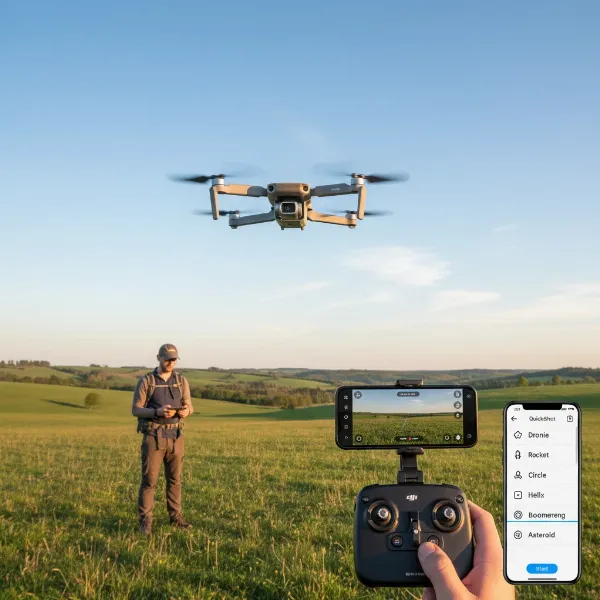
The world of FPV (First Person View) drones offers an exhilarating perspective, allowing pilots to navigate environments with unparalleled immersion. But when it comes to bringing that thrilling experience indoors, many drones falter. Enter the DJI Avata 2, a drone specifically engineered to bridge the gap between outdoor acrobatics and precise indoor navigation. As a technician with over a decade in the drone industry, I’ve seen countless models, and the Avata 2 stands out for its blend of accessibility and capability, especially within confined spaces. This comprehensive review dives deep into the DJI Avata 2’s design, features, and performance, helping you understand if this FPV drone is truly safe and effective for your indoor flying adventures.
What is the DJI Avata 2? Overview of Cinewhoop Technology
The DJI Avata 2 represents the evolution of FPV drones, specifically classified as a “cinewhoop.” This designation highlights its purpose: to capture cinematic footage in tight, dynamic environments. Unlike traditional racing FPV drones, the Avata 2 comes with integrated propeller guards, a crucial safety feature that allows for close-proximity flying without immediately damaging the propellers or surrounding objects.
This drone marks a significant step forward from its predecessor, the original Avata, incorporating design changes that enhance both performance and user experience. It features a standard propeller setup on top, a departure from the “pusher configuration” of the original. The Avata 2 also adopts standard T-mount props, simplifying replacements and customization for enthusiasts. With a weight of 386g (including battery), it’s noticeably lighter than the original Avata, contributing to its improved agility. Internal storage has also been boosted to 46GB, allowing for ample recording time even if you forget your SD card.
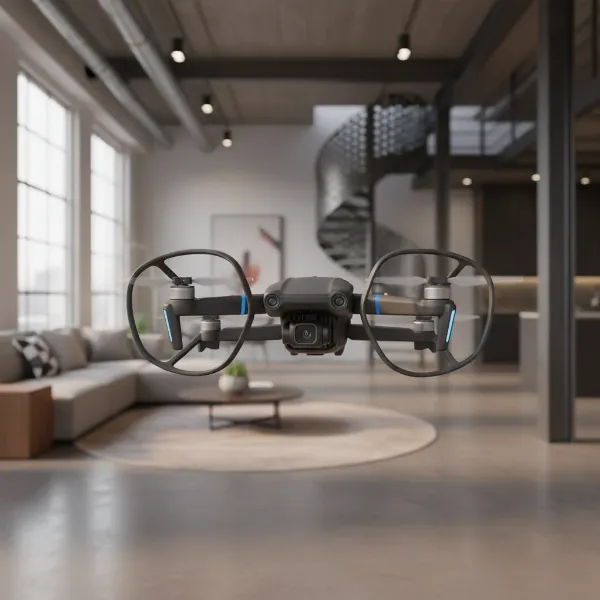 DJI Avata 2 showcasing its compact cinewhoop design with integrated propeller guards for indoor flying.
Is the DJI Avata 2 Safe for Indoor Flying? Features Enhancing Indoor Performance
The central question for many prospective owners is the DJI Avata 2’s safety and efficacy indoors. The answer is a resounding “yes,” thanks to several thoughtfully designed features.
Integrated Propeller Guards
|
Our Picks for the Best Drone in 2026
As an Amazon Associate I earn from qualifying purchases.
|
||
| Num | Product | Action |
|---|---|---|
| 1 | Drone with Camera for Adults 4K, Brushless Motor Drones for Kids Beginners, 60 Mins Flight, 130° Lens, FPV Foldable RC Quadcopter, Gesture Photography, Toys Gifts for Teen Boys Girls, Black |

|
| 2 | Drone with Camera 1080P HD FPV Foldable Mini Drone for Beginners Kids Adults, Drone with One Key Take Off/Landing, Gesture Selfie, Altitude Hold, 3D Flip, Easy to Fly, 2 Batteries, Toys for Boys Girls |
|
| 3 | Drone with Camera, Drones for Adults and Beginners, 1080P HD FPV Foldable Mini Drones for Kids, with 2 Batteries, Carrying Case, Trajectory Flight, Gravity Control, One-Key Takeoff/Landing, 360° Flip, Toys for Gift |
|
| 4 | DJI Mini 4K, Drone with 4K UHD Camera for Adults, Under 249 g, 3-Axis Gimbal Stabilization, 10km Video Transmission, Auto Return, Wind Resistance, 1 Battery for 31-Min Max Flight Time, Intelligent |
|
| 5 | DJI Air 3S Fly More Combo (RC 2 Screen Remote Controller), Drone with 1" CMOS Wide-Angle & Medium Tele Camera for Adults, 4K/60fps, Omnidirectional Sensing & 3 Batteries for Extended Flight Time |
|
| 6 | GPS Drones with Camera for Adults 4K, FPV Drone Under 249g with Brushless Motor, GPS Auto Return, Follow Me, Circle Fly, Waypoint Flight, Foldable Drone with Gesture Control, 46Mins with 2 Batteries |
|
| 7 | Drone with 1080P Camera - Foldable Remote Control Quadcopter with Gesture Control, 3D Flip, One Key Start, Emergency Stop, 2 Batteries, Easier to use, Toy for Kids Adult Beginners |
|
| 8 | DJI Mini 4K Camera Drone Combo, Drone with 4K UHD Camera for Adults, Under 249 g, 3-Axis Gimbal Stabilization, 10km Video Transmission, Auto Return, 2 Batteries for 62-Min Max Flight Time, QuickShots |
|
| 9 | Drone with Camera - Drone with Screen on Controller for Beginners, Foldable Remote Control Quadcopter with Gesture Control, 3D Flip, One Key Start, Emergency Stop, 2 Batteries, Easier to use to use |
|
| 10 | DJI Mini 3 Fly More Combo (DJI RC), Drones with Camera for Adults 4K, 3 Batteries for 114-min Flight Time, Vertical Shooting, 32800ft (10km) Video Transmission, Lightweight Mini Drone for Beginners |
|
Perhaps the most apparent safety feature for indoor flight is the integrated propeller guards. These robust guards encase the propellers, offering essential protection if the drone bumps into walls, furniture, or other obstacles, which is common in confined spaces. This design significantly reduces the risk of damage to the drone itself and minimizes potential harm to people or property, making indoor exploration far less daunting.
Beginner Mode & Intuitive Controls
For those new to FPV flying or indoor environments, the Avata 2 starts in a Beginner Mode, automatically reducing its speed. This controlled pace is invaluable for maneuvering in tighter spaces, giving pilots more time to react and reducing the likelihood of accidents. The DJI RC Motion 3 controller also offers an intuitive, game-like experience, simplifying complex flight maneuvers into easily managed inputs, further aiding beginners. While more advanced pilots might prefer the precision of the FPV Remote Controller 3 for manual mode, the Motion Controller allows for quick and enjoyable indoor navigation without extensive training.
Advanced Stabilization & Sensors
Indoor flying often means losing GPS signal, which traditional drones rely heavily on for stability. The Avata 2, however, excels indoors by utilizing its advanced internal sensors and machine vision approaches for stabilization. It features downward and backward visual positioning sensors, which are crucial for maintaining precise position hold even without satellite lock. These sensors, including fisheye sensors on the bottom rear, help the drone detect and react to obstacles, allowing it to navigate through hurdles at a steady pace. This means the Avata 2 can hover remarkably stably in one spot indoors, a significant improvement over previous models that would drift in dark or GPS-denied environments.
Improved Low-Light Camera Performance
Indoor environments frequently present lighting challenges, from dim corners to harsh contrasts. The Avata 2 addresses this with a significantly upgraded 1/1.3-inch camera sensor, similar to that found in high-quality action cameras. This larger sensor dramatically improves imaging capabilities, especially in low-light conditions, and offers better dynamic range. Coupled with 4K resolution and advanced Rocksteady 3.0 Electronic Image Stabilization, the Avata 2 can capture clear, steady, and vibrant footage even when indoor lighting isn’t optimal. While the manufacturer advises caution in extremely low-visibility situations, the Avata 2 performs “A LOT better in general, and in dark environments” compared to its predecessor.
Challenges and Considerations for Indoor Avata 2 Flights
While the DJI Avata 2 is well-suited for indoor flight, it’s essential to be aware of certain limitations and best practices to ensure a smooth and safe experience.
Navigating Low-Light Environments
Despite its improved low-light camera and stabilization, extremely dark rooms can still pose a challenge. The manufacturer advises caution in low-visibility situations. The drone’s visual positioning sensors rely on detectable surfaces and light to function effectively. If an indoor space is too dark, the drone might struggle with stable flight and could drift or become harder to control. As one expert noted, “The Pilot Institute YTube video show the A2 totally out of control after several feet into a dark culvert. Don’t remember which flight mode, but guessing N or S. Guessing got too dark. No reflective surfaces for the sensors to detect.” For such scenarios, external lighting solutions mounted on the drone might be necessary.
No Forward or Side Obstacle Avoidance
Unlike some DJI camera drones, the Avata 2 does not feature comprehensive obstacle avoidance sensors (e.g., forward or side). While its downward and backward sensors aid in precision hovering and navigating tighter spaces, it relies on the pilot’s skill to avoid obstacles in other directions. This design choice aligns with the FPV drone philosophy, where pilots aim for close-proximity flying rather than relying on automated avoidance systems, but it means pilots must remain vigilant.
Drone Size and Durability
The Avata 2, while compact for an FPV drone, is still “a lot bigger” than some micro cinewhoops. In extremely tight indoor spaces, its size might require more precise maneuvering. Furthermore, while the propeller guards offer protection, the drone’s construction can be “slightly more fragile than its predecessor” due to weight reduction. Crashes, even minor ones, can lead to cracked propeller guards, emphasizing the importance of practicing in open indoor areas first and considering DJI Care for repair or replacement coverage.
“For indoor drone flying, understanding your drone’s sensory limitations in various lighting conditions is paramount to ensuring both safety and successful footage.” – Admin, DroneEar.com
DJI Avata 2 vs. Avata 1: A Leap for Indoor FPV
The Avata 2 brings several key enhancements that make it a superior choice for indoor FPV compared to its predecessor:
| Feature | DJI Avata 2 | DJI Avata 1 | Impact on Indoor Flying |
|---|---|---|---|
| Weight | 377g | 410g | Lighter, more agile and responsive. |
| Visual Positioning | Downward and Backward | Downward Only | Enhanced precision in tight spaces. |
| Camera Sensor Size | 1/1.3-inch | 1/1.7-inch | Better low-light performance, improved dynamic range. |
| Low-Light Performance | Significantly improved | Noticeably drifted in dark environments | More stable and reliable in dim indoor settings. |
| Flight Path Accuracy | Enhanced with backward visual positioning | Less precise in complex environments | Navigates tighter spaces with greater accuracy. |
The Avata 2 is noticeably lighter, which contributes to its improved agility and responsiveness indoors. The addition of backward visual positioning sensors significantly enhances flight path accuracy, helping the drone navigate tight spaces more precisely. Crucially, the Avata 2 performs “A LOT better in general, and in dark environments” compared to the Avata 1, which was known to drift or even crash when it got too dark indoors. This makes the Avata 2 a far more reliable and enjoyable option for indoor FPV enthusiasts.
Essential Tips for Safe and Optimal Indoor Flying with DJI Avata 2
To maximize your indoor flying experience with the DJI Avata 2, consider these practical tips:
- Conduct Pre-Flight Checks: Always inspect your drone for any damage, especially to the propeller guards, and ensure batteries are fully charged. Check propeller screws for tightness.
- Choose a Safe Environment: Start in a spacious indoor area free of delicate objects, pets, or people. Clear potential obstacles and ensure adequate lighting.
- Utilize Beginner Mode: For initial indoor flights, keep the drone in Beginner Mode to manage speed and improve control. Gradually switch to Sport Mode as your confidence and skill grow.
- Mind the Lighting: While the Avata 2 excels in low light, avoid extremely dark rooms where visual sensors may struggle. For inspection tasks in very dim areas, consider attaching a lightweight external light.
- Practice Gentle Control: Especially for lateral (sideways) movements, be gentle on the joystick. The Avata 2 might tilt more than its predecessor during such movements, requiring a softer touch to maintain stability.
- Regular Maintenance: Keep your drone and especially the camera lens clean. Regularly check for loose parts or signs of wear on propellers and guards.
- Store Properly: When not in use, store your Avata 2 in its protective carrying case to prevent accidental damage.
Accessories for Enhanced Indoor Avata 2 Experience
To get the most out of your DJI Avata 2, particularly for indoor use, several accessories are highly recommended:
- DJI Avata 2 Fly More Combo: This bundle often includes multiple intelligent flight batteries and a charging hub. Having extra batteries is essential, as each offers about 15-23 minutes of flight time, and the charging hub prioritizes charging for quicker turnaround. The combo also usually includes extra propeller guards.
- Spare Propellers and Propeller Guards: Crashes happen, especially when learning or pushing boundaries indoors. Having spare propellers and replacement propeller guards ensures minimal downtime.
- High-Quality microSD Cards: With 4K recording capabilities and internal storage, a high-speed, high-capacity microSD card is crucial for capturing extended footage without interruption.
- DJI Goggles 3: The accompanying Goggles 3 are vital for the immersive FPV experience. They feature adjustable diopters, which are critical for users with different vision needs, ensuring a clear, focused image. “I adjusted the dials to “-250″ (not sure what units that is) but it helped the clarity immensely!” a user shared, indicating the effectiveness of the adjustable lenses.
Conclusion
The DJI Avata 2 carves out a niche as an exceptionally capable FPV drone for indoor flying. Its cinewhoop design, integrated propeller guards, intuitive controls, and advanced stabilization systems make it a robust and relatively safe option for navigating tight spaces and capturing dynamic footage. While cautious in dimly lit environments and mindful of its lack of forward obstacle avoidance, the Avata 2 significantly outperforms its predecessor and many other FPV drones in indoor scenarios. For beginners seeking an accessible entry into FPV, or experienced pilots looking for a reliable indoor cinematic tool, the Avata 2 delivers a compelling package.
Are you ready to unlock new perspectives and master the art of indoor drone flying with the DJI Avata 2?
Frequently Asked Questions
Can Avata 2 fly in very dark rooms?
While the DJI Avata 2 features an improved camera sensor that performs well in low light, flying in extremely dark rooms is not advised by the manufacturer. Its visual sensors require some ambient light to maintain stable flight and prevent drifting. For professional tasks in dim conditions, consider attaching external LED lights to the drone for better visibility and sensor performance.
Does Avata 2 have obstacle avoidance for indoor flight?
The DJI Avata 2 is equipped with downward and backward visual positioning sensors that assist with precision hovering and navigation in tight spaces. However, it does not feature comprehensive forward or side obstacle avoidance sensors found in some traditional camera drones. Pilots must rely on their FPV vision and skill to avoid frontal and lateral obstacles, making active piloting essential.
Is the Motion Controller good for indoor flying?
Yes, the DJI RC Motion 3 controller is excellent for indoor flying, especially for beginners. It offers an intuitive, game-like control experience that simplifies maneuvering in confined spaces by handling complex flight dynamics automatically. This allows new pilots to quickly gain confidence and enjoy the FPV experience without the steep learning curve associated with traditional stick controllers.
What’s the best way to charge Avata 2 batteries for frequent indoor sessions?
The DJI Avata 2’s Intelligent Flight Batteries can be charged directly or via the DJI Charging Hub. The charging hub is highly recommended for frequent sessions as it charges one battery at a time and prioritizes the one with the most charge remaining, ensuring the quickest possible turnaround time to get you back in the air. A full charge with the hub takes approximately 45 minutes.