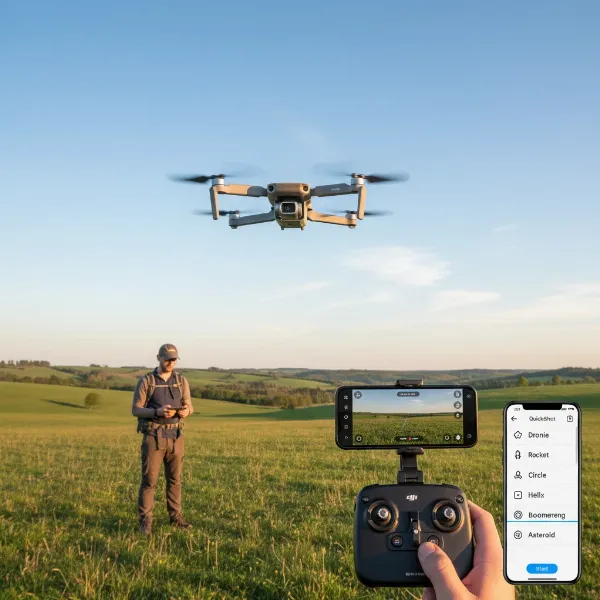
Drones have revolutionized how we capture the world, offering breathtaking aerial perspectives once reserved for expensive manned aircraft. From stunning landscape photography to essential infrastructure inspections, unmanned aerial vehicles (UAVs) open up a realm of possibilities. Yet, with this incredible technology comes a critical responsibility: understanding and respecting privacy laws. As drone technology becomes more accessible, the lines between what you can and cannot film become increasingly blurred, requiring pilots to be more vigilant than ever. This guide will walk you through the complex landscape of drone privacy regulations, helping you fly responsibly and legally.
Understanding “Privacy”: The Core Concept of Reasonable Expectation
At the heart of drone privacy laws lies the legal concept of a “reasonable expectation of privacy.” This principle dictates whether an individual can legally expect their activities or property to be free from observation or recording. Generally, people have a high expectation of privacy within their homes, enclosed backyards, or other private spaces not readily visible from public vantage points. For example, filming inside someone’s home or a secluded garden with a drone would almost certainly violate this expectation.
Conversely, in public spaces like streets, parks, or open fields, the expectation of privacy is significantly lower. If an activity is visible to the public eye, there’s generally no legal expectation of privacy. However, even in public, using a drone to persistently follow or harass an individual, or capturing identifiable personal data without consent for commercial purposes, can still lead to legal issues.
Federal vs. State & Local Drone Laws in the US
In the United States, the regulatory environment for drones is a multi-layered system involving federal, state, and local authorities. The Federal Aviation Administration (FAA) primarily governs airspace safety, regulating where and how drones can fly. This includes rules on altitude (generally below 400 feet), maintaining a visual line of sight, and avoiding restricted airspace like airports. While the FAA permits drones to fly over private property within these guidelines, it largely defers to states and local jurisdictions on privacy matters related to what drones can film.
This means that while a drone might be legally flying in federal airspace, it could simultaneously be violating state or local privacy laws if it’s used for unauthorized surveillance or filming of private property. Many states have enacted specific legislation to address drone privacy. For instance, California’s AB 856 prohibits using a drone to capture images of private property or individuals without consent if a reasonable expectation of privacy exists. Similarly, Idaho Code § 21-213 prohibits surveillance or recording of another person or their property via drone without written consent. Other states, like Florida (SB 766) and Texas (HB 912), have similar laws restricting drone use for capturing images of private property without consent when there’s an expectation of privacy. It is crucial for drone operators to research and understand the specific laws in the states and localities where they intend to fly.
Filming on Public Property: The Permissible and the Pitfalls
When operating your drone in public spaces, the general rule is that you can film anything visible from a public vantage point, as there is no reasonable expectation of privacy in such areas. This allows for vast creative freedom to capture stunning urban landscapes, public events, or natural scenery. Whether you’re a recreational flyer documenting your adventures or a commercial pilot shooting marketing footage, filming in public is generally permissible provided you adhere to FAA airspace regulations and local ordinances.
However, even in public, there are important ethical and legal considerations. While you might capture individuals in your footage, persistently focusing on identifiable individuals, especially children, without their consent, can lead to privacy concerns or complaints. If your drone’s camera has a powerful zoom, using it to look into private residences or secluded areas from a public flight path can be problematic. For commercial use, especially if identifiable individuals are prominent in your footage, obtaining a model release is a best practice to avoid potential legal issues. Always strive for responsible filming that respects the general public, even in openly accessible areas.
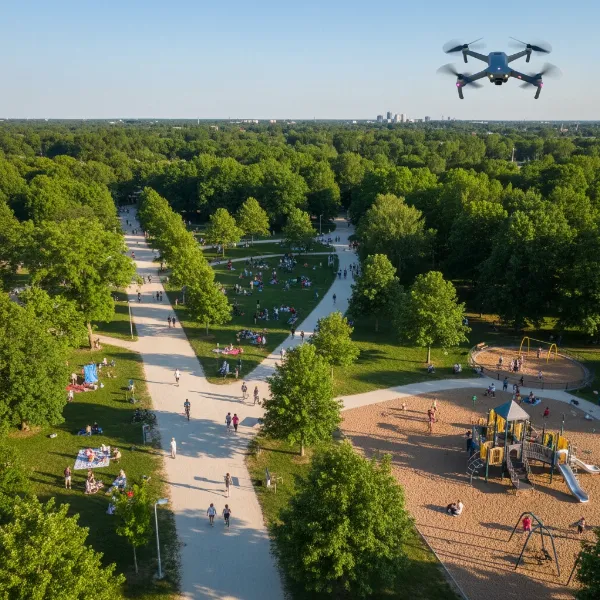 A drone capturing footage in a public park with people walking, emphasizing ethical distance and respecting privacy.
Filming Over Private Property: A Legal Minefield
The question of flying drones over private property and what can be filmed is perhaps the most contentious area of drone privacy law. While federal FAA regulations generally permit flights over private land within controlled airspace limits (typically under 400 feet), many state and local laws introduce significant restrictions on what can be filmed or how the drone is operated in such airspace.
Many homeowners view drones flying low or hovering repeatedly over their property as intrusive, especially if cameras are involved. This can be perceived as “trespass by drone” or an invasion of privacy. States often have laws that address this, treating persistent, low-altitude flights or filming of private property without consent as a violation. Capturing images or footage of individuals on private property without their explicit permission can lead to legal action, ranging from civil lawsuits to criminal charges depending on the jurisdiction. For instance, some states prohibit flying a drone below 400 feet above private property specifically to surveil or eavesdrop. Always obtain permission from property owners before flying directly over or filming their private property, even if you believe you are within FAA airspace guidelines. Ethical drone operation dictates respect for property boundaries and the personal space of others.
International Perspective: GDPR and Beyond
For drone pilots operating internationally, particularly within Europe, the General Data Protection Regulation (GDPR) adds another layer of complexity to privacy considerations. GDPR applies whenever drone operations involve processing personal data of European Union residents, regardless of where your company is based. This broad definition of personal data includes identifiable information such as facial images, vehicle license plates, street addresses, house numbers, GPS coordinates of private property, and even audio recordings of conversations.
Key GDPR principles for drone operations include:
- Legal Basis: You must have a lawful reason for collecting personal data (e.g., consent, legitimate interest, contractual necessity).
- Data Minimization: Collect only the data absolutely necessary for your stated purpose. If inspecting a roof, limit camera angles to the roofline and avoid capturing neighboring properties. Use the minimum resolution required and disable audio if not essential.
- Transparency: Inform people that data collection is occurring, perhaps with visible signage at operational sites, and maintain public-facing privacy policies.
- Retention: Define how long personal data will be kept and implement automatic deletion procedures.
The UK Civil Aviation Authority echoes these sentiments, stressing that if your drone is equipped with a camera, you must respect people’s privacy, especially in private areas like their homes or gardens. Any identifiable images or recordings are subject to data protection laws, regardless of whether the capture was intentional or unintentional. They advise knowing your camera’s capabilities, making your presence clear, and considering privacy before sharing any footage.
Ethical Drone Piloting: Best Practices for Respecting Privacy
Navigating drone privacy laws can be challenging, but adopting a strong ethical framework can help prevent legal issues and maintain good community relations. Here are essential best practices:
- Obtain Consent: Whenever possible, seek explicit permission from property owners before flying over their land and from individuals before filming them, especially for commercial purposes or if they are clearly identifiable.
- Maintain Distance and Altitude: Avoid flying low or hovering persistently over private property. Staying at higher altitudes and maintaining a respectful distance from homes and private areas significantly reduces perceived intrusion.
- Blur Identifiable Features: Before publishing drone footage, use editing software to blur out identifiable faces, license plates, or other sensitive details that could compromise an individual’s privacy.
- Announce Your Presence: If you are operating in a residential area, making your presence known to neighbors or posting clear signage can prevent misunderstandings and complaints.
- Be Aware of Surroundings: Always scan your environment for areas where people might have a heightened expectation of privacy, such as hot tubs, private patios, or areas behind tall fences.
- Understand Your Flight’s Purpose: Differentiate between recreational and commercial flights. Commercial flights often have stricter requirements for licensing (like FAA Part 107 in the US) and data handling.
> “Responsible drone piloting isn’t just about adhering to regulations; it’s about building trust and showing respect for the communities you fly within. Always ask yourself if you would want a drone filming in that manner over your own home.” – Alex DroneTech, Certified Drone Instructor at DroneEar.com
Consequences of Violating Drone Privacy Laws
The consequences of violating drone privacy laws can be severe and vary depending on the jurisdiction and the nature of the offense. For instance, in some US states, unauthorized drone surveillance can lead to civil lawsuits for invasion of privacy, where the drone operator may be liable for damages. In other cases, flying a drone over private property to record without consent might be classified as a misdemeanor or even a felony, carrying substantial fines and potential imprisonment.
Under GDPR, non-compliance can result in hefty penalties, including fines of up to €20 million or 4% of a company’s annual global revenue, whichever is higher. Even if no criminal charges are filed, legal disputes can be costly and time-consuming, damaging a drone pilot’s reputation and potentially leading to restrictions on future operations. Understanding these risks underscores the importance of proactive compliance and ethical conduct.
Conclusion
The evolution of drone technology continues to push the boundaries of aerial imaging, but it also brings with it the crucial need for responsible and legal operation. Navigating the intricate web of federal, state, local, and international privacy laws requires diligence, awareness, and a commitment to ethical piloting. By understanding the concept of a “reasonable expectation of privacy,” respecting private property rights, and adhering to best practices like obtaining consent and minimizing data collection, drone enthusiasts and professionals alike can enjoy the incredible capabilities of their UAVs without infringing on the privacy of others. Always stay informed about the latest regulations and strive to be a considerate member of the airspace community.
What steps will you take to ensure your next drone flight is both spectacular and respectful of privacy?
Frequently Asked Questions
Can a drone film in a public park without permission?
|
Our Picks for the Best Drone in 2026
As an Amazon Associate I earn from qualifying purchases.
|
||
| Num | Product | Action |
|---|---|---|
| 1 | Drone with 1080P Camera - Foldable Remote Control Quadcopter with Gesture Control, 3D Flip, One Key Start, Emergency Stop, 2 Batteries, Easier to use, Toy for Kids Adult Beginners |

|
| 2 | DJI Mini 3 Fly More Combo (DJI RC), Drones with Camera for Adults 4K, 3 Batteries for 114-min Flight Time, Vertical Shooting, 32800ft (10km) Video Transmission, Lightweight Mini Drone for Beginners |
|
| 3 | DJI Mini 4K Camera Drone Combo, Drone with 4K UHD Camera for Adults, Under 249 g, 3-Axis Gimbal Stabilization, 10km Video Transmission, Auto Return, 2 Batteries for 62-Min Max Flight Time, QuickShots |
|
| 4 | GPS Drones with Camera for Adults 4K, FPV Drone Under 249g with Brushless Motor, GPS Auto Return, Follow Me, Circle Fly, Waypoint Flight, Foldable Drone with Gesture Control, 46Mins with 2 Batteries |
|
| 5 | Drone with Camera for Adults 4K, Brushless Motor Drones for Kids Beginners, 60 Mins Flight, 130° Lens, FPV Foldable RC Quadcopter, Gesture Photography, Toys Gifts for Teen Boys Girls, Black |
|
| 6 | DJI Mini 4K, Drone with 4K UHD Camera for Adults, Under 249 g, 3-Axis Gimbal Stabilization, 10km Video Transmission, Auto Return, Wind Resistance, 1 Battery for 31-Min Max Flight Time, Intelligent |
|
| 7 | Drone with Camera 1080P HD FPV Foldable Mini Drone for Beginners Kids Adults, Drone with One Key Take Off/Landing, Gesture Selfie, Altitude Hold, 3D Flip, Easy to Fly, 2 Batteries, Toys for Boys Girls |
|
| 8 | Drone with Camera - Drone with Screen on Controller for Beginners, Foldable Remote Control Quadcopter with Gesture Control, 3D Flip, One Key Start, Emergency Stop, 2 Batteries, Easier to use to use |
|
| 9 | Drone with Camera, Drones for Adults and Beginners, 1080P HD FPV Foldable Mini Drones for Kids, with 2 Batteries, Carrying Case, Trajectory Flight, Gravity Control, One-Key Takeoff/Landing, 360° Flip, Toys for Gift |
|
| 10 | DJI Air 3S Fly More Combo (RC 2 Screen Remote Controller), Drone with 1" CMOS Wide-Angle & Medium Tele Camera for Adults, 4K/60fps, Omnidirectional Sensing & 3 Batteries for Extended Flight Time |
|
Generally, drones can film in public parks without specific permission from individuals, as there’s a lower expectation of privacy in public spaces. However, it’s essential to comply with any local park ordinances, FAA regulations, and avoid intrusive behavior like focusing on specific individuals or flying too low. Always be mindful and respectful of others enjoying the public space.
Is it legal to use a drone to film real estate properties for sale?
Yes, it is legal to use drones for real estate photography, but with strict privacy caveats. You must have explicit permission from the property owner you are filming. Additionally, you must be extremely careful not to capture neighboring properties, individuals, or private spaces through windows without their consent, as this can lead to legal issues. Blurring identifiable features of neighbors or their properties before publishing is a recommended practice.
What should I do if a drone is flying over my private property and I suspect it’s filming?
If you suspect a drone is violating your privacy by filming over your private property, you should first document the incident (e.g., note the drone’s appearance, time, and behavior). Avoid attempting to bring the drone down, as this could lead to legal trouble. Instead, contact your local law enforcement to report a potential privacy violation, as state and local laws often protect against unauthorized surveillance over private land.