Have you ever considered turning your passion for drones into a thriving source of income? The drone industry is no longer just for hobbyists; it’s a rapidly expanding market brimming with commercial opportunities. In 2026, the landscape for Unmanned Aerial Vehicles (UAVs) offers unprecedented potential for skilled pilots and savvy entrepreneurs to generate significant revenue. This comprehensive guide will navigate you through the most lucrative avenues, essential equipment, critical regulations, and practical tips to build a successful drone business.
Drone: A Comprehensive Guide from A to Z
What is a Drone? An Overview of UAV Technology
|
Our Picks for the Best Drone in 2026
As an Amazon Associate I earn from qualifying purchases.
|
||
| Num | Product | Action |
|---|---|---|
| 1 | DJI Mini 4K Camera Drone Combo, Drone with 4K UHD Camera for Adults, Under 249 g, 3-Axis Gimbal Stabilization, 10km Video Transmission, Auto Return, 2 Batteries for 62-Min Max Flight Time, QuickShots |

|
| 2 | GPS Drones with Camera for Adults 4K, FPV Drone Under 249g with Brushless Motor, GPS Auto Return, Follow Me, Circle Fly, Waypoint Flight, Foldable Drone with Gesture Control, 46Mins with 2 Batteries |
|
| 3 | DJI Air 3S Fly More Combo (RC 2 Screen Remote Controller), Drone with 1" CMOS Wide-Angle & Medium Tele Camera for Adults, 4K/60fps, Omnidirectional Sensing & 3 Batteries for Extended Flight Time |
|
| 4 | Drone with Camera 1080P HD FPV Foldable Mini Drone for Beginners Kids Adults, Drone with One Key Take Off/Landing, Gesture Selfie, Altitude Hold, 3D Flip, Easy to Fly, 2 Batteries, Toys for Boys Girls |
|
| 5 | Drone with Camera, Drones for Adults and Beginners, 1080P HD FPV Foldable Mini Drones for Kids, with 2 Batteries, Carrying Case, Trajectory Flight, Gravity Control, One-Key Takeoff/Landing, 360° Flip, Toys for Gift |
|
| 6 | Drone with 1080P Camera - Foldable Remote Control Quadcopter with Gesture Control, 3D Flip, One Key Start, Emergency Stop, 2 Batteries, Easier to use, Toy for Kids Adult Beginners |
|
| 7 | Drone with Camera for Adults 4K, Brushless Motor Drones for Kids Beginners, 60 Mins Flight, 130° Lens, FPV Foldable RC Quadcopter, Gesture Photography, Toys Gifts for Teen Boys Girls, Black |
|
| 8 | DJI Mini 4K, Drone with 4K UHD Camera for Adults, Under 249 g, 3-Axis Gimbal Stabilization, 10km Video Transmission, Auto Return, Wind Resistance, 1 Battery for 31-Min Max Flight Time, Intelligent |
|
| 9 | DJI Mini 3 Fly More Combo (DJI RC), Drones with Camera for Adults 4K, 3 Batteries for 114-min Flight Time, Vertical Shooting, 32800ft (10km) Video Transmission, Lightweight Mini Drone for Beginners |
|
| 10 | Drone with Camera - Drone with Screen on Controller for Beginners, Foldable Remote Control Quadcopter with Gesture Control, 3D Flip, One Key Start, Emergency Stop, 2 Batteries, Easier to use to use |
|
A drone, often referred to as an Unmanned Aerial Vehicle (UAV) or Unmanned Aircraft System (UAS), is an aircraft without a human pilot aboard. These sophisticated machines are remotely controlled or can fly autonomously based on pre-programmed flight plans. Originally developed for military applications, drones have rapidly transitioned into civilian sectors, transforming industries from entertainment to agriculture. Today, the technology encompasses a vast array of designs, from compact consumer models to large, specialized industrial platforms, each tailored for different tasks and purposes. This evolution highlights a significant shift towards more accessible and versatile aerial technology.
Advantages and Challenges of Commercial Drone Operation
Operating a drone commercially offers a myriad of advantages, making it an attractive business venture. Drones can access difficult or dangerous areas, such as inspecting tall structures or hazardous industrial sites, significantly reducing risk to human personnel. They also offer substantial cost and time savings compared to traditional methods like helicopter rentals for aerial photography or manual inspections. Furthermore, the versatility of drones allows them to be applied across diverse sectors, from capturing stunning cinematic footage to conducting precise agricultural surveys.
However, the commercial drone landscape is not without its challenges. Concerns regarding privacy and security remain prominent, necessitating careful operation and adherence to local laws. Drones also have inherent limitations concerning flight time and operational range, which require strategic planning and a robust battery management system. Moreover, becoming a professional drone pilot demands not only advanced piloting skills but also a comprehensive understanding of aviation regulations and specialized knowledge pertinent to your chosen niche.
Lucrative Drone Applications for Earning Income in 2026
The commercial drone market is projected to reach $29.4 billion by 2026, highlighting a wealth of opportunities for drone operators. Several sectors stand out as particularly profitable for those looking to monetize their drone skills.
Aerial Photography & Videography: This remains one of the most accessible and in-demand drone services.
- Real Estate: High-quality aerial photos and videos are crucial for showcasing properties, highlighting expansive layouts, and illustrating neighborhood proximity. FPV (First-Person View) cinematic flythroughs are an emerging, highly lucrative niche due to their immersive quality and limited number of providers.
- Events: From weddings and concerts to corporate gatherings, drones capture breathtaking, sweeping shots that traditional ground cameras cannot. Live-streaming services for events are also gaining traction.
- Advertising & Marketing: Businesses across various industries utilize dynamic aerial footage for commercials, promotional campaigns, and brand storytelling.
Inspections: Drones significantly enhance safety and efficiency in various inspection tasks.
- Infrastructure: Inspecting bridges, cell towers, power lines, and pipelines safely from a distance, identifying structural issues or wear and tear without human risk.
- Roofing & Building: Rapidly assessing damage to roofs after storms or conducting routine building health checks for property managers.
- Solar & Wind Farms: Using thermal cameras to identify defective solar panels or inspecting wind turbine blades for cracks and erosion, optimizing energy output and preventing costly repairs.
Mapping & Surveying: Drones provide accurate, high-resolution data for various planning and development needs.
- Construction: Monitoring site progress, creating 3D models, and performing topographic surveys faster than traditional methods.
- Agriculture: Generating detailed maps for soil analysis, crop health monitoring, and irrigation management in precision agriculture.
- Land Development: Assisting city planners and developers with urban planning and real estate projects by providing accurate terrain data.
Precision Agriculture: Beyond mapping, drones are integral to modern farming.
- Crop Monitoring: Detecting plant health issues, pest infestations, and irrigation problems early, allowing for targeted interventions.
- Precision Spraying: Applying fertilizers, herbicides, and pesticides with pinpoint accuracy, reducing waste and maximizing yield.
Public Safety & Emergency Services: Drones are invaluable tools in critical situations.
- Search & Rescue (SAR): Equipped with thermal cameras, drones can locate missing persons in difficult terrain or after dark, improving response times.
- Disaster Relief & Damage Assessment: Quickly surveying areas affected by natural disasters to assess damage and guide relief efforts.
Emerging Niches: The industry is constantly innovating, opening doors for specialized services.
- Drone Light Shows: Choreographed drone formations for entertainment, advertising, and public events.
- Niche Drone Delivery: Specialized delivery services for specific items in challenging environments, complementing traditional logistics.
- Educational Workshops: Training aspiring drone pilots on flight operations, safety, regulations, and advanced techniques.
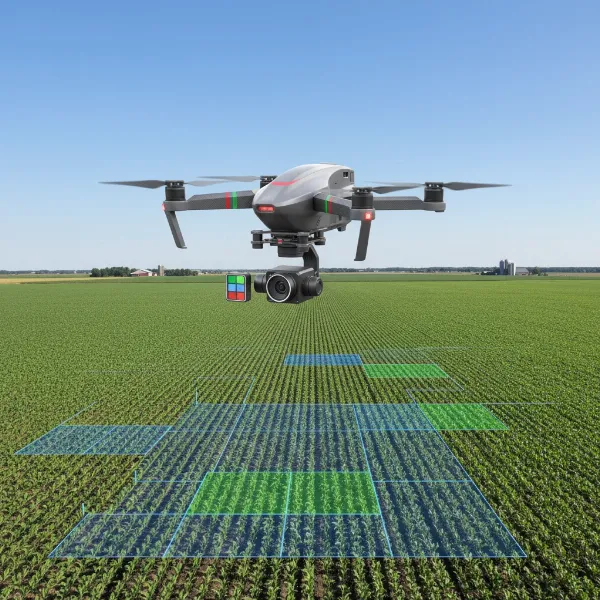 A drone with multispectral sensors flying over a vast agricultural field, conducting a crop health survey with precision farming technology
Comparing Top Drones for Professional Use in 2026
Choosing the right drone is paramount for commercial success, with performance, camera quality, and features being critical considerations. Here’s a comparison of some leading professional drones relevant in 2026, especially for photography and videography:
| Feature/Drone | DJI Mavic 4 Pro | DJI Air 3S | DJI Mini 5 Pro | DJI Inspire 3 |
|---|---|---|---|---|
| Camera | Triple-camera setup (100MP Hasselblad, telephoto) | Dual-camera (50MP 1-inch CMOS & 48MP 1/1.3-inch) | 48MP 1/1.3-inch CMOS | Full-frame, interchangeable lens (Zenmuse X9-8K Air) |
| Video Resolution | Up to 6K at 60 fps, 4K at 120 fps | Up to 4K at 120 fps | Up to 4K at 60 fps (vertical video capable) | Up to 8K at 75 fps |
| Flight Time | Up to ~51 minutes | Up to 45 minutes | Up to 38 minutes | Up to 28 minutes |
| Weight | ~1063g (~2.34 lbs) | ~724g (~1.6 lbs) | Under 249g | ~4000g (~8.8 lbs) |
| Key Features | Omnidirectional obstacle sensing, LiDAR, advanced flight modes, adjustable aperture | Advanced collision avoidance, O4 transmission | Sub-250g for relaxed regulations, 360 obstacle avoidance, ActiveTrack | Dual-control, RTK positioning, cinematic capabilities, high-end production |
| Best For | Professional filmmakers, high-end commercial work | Versatile prosumer photography/videography | Beginners, real estate, social media, travel (regulatory ease) | Hollywood-grade film, precision surveying, large-scale projects |
Note on US Regulations: For operators in the United States, recent FCC regulations introduced in late 2025/early 2026 significantly impact the drone market. New foreign-produced drones and critical components are largely barred from entry unless they appear on the “Blue UAS Cleared List” or qualify as a “domestic end product” under Buy American standards. This means US businesses should prioritize “Blue UAS” or “Buy American-compliant” platforms to ensure regulatory compliance and reduce operational risk.
Choosing the Right Drone for Your Business Needs
Selecting the ideal drone is a critical investment that directly impacts your ability to generate income. This decision should be driven by a clear understanding of your business goals and operational context.
First, determine your niche or primary purpose. Are you focused on real estate photography, industrial inspections, or agricultural surveying? Each application demands specific camera capabilities, flight characteristics, and specialized payloads. For instance, high-resolution cameras are paramount for photography, while thermal or multispectral sensors are vital for inspections and agriculture.
Next, consider your budget. Commercial drones can range from a few hundred to tens of thousands of dollars. While it’s tempting to start with an entry-level model, remember that higher-end drones often offer superior reliability, advanced features, and better image quality, which can justify the investment through increased client satisfaction and higher service fees.
Crucial technical factors include camera resolution and sensor size for image quality, flight stability for smooth footage, advanced obstacle avoidance for safety, and robust battery life and range for extended operations. A reliable GPS system is also essential for accurate positioning and flight planning. Don’t overlook the importance of the software ecosystem; robust flight planning apps and post-processing tools are key to efficient workflows.
Finally, research brand reputation and customer support. Reputable brands like DJI and Autel Robotics offer proven performance and access to spare parts and service. Ensuring your chosen drone has good support can be invaluable when technical issues arise.
Leading Drone Brands Favored by Professionals
The commercial drone market is dominated by a few key players known for their innovation, reliability, and range of products.
DJI stands as the undisputed global leader in civilian drones. Their extensive lineup, from the portable Mini series to the professional Mavic and Inspire lines, offers solutions for nearly every commercial application. DJI drones are renowned for their advanced camera technology, stable flight performance, intuitive controls, and comprehensive feature sets, including sophisticated obstacle avoidance and intelligent flight modes.
Autel Robotics is a strong competitor, particularly for those seeking alternatives to DJI, offering powerful drones with excellent camera capabilities and robust designs. Autel’s Evo series often competes directly with DJI’s mid-to-high-end models, providing reliable performance and competitive features.
While less dominant in the broad commercial photography/videography space, Parrot (from France) produces quality drones, often focusing on portability and specialized applications. However, with the evolving regulatory landscape in the US, especially concerning foreign-made drones, businesses should increasingly consider domestic manufacturers or those with products on the “Blue UAS Cleared List” for government contracts or sensitive operations.
Understanding Drone Laws and Regulations
Operating a drone for commercial gain requires a thorough understanding of and strict adherence to local aviation laws. In the United States, obtaining a Part 107 Remote Pilot Certificate from the FAA is mandatory for any commercial drone operation. This certification ensures pilots possess the foundational knowledge of airspace, regulations, weather, and drone operations necessary for safe and legal flight.
Operators must be acutely aware of airspace restrictions, including No-Fly Zones around airports, critical infrastructure, and temporary flight restrictions (TFRs) that can be enacted for various reasons. Recent FAA TFRs have even prohibited drone operations near Department of Homeland Security (DHS) “mobile assets,” creating potentially “roving, invisible” no-fly zones that require constant vigilance from pilots.
A significant development in 2026, particularly for the US market, involves recent FCC regulations. As of December 2025 and January 2026, the FCC added all foreign-produced Uncrewed Aircraft Systems (UAS) and critical components to its “Covered List.” This essentially bars new foreign-made drones from receiving FCC authorization for import, marketing, or sale in the US, with certain exemptions for products on the “Blue UAS Cleared List” or classified as “domestic end products.” Commercial operators must verify the compliance of their equipment, especially when purchasing new drones.
Furthermore, privacy considerations are paramount. Operators must respect individuals’ rights to privacy, especially when flying over private property, and obtain necessary permissions where required. Finally, adequate drone insurance is highly recommended to protect against liability for property damage or injury. “Navigating drone regulations is complex, but it’s the bedrock of a sustainable and trustworthy drone business.” – Alex DroneTech, Certified Commercial Drone Instructor.
Essential Tips for Drone Operation and Maintenance for Profit
To ensure consistent performance and maximize profitability, diligent operation and maintenance practices are crucial for your commercial drone.
Always perform pre-flight checks before launching. This includes inspecting propellers for damage, ensuring batteries are fully charged and securely seated, checking for firmware updates, and verifying GPS signal strength. A quick visual inspection of the drone’s body and camera gimbal can prevent unforeseen issues.
Adhere to safe flying practices. Maintain visual line of sight (unless operating under an FAA waiver), avoid flying over crowds, and keep a safe distance from obstacles. Understanding the capabilities and limitations of your drone is key to safe operation.
Weather considerations cannot be overstated. High winds, heavy rain, or extreme temperatures can severely impact drone performance and safety. Always check weather forecasts and avoid flying in adverse conditions.
Regular maintenance and cleaning are vital. This includes regularly cleaning camera lenses, sensors, and the drone body to prevent dust and debris from affecting performance. Keeping propellers free of nicks and ensuring battery health through proper charging and storage cycles extends their lifespan. Periodically check for and apply firmware updates to keep your drone’s software current.
Finally, proper storage and transport are essential. Invest in a durable, protective case or backpack to safeguard your drone and accessories from impact and environmental elements during transit and when not in use.
Must-Have Accessories for Your Commercial Drone Kit
A well-equipped drone kit is indispensable for professional operations, enhancing efficiency, safety, and the quality of your deliverables.
- Extra Batteries and Multi-Charger: Commercial jobs often require extended flight times. Multiple batteries are crucial, along with a multi-charger to rapidly prepare them for subsequent flights.
- Spare Propellers: Propellers are prone to damage. Having several sets of spares ensures you can quickly replace them on-site and avoid downtime.
- High-Capacity, High-Speed SD Cards: Professional-grade photos and 4K/6K video demand fast, reliable storage. Invest in multiple high-capacity cards to prevent running out of space during a shoot.
- ND (Neutral Density) Filters: These are essential for photographers and videographers to control exposure in bright lighting conditions, reduce shutter speed for cinematic motion blur, and enhance color vibrancy.
- Rugged Tablet or Smartphone: A dedicated, reliable device with a bright screen is necessary for clear FPV viewing, flight planning, and precise control, even in direct sunlight.
- Protective Case/Backpack: A hard-shell case or a custom-fitted backpack protects your drone and accessories from bumps, dust, and moisture during transport.
- Portable Power Bank: For recharging your controller or smart device in the field.
- External Monitor (Optional but Recommended): Provides a larger, clearer view for critical assessment of shots, especially valuable for clients on-site.
- Data Storage Solution: An external SSD or cloud storage subscription for immediate backup of valuable footage after a job.
Conclusion
The year 2026 presents an exciting and highly profitable landscape for drone enthusiasts eager to turn their skills into a thriving business. From captivating aerial photography for real estate and events to critical inspections of infrastructure and precision agriculture, the applications for drones are vast and continually expanding. Success hinges on a combination of mastering your flight skills, understanding the unique demands of your chosen niche, investing in the right equipment, and diligently adhering to evolving regulations. With careful planning, continuous learning, and a commitment to professionalism, your drone can be much more than a hobby—it can be a powerful engine for innovation and significant income. Are you ready to take your drone business to new heights?
Frequently Asked Questions
How much can I realistically earn with a drone in 2026?
Commercial drone pilots can realistically earn between $50,000 to $100,000 annually, depending on their chosen niche, skill level, and geographical location. Highly specialized services like industrial inspections or advanced mapping can command even higher rates, making the drone industry a lucrative career path for dedicated professionals.
Do I need a special license to make money with my drone?
Yes, in most countries, including the United States, you need a commercial drone pilot license or certification. In the US, this is the FAA Part 107 Remote Pilot Certificate, which is mandatory for any operation where you receive compensation for your drone services.
What are the easiest drone jobs to get into for beginners?
For beginners, aerial photography and videography for real estate or small events are often the easiest entry points. These niches generally have lower startup costs and a higher demand, allowing new pilots to build a portfolio and gain experience before moving into more specialized or technically demanding services.
Are there new regulations I should be aware of in 2026?
Yes, in the US, significant FCC regulations from late 2025/early 2026 now restrict new foreign-produced drones and critical components from the market unless they are on the “Blue UAS Cleared List” or qualify as “domestic end products.” Additionally, new FAA Temporary Flight Restrictions around sensitive areas require constant monitoring for all commercial operators.
Which drone is best for starting a drone business?
The “best” drone depends on your specific business focus and budget. For versatile professional photography/videography, the DJI Mavic 4 Pro or DJI Air 3S are excellent choices. If budget or sub-250g regulatory advantages are key, the DJI Mini 5 Pro offers professional capabilities in a highly portable package.