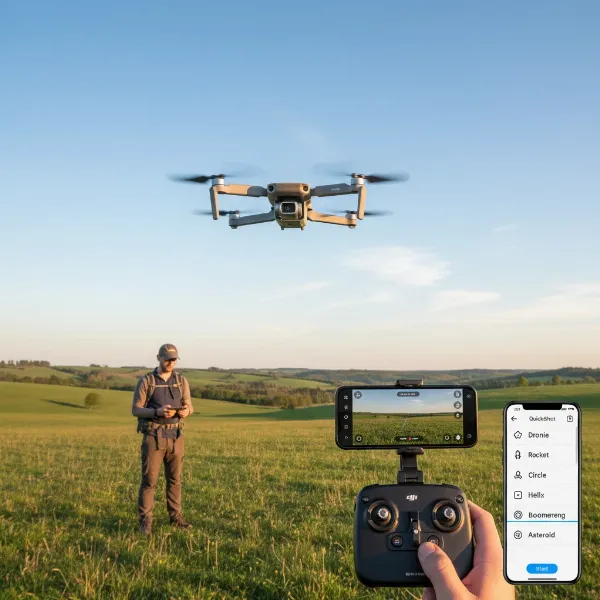
The night sky, once reserved for stars and occasional fireworks, has been dramatically transformed by an astonishing blend of technology and artistry: drone light shows. These captivating spectacles, where hundreds or even thousands of illuminated drones dance in perfect synchrony, paint dynamic images and tell stories across the dark canvas above us. But what exactly goes into orchestrating such a dazzling display? As an administrator for DroneEar.com with a decade of experience in drone technology, I’ve witnessed the incredible evolution of unmanned aerial vehicles, and today, we’ll delve deep into the sophisticated mechanics and intricate choreography that bring these mesmerizing drone light shows to life.
What Are Drone Light Shows? An Overview of Aerial Choreography
A drone light show is an aerial spectacle featuring illuminated, synchronized, and choreographed groups of unmanned aerial vehicles (UAVs) that arrange themselves into various formations to create dynamic visuals in the night sky. Unlike traditional drones used for filming or surveying, these specialized show drones are designed for precision movement and brilliant light output. They are essentially flying pixels, each equipped with powerful LEDs capable of millions of color combinations, transforming the darkness into a vibrant, moving canvas.
The concept of coordinated drone fleets gained prominence with Professor Vijay Kumar’s 2012 TED Talk, where he demonstrated how UAVs could fly together in perfect sync, inspiring pioneers like the Spaxels Research Initiative and companies such as Intel, which later popularized drone shows at major events like the Super Bowl and the Winter Olympics. This technological leap moved drone shows from laboratory curiosities to large-scale public entertainment, forever changing how we experience nighttime events.
Advantages and Disadvantages of Drone Light Shows
Drone light shows offer compelling benefits that set them apart from conventional aerial displays, while also presenting unique challenges.
Advantages:
- Environmental Friendliness: Drone shows are a significantly more sustainable alternative to fireworks. They are reusable, produce no polluting emissions, and are entirely smoke-free.
- Reduced Noise Pollution: The near-silent operation of drones makes them kinder to wildlife, pets, and people who find loud noises distressing, such as individuals with PTSD, offering a gentler and more inclusive spectacle.
- Enhanced Safety: Eliminating explosive components reduces the risk of wildfires and other accidents associated with pyrotechnics. Safety is paramount, with strict protocols and built-in redundancies.
- Unlimited Creativity and Storytelling: Drones provide a far greater range of effects and sophisticated choreography. Almost any image or story can be recreated in the sky, offering dynamic, repositionable 3D pixels capable of generating virtually unlimited imagery.
- Versatile Deployment: Drone shows can be deployed in more constrained environments where fireworks might be prohibited due to fire risk or noise regulations.
|
Our Picks for the Best Drone in 2026
As an Amazon Associate I earn from qualifying purchases.
|
||
| Num | Product | Action |
|---|---|---|
| 1 | GPS Drones with Camera for Adults 4K, FPV Drone Under 249g with Brushless Motor, GPS Auto Return, Follow Me, Circle Fly, Waypoint Flight, Foldable Drone with Gesture Control, 46Mins with 2 Batteries |

|
| 2 | DJI Mini 4K Camera Drone Combo, Drone with 4K UHD Camera for Adults, Under 249 g, 3-Axis Gimbal Stabilization, 10km Video Transmission, Auto Return, 2 Batteries for 62-Min Max Flight Time, QuickShots |
|
| 3 | Drone with 1080P Camera - Foldable Remote Control Quadcopter with Gesture Control, 3D Flip, One Key Start, Emergency Stop, 2 Batteries, Easier to use, Toy for Kids Adult Beginners |
|
| 4 | Drone with Camera - Drone with Screen on Controller for Beginners, Foldable Remote Control Quadcopter with Gesture Control, 3D Flip, One Key Start, Emergency Stop, 2 Batteries, Easier to use to use |
|
| 5 | Drone with Camera 1080P HD FPV Foldable Mini Drone for Beginners Kids Adults, Drone with One Key Take Off/Landing, Gesture Selfie, Altitude Hold, 3D Flip, Easy to Fly, 2 Batteries, Toys for Boys Girls |
|
| 6 | Drone with Camera for Adults 4K, Brushless Motor Drones for Kids Beginners, 60 Mins Flight, 130° Lens, FPV Foldable RC Quadcopter, Gesture Photography, Toys Gifts for Teen Boys Girls, Black |
|
| 7 | DJI Mini 3 Fly More Combo (DJI RC), Drones with Camera for Adults 4K, 3 Batteries for 114-min Flight Time, Vertical Shooting, 32800ft (10km) Video Transmission, Lightweight Mini Drone for Beginners |
|
| 8 | DJI Mini 4K, Drone with 4K UHD Camera for Adults, Under 249 g, 3-Axis Gimbal Stabilization, 10km Video Transmission, Auto Return, Wind Resistance, 1 Battery for 31-Min Max Flight Time, Intelligent |
|
| 9 | Drone with Camera, Drones for Adults and Beginners, 1080P HD FPV Foldable Mini Drones for Kids, with 2 Batteries, Carrying Case, Trajectory Flight, Gravity Control, One-Key Takeoff/Landing, 360° Flip, Toys for Gift |
|
| 10 | DJI Air 3S Fly More Combo (RC 2 Screen Remote Controller), Drone with 1" CMOS Wide-Angle & Medium Tele Camera for Adults, 4K/60fps, Omnidirectional Sensing & 3 Batteries for Extended Flight Time |
|
Disadvantages:
- High Initial Cost: Producing a large-scale drone light show can be expensive, ranging from tens of thousands to over a million dollars, depending on the number of drones and complexity.
- Complex Programming and Labor: Designing and programming intricate aerial animations requires specialized software, skilled engineers, and considerable time and effort.
- Regulatory Approvals: Extensive regulatory approvals are required from aviation authorities (like the FAA in the US) to ensure public safety, involving permits, flight plans, and compliance with airspace restrictions.
- Weather Sensitivity: While light rain and wind are often manageable, strong gusts or heavy precipitation can lead to postponement for safety reasons, as precise coordination relies on stable atmospheric conditions.
Applications of Drone Light Shows in Modern Life
Drone light shows have rapidly expanded their reach, moving beyond novelty to become a preferred choice for a diverse array of events. Their versatility allows them to serve multiple purposes, blending entertainment with strategic communication.
- Grand Public Entertainment: From major city celebrations and national holidays to music festivals and sporting events like the Olympics and Super Bowl halftime shows, drone light shows provide a spectacular centerpiece. They offer an immersive experience, combining stunning visuals with synchronized music and narration.
- Corporate Events and Marketing: Companies leverage drone displays for impactful product launches, brand announcements, and to showcase logos or key messages in a memorable, high-tech fashion. This provides a unique and visually striking advertising medium.
- Artistic Installations and Storytelling: Drone shows are increasingly used as a medium for artistic expression, creating complex narratives and abstract art in the sky. They can bring classic stories to life, explore natural themes, or commemorate special occasions with emotive choreography.
- Complementing or Replacing Fireworks: Due to their environmental benefits and safety advantages, drone shows are often chosen as a “greener” alternative to traditional fireworks, or they can be integrated with fireworks to create hybrid displays that offer both traditional spectacle and modern artistry.
Drone Light Shows vs. Traditional Fireworks: A Comparative Look
When it comes to dazzling aerial displays, drone light shows and traditional fireworks offer distinct experiences. The choice often comes down to priorities like environmental impact, safety, and creative flexibility.
| Feature | Drone Light Shows | Traditional Fireworks |
|---|---|---|
| Noise | Virtually silent operation | Loud, abrupt bangs and crackles |
| Pollution | Zero emissions, no smoke or debris | Significant air and noise pollution, chemical residue |
| Reusability | Drones are reusable for multiple shows | Single-use, non-reusable components |
| Creativity | Limitless 3D shapes, animations, complex storytelling | Limited to predetermined explosive patterns |
| Safety | High safety protocols, no explosives, geofencing | Inherent risks of fire, explosions, falling debris |
| Environmental | Kinder to wildlife, pets, and sensitive individuals | Disruptive to wildlife, potential for wildfires |
| Cost (Relative) | Can be high, but decreasing; scalable for complexity | Generally lower entry cost for basic displays |
| Duration | Typically 10-15 minutes, some up to 40 minutes | Usually 5-20 minutes |
Drone light shows are emerging as a superior option for many events, offering unparalleled creative potential and addressing growing concerns about environmental impact and noise.
Choosing a Drone Light Show Provider: What to Consider
Selecting the right drone light show provider is crucial for a successful and safe event. It’s not about “buying a drone,” but investing in a sophisticated service that delivers a memorable experience.
- Define Your Purpose and Vision: Clearly outline what you want to achieve with the show – is it a brand launch, a community celebration, or an artistic statement? This will guide the complexity and scale required.
- Budget Allocation: Drone shows vary widely in cost. Establish a realistic budget, understanding that factors like the number of drones, show complexity, and duration will significantly impact the price.
- Technical Expertise and Equipment: Inquire about the provider’s drone fleet and software. Look for custom-designed drones with high-precision avionics and powerful LEDs. The software should facilitate safe flight path deconfliction and realistic 3D show simulation.
- Regulatory Compliance and Safety Record: This is non-negotiable. Ensure the provider has a pristine safety record and a deep understanding of local aviation regulations, including obtaining all necessary permits and approvals (e.g., FAA approvals in the US). They should outline their safety protocols, including geofencing and redundancy systems.
- Experience and Portfolio: Review their past work. A reputable provider will have a strong portfolio demonstrating their ability to handle shows of varying scales and complexities. Look for testimonials and case studies.
- Customization and Storytelling Capabilities: Assess their design team’s ability to translate your vision into compelling aerial choreography. The art of storytelling through light and motion is what sets a truly spectacular show apart.
- Contingency Planning: Ask about their protocols for adverse weather conditions or technical malfunctions. A professional team will have clear contingency plans, including backup systems and safe drone descent programming.
Key Players and Technologies in Drone Light Shows
The innovation in drone light shows is driven by specialized companies and advanced technological components. These entities and their solutions are crucial for transforming abstract designs into precise aerial ballets.
-
Leading Companies:
- Intel: Pioneered and popularized drone light shows on a global scale, showcasing their capabilities at major international events.
- Verge Aero: Known for its custom-designed drones and unified software platforms that simplify show design and operations, making shows more accessible.
- Celestial: A world-leading drone art company, partnering with platforms like Yuup to deliver immersive storytelling experiences with drones.
- Skymagic, Open Sky Productions: Other prominent names contributing to the industry with their expertise in show production and regulatory navigation.
-
Core Technologies:
- Specialized Drones: Unlike consumer drones, these are engineered specifically for light shows. They are robust, often lack cameras to simplify design, and feature extremely bright, multi-color LED light sources.
- Advanced GPS (Global Positioning System): At the heart of synchronization, GPS modules track each drone’s position in real-time, ensuring it adheres precisely to its programmed flight path. This is often supplemented with additional positional data from ground stations for enhanced accuracy.
- Central Control System: A ground control station, operated by a certified pilot, communicates with the entire fleet via local, encrypted radio signals. This central computer sends specific commands and continuously monitors the status of each drone.
- 3D Animation and Flight Path Software: Specialized software allows designers to create 3D animations from storyboards, translating these into synchronized flight paths and light sequences for each individual drone. Crucially, this software automatically deconflicts flight paths to prevent collisions and can simulate the entire performance.
- Robust Communication Systems: Drones carry multiple radios operating simultaneously across different frequency bands, ensuring communication is maintained even in busy radio environments.
- Redundancy and Fail-safes: Critical safety features include separate processors for autopilot and mission control software, and programming that instructs drones to safely descend to a designated landing area in case of malfunction.
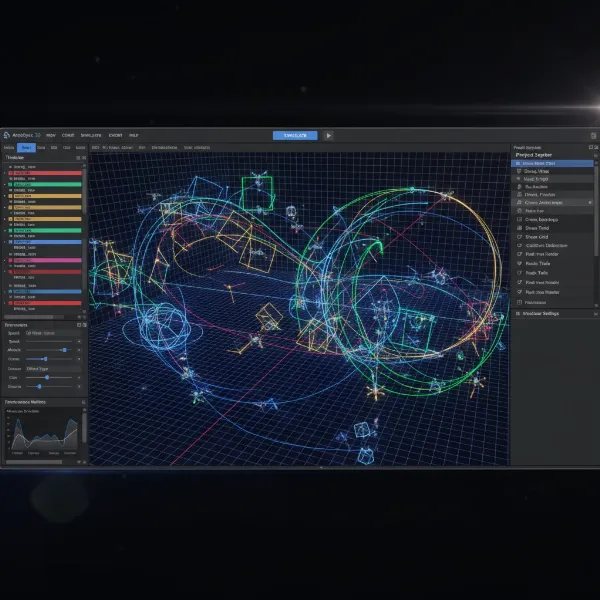 Drone light show design software illustrating flight paths and 3D animation for synchronized drone movements.
Regulatory and Safety Considerations for Drone Light Shows
Operating a fleet of drones in public airspace requires stringent adherence to regulations and comprehensive safety measures to protect both the public and the success of the show.
-
Regulatory Compliance:
- Permits and Approvals: Show operators must secure permits and approvals from relevant aviation authorities, such as the Federal Aviation Administration (FAA) in the United States, or local civil aviation bodies in other countries.
- Airspace Restrictions: Flight plans must comply with local airspace restrictions, avoiding no-fly zones and areas near airports.
- Flight Plans: Detailed flight plans are filed, outlining every aspect of the show, including drone numbers, flight paths, altitudes, and safety zones.
-
Safety Protocols:
- Geofencing: Multiple virtual barriers, known as geofences, are programmed into the system to prevent drones from straying outside the designated safe-flight zone.
- Pre-Flight Checks: Before every show, rigorous checklists are used to verify drone functionality, battery levels, communication systems, and GPS accuracy.
- Certified Pilots: Shows are flown by certified pilots who are experts in aviation regulations and weather conditions.
- Ground Control Monitoring: The ground control station provides a detailed dashboard display to continuously monitor each drone’s status throughout the performance.
- Collision Avoidance: The design software plays a critical role in preventing mid-air collisions by calculating and deconflicting flight paths for all drones.
- Weather Monitoring: Teams closely monitor weather forecasts, as strong winds or rain can significantly impact drone stability and necessitate rescheduling for safety.
Ensuring a Flawless Display: Operational Excellence
The execution of a drone light show is a testament to meticulous planning and operational precision. Every step, from setup to flight, is carefully orchestrated to ensure a seamless and breathtaking experience.
- Pre-Show Setup: The production team establishes a designated launch area, carefully spacing the drones to prevent collisions during takeoff. This area is secured to keep unauthorized personnel at a safe distance, while the control team operates from a nearby command station.
- Drone Placement: Many advanced systems allow drones to contain a full copy of the show program, meaning they can be placed in any available takeoff slot within the grid, streamlining the setup process.
- Real-Time Monitoring: During the show, the ground control station continuously monitors each drone, ensuring it maintains its assigned flight path, altitude, and synchronization. Multiple radios operating across different frequency bands ensure robust communication is maintained.
- Contingency and Malfunction Protocols: If a drone experiences a malfunction during a performance, it is typically programmed to safely descend to a designated landing area, protecting both the public and the integrity of the display.
- Post-Show Procedures: After the show, drones are collected, batteries are recharged, and any necessary maintenance is performed. Wireless software updates keep the fleet’s technology current and efficient.
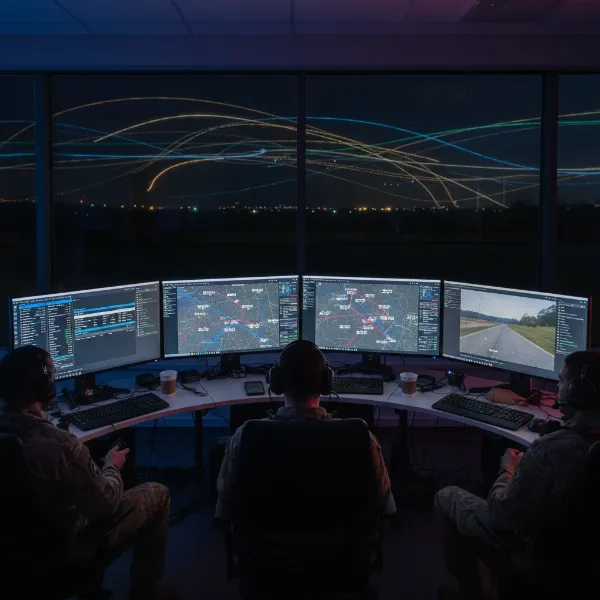 Ground control station overseeing a drone light show with multiple screens displaying drone positions and flight data.
Essential Technologies for Drone Light Shows
The magic of drone light shows is underpinned by a sophisticated ecosystem of interconnected technologies. These are not merely “accessories” but fundamental components that enable the entire spectacle.
- High-Performance Drones: Specifically designed for light shows, these drones feature lightweight frames, powerful motors for precise maneuvering, and most importantly, integrated, ultra-bright LED lighting systems that can display a vast spectrum of colors.
- Advanced GPS Modules: Crucial for precise positioning, these modules allow each drone to know its exact location in 3D space, often with centimeter-level accuracy, ensuring tight formations and smooth transitions.
- Real-time Communication Systems: A robust, encrypted radio network is essential for the central control station to send commands to hundreds or thousands of drones simultaneously and for drones to report their status back. This typically involves multiple redundant radio links to prevent interference and ensure uninterrupted communication.
- Proprietary Control Software: The brain of the operation, this software manages everything from animation design and flight path generation (including anti-collision algorithms) to real-time fleet monitoring and emergency protocols. Companies like Verge Aero develop their own unified platforms for streamlined show creation and execution.
- High-Capacity Batteries and Charging Systems: To ensure sufficient flight time and rapid turnaround between shows, efficient, high-density batteries and fast-charging solutions are critical for managing large fleets.
- Ground Control Station Hardware: This includes ruggedized computers, specialized antennae, and operator interfaces that allow pilots to monitor, launch, and manage the drone fleet safely and effectively.
- Environmental Sensors: Drones may be equipped with sensors to detect wind speed, rain, and other environmental factors, feeding data back to the control system to assist in safe flight decisions and contingency planning.
Conclusion
Drone light shows represent a thrilling convergence of cutting-edge technology and creative expression, offering an unparalleled form of aerial entertainment. From their meticulous design and programming to the precise execution guided by advanced GPS and robust communication systems, these spectacles are a testament to human ingenuity. They stand as a testament to the fact that with careful planning and sophisticated engineering, the night sky can become a canvas for limitless imagination. Offering a greener, quieter, and safer alternative to traditional fireworks, drone light shows are not just a fleeting trend but a transformative shift in how we celebrate and tell stories.
What stories will we see illuminated in the sky next, as this incredible technology continues to evolve?
Frequently Asked Questions
How many drones are typically used in a drone light show?
The number of drones varies significantly based on the scale and complexity of the show, but typically ranges from 100 to 700 drones for most public events. However, record-breaking displays have utilized thousands of drones, showcasing incredibly intricate visuals.
Can drone light shows operate in bad weather?
Drone light shows can generally operate in light rain and moderate winds. However, strong gusts, heavy precipitation, or severe weather conditions can cause shows to be postponed or canceled for safety reasons, as precise flight synchronization can be compromised.
How long do drone light shows usually last?
Most public drone light shows typically run for 10 to 15 minutes. However, some elaborate productions, especially those combining drone storytelling with music, narration, and live atmosphere, can last longer, sometimes up to 40 minutes for a truly immersive experience.
Are drone light shows environmentally friendly?
Yes, drone light shows are considered a highly environmentally friendly alternative to traditional fireworks. They are reusable, produce no smoke, debris, or polluting emissions, and are significantly quieter, reducing negative impacts on wildlife and the environment.
What kind of skills are needed to create a drone light show?
Creating a drone light show requires a multidisciplinary team with expertise in 3D animation, drone engineering, software development, choreography, project management, and aviation regulations. Certified drone pilots are also essential for safe and compliant operation.