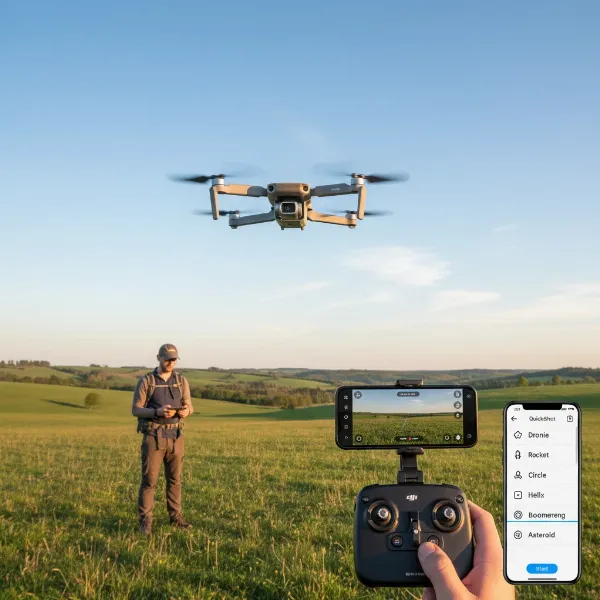
Unwanted vibrations and erratic flight patterns can plague even the most advanced drones, often leading to frustrating flight experiences and compromised aerial footage. At the heart of many of these issues lies an often-overlooked component: the drone’s propellers. Perfectly balanced propellers are crucial for maximizing your drone’s performance, ensuring stable flights, extending its lifespan, and capturing crystal-clear aerial shots. This comprehensive guide will walk you through the essential techniques for balancing your drone propellers, empowering you to unlock your drone’s full potential.
Understanding Drone Propellers and Imbalance
A drone propeller is more than just a spinning blade; it’s a precisely engineered airfoil designed to generate lift and thrust. These crucial components spin at extremely high revolutions per minute (RPM), making even the slightest imbalance a significant issue.
What Causes Propeller Imbalance?
Propeller imbalance can arise from several factors. Often, manufacturing defects, though rare in high-quality props, can lead to uneven weight distribution. More commonly, minor damage from crashes, hard landings, or even slight nicks and scratches from debris can alter a propeller’s weight. Over time, uneven wear or the accumulation of dirt and grime can also contribute to an imbalance.
Signs of an Unbalanced Propeller
Identifying an unbalanced propeller before it causes major issues is key. You might notice your drone exhibiting excessive vibrations, producing abnormal sounds during flight, or displaying erratic flight patterns. For those capturing aerial content, an unbalanced propeller is a notorious culprit behind the dreaded “jello” effect in videos, where footage appears wobbly or distorted. Additionally, an imbalanced prop can lead to higher power consumption and increased wear on critical drone components.
Why Balancing Your Drone Propellers Matters
The meticulous act of balancing your drone propellers offers a cascade of benefits, transforming your flying experience and safeguarding your investment.
Enhanced Flight Stability and Control
A perfectly balanced set of propellers ensures that each rotor spins with consistent force, allowing your drone to maintain a stable center of gravity. This precision directly translates to more predictable and responsive control, making intricate aerial maneuvers smoother and more achievable. You’ll experience less drift and a more locked-in feeling during flight, giving you greater confidence in challenging conditions.
Reduced Vibrations and “Jello” Effect
Unbalanced propellers generate vibrations that propagate throughout the drone’s frame. These vibrations are not only detrimental to the drone’s hardware but also to your camera’s ability to capture smooth footage. By eliminating these oscillations, you can drastically reduce the “jello” effect, resulting in professional-quality, buttery-smooth videos and sharp photographs.
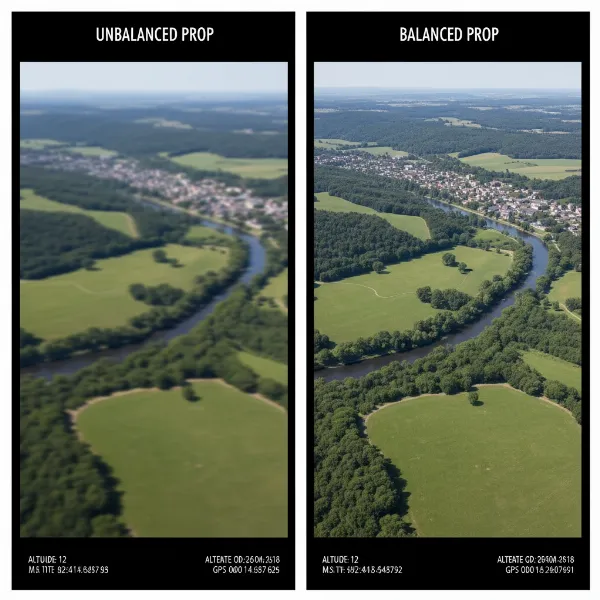 Comparison of drone footage with and without jello effect from unbalanced propellers
Extended Drone Component Lifespan
The constant stress from unbalanced vibrations takes a toll on your drone’s delicate internal components. Motors, bearings, and even the flight controller are subjected to undue strain, accelerating wear and tear. Balancing your propellers significantly mitigates this stress, preserving the integrity of these parts and extending the overall lifespan of your drone.
Improved Efficiency and Longer Flight Times
When propellers are balanced, they spin more efficiently, requiring less energy to generate the necessary lift and thrust. This optimization means your drone can achieve longer flight times on a single battery charge. Increased efficiency also contributes to better overall performance, allowing your drone to fly faster and handle wind more effectively.
Safer Operations
Erratic behavior caused by unbalanced props can lead to hazardous situations, particularly during takeoff, landing, or complex maneuvers. By ensuring optimal control and reducing the risk of unexpected movements, propeller balancing contributes to safer flights, protecting your drone, property, and anyone nearby.
Tools You’ll Need for Propeller Balancing
Achieving perfectly balanced propellers requires only a few specialized yet affordable tools.
- Propeller Balancer: This is the most crucial tool. A high-quality magnetic balancer is highly recommended as it offers minimal friction, allowing for the most accurate detection of weight discrepancies. These typically consist of a precision shaft that holds the propeller, resting on magnetic bearings.
- Small Strips of Clear Tape: Lightweight, clear tape (like Scotch tape or thin electrical tape) is commonly used to add weight to the lighter side of a propeller. It adheres well and can be easily trimmed for fine adjustments.
- Fine-Grit Sandpaper (Optional): For those who prefer to remove material from the heavier side rather than add tape, fine-grit sandpaper can be used with extreme caution. This method requires a delicate touch to avoid over-sanding or damaging the propeller’s aerodynamic profile.
- Permanent Marker (Optional): A marker can be helpful for temporarily marking the heavier blade as you work, especially if you’re balancing multiple props.
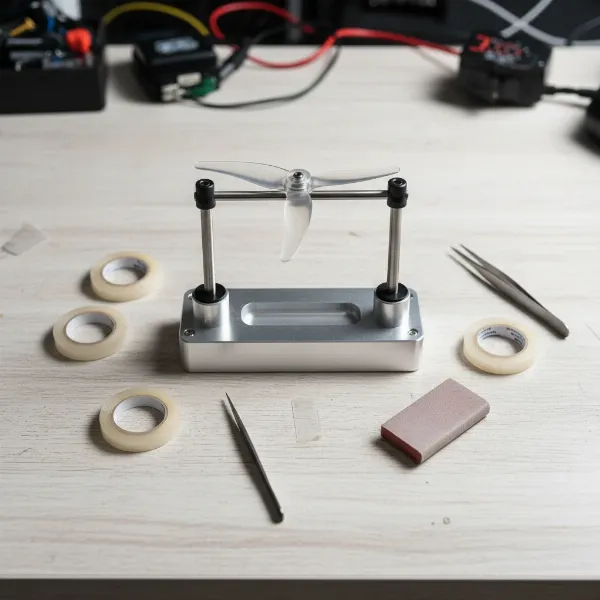 Essential tools for balancing drone propellers including a magnetic balancer and tape
Step-by-Step Guide to Static Propeller Balancing
Static balancing is the most common and effective method for hobbyist drones. It involves balancing the propeller when it’s not rotating on the drone.
Step 1: Visual Inspection
Before you begin, thoroughly inspect each propeller for any signs of damage. Look for chips, cracks, bends, warped tips, or any other visible imperfections. Even tiny nicks can significantly affect balance. If a propeller is severely damaged, it’s always safer to replace it entirely rather than attempt to balance it. Minor cosmetic nicks, however, might still be salvageable with careful balancing.
Step 2: Mount the Propeller
Carefully mount the propeller onto your balancing tool. Ensure that it sits freely on the shaft and the balancer’s bearings allow it to rotate with minimal resistance. The goal is for the propeller to find its natural resting point based purely on its weight distribution.
Step 3: Identify the Heavy Side
Once mounted, gently spin the propeller and allow it to come to rest. Observe which blade consistently tips downwards. This is your heavy side. If the propeller remains perfectly level in any position, it is already well-balanced. If one blade drops, slowly rotate it 90 degrees and release it. If it returns to the same downward position, you’ve confirmed the heavy spot.
Step 4: Correct the Imbalance
You have two primary methods to correct the imbalance:
- Adding Weight (Tape Method): This is the most common and safest approach. Take a small strip of clear tape and apply it to the lighter blade, typically on the leading edge (the side that cuts into the air). Wrap the tape around the blade, ensuring it adheres smoothly without creating wrinkles or bumps. The exact placement can vary, but generally, tape placed further from the hub has a greater effect. Start with a small piece, as a little goes a long way.
- Removing Material (Sanding Method): This method requires extreme caution and precision. If you choose to sand, only remove material from the heavier blade. Use very fine-grit sandpaper and gently sand tiny amounts of material from the trailing edge or the blade tip. It’s easy to remove too much, so proceed with extreme care and check frequently. This method is generally not recommended for beginners.
Step 5: Re-test and Refine
After adding tape or sanding, gently spin the propeller again on the balancer. Observe its new resting position. You may need to repeat Step 3 and 4 several times, making small adjustments each time, until the propeller remains level in any position you place it. A perfectly balanced propeller will stay put without tilting downwards, regardless of its rotational orientation.
Static vs. Dynamic Propeller Balancing: What’s the Difference?
While the focus for most drone enthusiasts is static balancing, it’s worth understanding the distinction between the two main types.
- Static Balancing: As described above, static balancing deals with the propeller’s weight distribution when it is stationary. It corrects any unevenness in mass that would cause it to tip to one side. This is often sufficient for small to medium-sized drone propellers.
- Dynamic Balancing: Dynamic balancing addresses rotational forces when the propeller is spinning at high speeds. It takes into account not only uneven weight but also aerodynamic factors and how the weight is distributed along the blade’s length. This more complex method typically requires specialized equipment and is usually performed on larger aircraft propellers or in professional industrial settings. For the vast majority of consumer and hobby drones, static balancing provides significant improvements.
How Often Should You Balance Your Drone Propellers?
The frequency of propeller balancing depends on your flying habits and the drone’s use.
- Before Major Flights: Always perform a quick visual inspection and consider balancing before critical missions, especially if you’re aiming for cinematic footage.
- After Crashes or Hard Landings: Even minor impacts can bend or nick a propeller, throwing it out of balance. Always re-check balance after any significant incident.
- Regular Checks: For high-intensity flying, such as FPV racing or acrobatic maneuvers, a weekly check might be beneficial. For more casual pilots, a monthly inspection and rebalancing can suffice.
- When Noticing Vibration: If you start to notice unusual vibrations, abnormal sounds, or reduced flight performance, balancing your props should be one of your first troubleshooting steps.
Modern Drones and Propeller Balancing: Is it Still Necessary?
With advancements in manufacturing, many contemporary drone propellers, especially from leading brands like DJI, come remarkably well-balanced straight out of the factory. For small, recreational drones, the need for manual balancing might be less pronounced than it was a decade ago.
However, propeller balancing remains highly relevant for several reasons:
- Larger Propellers: As propeller size increases (e.g., 7 inches or more), even minor imbalances become more significant due to increased rotational inertia.
- Custom Builds & Aftermarket Props: If you’re building a custom drone or using third-party/aftermarket propellers, their factory balance might be less consistent, making manual balancing essential.
- FPV Drones: FPV pilots often push their drones to the limits, and precise balance can reduce vibrations that affect flight controller performance and video quality.
- Performance Optimization: For those seeking the absolute smoothest flight or the highest quality aerial cinematography, even factory-balanced props can often benefit from fine-tuning.
Conclusion
Mastering the art of balancing your drone propellers is a fundamental skill for any serious drone pilot. By understanding the causes and effects of imbalance, equipping yourself with the right tools, and following a straightforward balancing procedure, you can significantly enhance your drone’s flight stability, reduce disruptive vibrations, and prolong the life of its vital components. This simple yet impactful maintenance routine ensures your drone operates at its peak, delivering a more enjoyable and safer flying experience with stunningly clear results. Regular attention to these critical components transforms your drone from a mere gadget into a finely tuned aerial machine. Are you ready to elevate your drone’s performance?
Frequently Asked Questions
What is the propeller balancing method?
Propeller balancing primarily involves static balancing, a process of adjusting a propeller’s weight distribution when it’s stationary. This method aims to equalize the mass across all blades to reduce vibrations and improve overall efficiency during flight. It typically uses a precision balancer to identify heavy spots, which are then corrected by adding small amounts of weight (like tape) to the lighter side or carefully removing material from the heavier side.
How would you know if the propeller is out of balance?
You can identify an unbalanced propeller by observing several signs. During flight, look for noticeable vibrations, hear abnormal sounds, or witness erratic or unstable flight patterns. For camera drones, the presence of a “jello” effect in your video footage is a strong indicator. On a propeller balancer, an unbalanced prop will consistently tilt to one side, indicating its heavy spot.
What causes propeller imbalance?
Propeller imbalance can stem from various sources. Common causes include minor manufacturing inconsistencies, physical damage such as nicks, chips, or bends from crashes or hard landings, and uneven wear over time. Environmental factors like dirt or debris accumulation on the blades can also subtly alter the weight distribution, leading to an imbalance that affects drone performance.
Can damaged props be rebalanced?
While lightly damaged propellers with minor nicks or scratches can often be successfully rebalanced, it’s generally safer to replace props with significant damage. Extensive damage may compromise the structural integrity of the propeller, making it unsafe for flight even if balanced. Always carefully assess the extent of the damage; if there’s any doubt about its structural soundness, replacement is the more prudent choice for safety and optimal performance.
What’s the best prop material for stability?
Carbon fiber is widely considered one of the best materials for propeller stability due to its exceptional stiffness and low weight. These properties allow carbon fiber props to maintain their shape better at high RPMs, resisting flex and vibration. While carbon fiber offers superior durability and performance, well-manufactured plastic props can also provide good stability and are often more cost-effective for everyday flying and beginners.