Flying a drone over water offers unparalleled opportunities to capture breathtaking aerial footage and stunning photos that simply aren’t possible from land. The shimmering reflections, dramatic coastlines, and unique perspectives of aquatic environments call to every drone enthusiast. However, these mesmerizing scenes come with a distinct set of challenges and risks. Without proper knowledge and preparation, a serene flight can quickly turn into a costly mishap, potentially sending your valuable drone to a watery grave.
This comprehensive guide, born from over a decade of hands-on experience in the drone industry, will equip you with the expertise needed to navigate the complexities of waterborne drone operations. We’ll delve into the specific dangers posed by water, outline crucial pre-flight preparations, guide you through mastering in-flight controls, introduce specialized gear for added protection, clarify legal considerations, and detail essential post-flight care. Our goal is to empower you to fly confidently, capture incredible content, and bring your drone home safely every time.
What Makes Flying Over Water So Challenging?
The serene beauty of water belies the hidden dangers it presents to drone pilots. Unlike solid ground, water interacts with drone technology in unpredictable ways, demanding a heightened level of awareness and specific precautions. Understanding these challenges is the first step toward a safe and successful flight.
One of the primary concerns is the Vision Positioning System (VPS), a feature common in many consumer drones designed to help maintain stability by mapping the surface below. Over water, however, the reflective and often featureless surface can confuse the VPS sensors, leading to erratic behavior, sudden altitude drops, or what pilots sometimes call a “phantom dive”. This is particularly risky when flying at low altitudes, where an unexpected dip can bring your drone into direct contact with the water.
The natural environment itself presents formidable obstacles. Wind over open water is frequently stronger and more unpredictable than on land, quickly draining battery life and making stable flight difficult. Gusts can easily push a lightweight drone off course or even into the water. Waves and sea spray are also significant threats; even small waves can splash high enough to drench a low-flying drone, and corrosive saltwater is particularly damaging to delicate electronics. Beyond the immediate impact, fine salt particles carried by the wind can infiltrate the drone’s components, causing long-term corrosion.
Furthermore, GPS signals can sometimes be less reliable over large bodies of water due to reflections and the lack of land-based reference points, potentially affecting the drone’s precise positioning. Obstacles such as boats, lighthouses, and other structures can interfere with compass or GPS signals, while unexpected encounters with birds, especially aggressive seagulls, pose a collision risk. These cumulative factors highlight why standard drones, which are generally not waterproof, face elevated risks when operating near or above aquatic environments.
Essential Pre-Flight Preparations for Water Flights
Before your drone even leaves the ground (or boat deck), meticulous preparation is paramount for ensuring a safe and successful mission over water. Think of it as a pilot’s checklist before a critical flight – no step should be overlooked.
Firstly, if you’re new to drone piloting, master basic flight controls on land extensively. Flying over water introduces multiple layers of complexity, and you need to be instinctively comfortable with your drone’s movements, takeoff, and landing before attempting it over a less forgiving environment.
A thorough pre-flight check is non-negotiable. Inspect your propellers for any nicks or cracks, ensure your battery is fully charged and securely seated, and check all sensors for cleanliness. Confirm strong GPS reception and calibrate your compass away from any metallic interference. Crucially, verify your Return-to-Home (RTH) altitude is set appropriately high to clear any potential obstacles like boats or shoreline structures on its way back.
Flight planning is another critical aspect. Visualize your desired shots and plan your flight path to be as direct and efficient as possible over water, minimizing exposure to risk. Always operate your drone within your visual line of sight (VLOS), meaning you must be able to see it with your own eyes, not just through a screen. Consider setting a maximum flight distance in your drone’s app to prevent accidental overextension beyond your control range or battery limits. Lastly, check the weather forecast meticulously, paying close attention to wind speed and direction, as well as any chances of rain or fog. Calm conditions are always preferable for water flights.
Mastering In-Flight Control Over Water
Once your drone is airborne over water, a different set of piloting skills and awareness comes into play. Proactive adjustments and constant monitoring are key to maintaining control and mitigating risks.
One of the most vital actions, especially when flying at low altitudes, is to disable your drone’s Vision Positioning System (VPS). As discussed, the reflective surface of water can confuse these downward-facing sensors, leading to instability or sudden drops. By turning it off, you prevent the drone from reacting erroneously to water reflections. Most drone apps provide an option to disable this feature.
Maintaining a safe altitude is crucial. Aim to fly at least two meters (approximately 6.5 feet) above the water’s surface to avoid unexpected waves or sea spray. While low-altitude shots can be stunning, they inherently carry higher risk, and should only be attempted by experienced pilots under ideal conditions with VPS disabled.
If you are launching from a moving boat, you must actively update your Home Point. Standard RTH functions will guide your drone back to its initial takeoff location, which, if on a boat that has drifted, will result in your drone landing in the water. Instead, use the “Home Point Me” feature in your drone’s app to set the RTH point to your current controller location. Always closely monitor your drone’s return flight and be prepared to take manual control if needed.
Throughout your flight, continuously monitor your battery level and wind speed. Headwinds will consume battery faster, so plan your return journey with this in mind. It’s often strategic to fly out against the wind and return with it pushing your drone back, conserving power. Lastly, remain vigilant for obstacles such as other boats, ships, lighthouses, or even aggressive birds. Maintain a safe distance from these potential hazards and be ready to adjust your flight path accordingly.
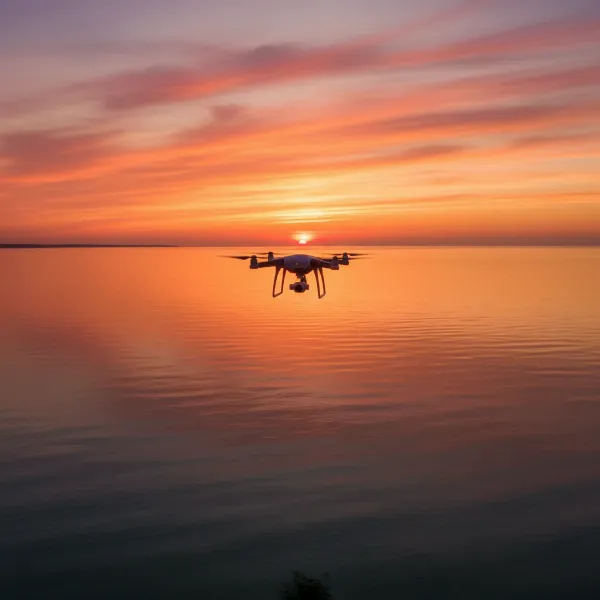 A drone flying gracefully over calm ocean water during sunset, capturing cinematic footage.
Specialized Gear and Protections
While expert piloting and meticulous planning significantly enhance safety, certain specialized gear and preventative measures can offer an extra layer of protection when flying over water.
For ultimate peace of mind, consider investing in a waterproof drone. While most popular consumer drones like DJI models are not inherently waterproof, brands like SwellPro (e.g., SplashDrone 4) and PowerVision (e.g., PowerEgg X) specifically design drones for aquatic environments. These drones are built to withstand splashes, rain, and even brief submersion, often featuring waterproof cameras and robust construction suitable for marine conditions. Some can even land on and take off from the water.
Regardless of your drone type, drone insurance with water damage coverage is a highly recommended safeguard. A crash over water often means total loss, as retrieving a drone from the ocean can be impossible, and saltwater rapidly corrodes electronics. Many standard policies might not cover water damage, so ensure your policy explicitly includes it. This financial protection can soften the blow of an unfortunate incident.
Small but effective accessories can also make a difference. A drone landing pad provides a clean, stable, and elevated surface for takeoff and landing, particularly useful on sandy beaches or from a boat deck, preventing sand or water from getting into motors and sensors. For those operating from boats, a sturdy, elevated platform can also help prevent compass interference from the boat’s metal components.
Finally, while not “gear” in the traditional sense, understanding basic recovery tools for fresh water (like a fishing net on a long pole for shallow lakes) can be useful. However, in saltwater or deep-water scenarios, recovery is often impractical or impossible.
“Flying drones over water is a calculated risk. While no preparation guarantees absolute safety, combining skilled piloting with the right gear, like waterproof drones or comprehensive insurance, dramatically shifts the odds in your favor.” – Alex “DroneMaster” Chen, Professional Aerial Cinematographer
Legal & Ethical Considerations When Flying Near Water
Operating a drone over water, much like on land, comes with a set of legal and ethical responsibilities that pilots must understand and adhere to. These regulations are designed to ensure public safety, protect privacy, and prevent interference with other aircraft or critical infrastructure.
Firstly, you must always be aware of local drone regulations. These can vary significantly by country, state, or even local municipality. Common rules include maintaining your drone within visual line of sight (VLOS), keeping a minimum distance from people (typically 30 meters or 100 feet), and not flying higher than a specified altitude (e.g., 120 meters or 400 feet above ground level). Flying over populous areas like beaches, crowded parks, or public events may be restricted or require special authorization.
When flying near coastal areas, be mindful of airports or restricted airspace. Most countries have “no-fly zones” around airports, often extending 5.5 kilometers (3.4 miles) or more, where drone operations are prohibited or severely restricted. Always check official aviation maps and drone safety apps before taking off.
Privacy is another significant ethical consideration. Drones, with their powerful cameras, can easily intrude on personal space. Avoid flying over private property, individuals, or boats without explicit permission, especially when capturing footage. Respecting people’s right to privacy is not only good practice but can also prevent legal issues and negative public perception of drone pilots.
For those venturing into international waters, the situation becomes more complex. While direct national FAA (or similar agency) regulations might not apply, international aviation rules established by organizations like ICAO (International Civil Aviation Organization) generally govern all aircraft, including drones. It is the pilot’s responsibility to understand and comply with these broader regulations, which often still require registration and adherence to flight safety standards. In essence, while the water may seem like an open frontier, it’s crucial to remember that it is still subject to rules and respect for others.
Post-Flight Care: Protecting Your Drone from Water Damage
After a successful flight over water, the mission isn’t over until your drone is properly cared for. Neglecting post-flight maintenance, especially after exposure to moisture or salt, can lead to insidious corrosion and irreversible damage.
The most critical step is to clean your drone thoroughly, particularly after flying over saltwater. Saltwater is highly corrosive and can quickly degrade electronic components, motors, and plastic parts. Use a soft, damp (not wet) cloth with fresh water to gently wipe down the entire drone, paying close attention to the motors, camera gimbal, and any crevices where salt crystals might accumulate. Avoid harsh chemicals or excessive moisture.
Next, focus on drying procedures. Air-dry your drone in a well-ventilated area, ideally with a fan, for several hours. You can also place it in a sealed container with desiccant packets (like silica gel) to absorb any lingering moisture, especially from inside the chassis. Do not charge batteries or attempt to power on the drone until you are absolutely certain it is completely dry. Any residual moisture can cause short circuits.
Inspect your drone one more time after it’s dry. Check the propellers, arms, and camera for any signs of wear, damage, or remaining residue. This is also a good time to ensure all ports and covers are clean and properly sealed.
Finally, store your drone correctly. Keep it in a dry, cool environment, ideally in its protective case. This prevents dust and humidity from affecting its sensitive electronics. By integrating these simple but crucial post-flight care steps into your routine, you can significantly extend the lifespan of your drone and ensure it’s ready for its next water adventure.
Conclusion
Flying drones over water offers an incredible opportunity to capture unique perspectives and stunning imagery. However, it’s a domain that demands respect, meticulous preparation, and refined piloting skills. By understanding the inherent challenges like VPS interference, unpredictable winds, and corrosive saltwater, you can proactively mitigate risks. Essential steps such as thorough pre-flight checks, mastering in-flight controls (including disabling VPS and updating your Home Point), considering specialized waterproof drones, and securing adequate insurance are not just recommendations – they are vital safeguards.
Always remember your legal and ethical responsibilities, ensuring your flights respect privacy and adhere to local regulations. And never underestimate the importance of diligent post-flight care to protect your investment from the elements. With careful planning, precise execution, and a commitment to safety, your drone can soar gracefully above the waves, bringing back cinematic treasures. Are you ready to take your aerial photography to the next level, responsibly embracing the beauty and challenges of the aquatic world?
Frequently Asked Questions
Is it safe to fly any drone over water?
|
Our Picks for the Best Drone in 2026
As an Amazon Associate I earn from qualifying purchases.
|
||
| Num | Product | Action |
|---|---|---|
| 1 | Drone with Camera for Adults 4K, Brushless Motor Drones for Kids Beginners, 60 Mins Flight, 130° Lens, FPV Foldable RC Quadcopter, Gesture Photography, Toys Gifts for Teen Boys Girls, Black |

|
| 2 | Drone with Camera 1080P HD FPV Foldable Mini Drone for Beginners Kids Adults, Drone with One Key Take Off/Landing, Gesture Selfie, Altitude Hold, 3D Flip, Easy to Fly, 2 Batteries, Toys for Boys Girls |
|
| 3 | GPS Drones with Camera for Adults 4K, FPV Drone Under 249g with Brushless Motor, GPS Auto Return, Follow Me, Circle Fly, Waypoint Flight, Foldable Drone with Gesture Control, 46Mins with 2 Batteries |
|
| 4 | DJI Mini 4K Camera Drone Combo, Drone with 4K UHD Camera for Adults, Under 249 g, 3-Axis Gimbal Stabilization, 10km Video Transmission, Auto Return, 2 Batteries for 62-Min Max Flight Time, QuickShots |
|
| 5 | DJI Air 3S Fly More Combo (RC 2 Screen Remote Controller), Drone with 1" CMOS Wide-Angle & Medium Tele Camera for Adults, 4K/60fps, Omnidirectional Sensing & 3 Batteries for Extended Flight Time |
|
| 6 | Drone with 1080P Camera - Foldable Remote Control Quadcopter with Gesture Control, 3D Flip, One Key Start, Emergency Stop, 2 Batteries, Easier to use, Toy for Kids Adult Beginners |
|
| 7 | Drone with Camera - Drone with Screen on Controller for Beginners, Foldable Remote Control Quadcopter with Gesture Control, 3D Flip, One Key Start, Emergency Stop, 2 Batteries, Easier to use to use |
|
| 8 | DJI Mini 4K, Drone with 4K UHD Camera for Adults, Under 249 g, 3-Axis Gimbal Stabilization, 10km Video Transmission, Auto Return, Wind Resistance, 1 Battery for 31-Min Max Flight Time, Intelligent |
|
| 9 | DJI Mini 3 Fly More Combo (DJI RC), Drones with Camera for Adults 4K, 3 Batteries for 114-min Flight Time, Vertical Shooting, 32800ft (10km) Video Transmission, Lightweight Mini Drone for Beginners |
|
| 10 | Drone with Camera, Drones for Adults and Beginners, 1080P HD FPV Foldable Mini Drones for Kids, with 2 Batteries, Carrying Case, Trajectory Flight, Gravity Control, One-Key Takeoff/Landing, 360° Flip, Toys for Gift |
|
No, most standard consumer drones are not waterproof and are highly susceptible to damage from water, especially saltwater. Specialized waterproof drones are designed for such environments, but even with them, strict safety precautions are essential.
What is the biggest risk when flying a drone over water?
One of the most significant risks is the drone’s Vision Positioning System (VPS) malfunctioning due to water’s reflective surface, leading to unstable flight or unexpected altitude drops. Loss of GPS signal, strong winds, and battery depletion are also major concerns.
Should I disable VPS when flying low over water?
Yes, it is highly recommended to disable your drone’s Vision Positioning System (VPS) when flying at low altitudes (especially below two meters) over water to prevent erratic behavior caused by reflections confusing the sensors.
How do I prevent my drone from flying back into the water if I launch from a boat?
If launching from a moving boat, you must manually update your drone’s Home Point to your current controller location. Otherwise, the drone’s Return-to-Home (RTH) function will guide it back to its original launch point, potentially landing it in the water.
What should I do if my drone gets wet from saltwater?
Immediately retrieve the drone, power it off, and remove the battery. Gently wipe down all surfaces with a cloth dampened with fresh water to remove salt residue. Then, allow the drone to air-dry completely in a well-ventilated area, ideally with desiccant packets, before attempting to power it on again.